
Unity without sameness: What the desert camp teaches us today
Numbers 1:1 – 4:20
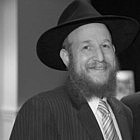

I just returned from Caracas, Venezuela, where I traveled to celebrate a family simcha, and something amusing kept happening to me.
People constantly confused me with my identical twin brother who lives there.
Some greeted me enthusiastically, convinced I was him. Others began conversations assuming they knew who I was, only to stop mid-sentence and realize they had the wrong brother. A few people even did a double take when the two of us walked into the same room.
Get The Jewish Chronicle Weekly Edition by email and never miss our top stories Free Sign Up
At one point, it became almost comical.
And of course, I understand why. We look alike, we sound alike, we share the same parents, the same birthday and many of the same values.
But anyone who actually knows us understands something deeper. As much as we look the same, we are not the same person. We each have our own personality, our own strengths, our own perspective and our own unique way of interacting with the world.
One of the striking features of this week’s Torah portion, Bamidbar, is the Torah’s emphasis on the individuality of the 12 tribes of Israel.
Each tribe had its own place in the camp, its own mission, its own personality and, remarkably, its own flag.
Judah had the lion. Dan had the serpent. Zevulun had the ship.
Every tribe marched beneath its own banner, with its own symbol and identity.
At first glance, this feels surprising.
Wouldn’t unity require sameness? Wouldn’t one nation function best under one flag?
Yet the Torah seems to move in the opposite direction, emphasizing distinctions and preserving differences.
But then the Torah adds one critical detail: All 12 tribes camped around one center, the Mishkan, the Tabernacle, the dwelling place of G-d.
That detail changes everything.
The Torah is teaching us that unity does not mean everybody becoming the same. Real unity comes when different people are connected to the same core values and shared purpose.
A symphony is not made from one repeated note. It’s made from different notes working together.
Maybe this is one of the biggest struggles in society today.
On the one hand, tribalism can become unhealthy. People split into camps and begin seeing anyone different from them as a threat. Disagreements quickly become hostility. Differences can quickly divide people.
But there is another problem too: the belief that unity only works if everybody thinks the same way, talks the same way and sees the world the same way.
The Torah rejects both extremes.
Judaism believes deeply in individuality. Different tribes. Different personalities. Different customs. Different strengths.
But those differences were meant to serve something greater than ourselves.
That is why the Midrash says the nations of the world were amazed when they saw the Jewish people traveling through the desert with their flags. The amazing part was not that they had different banners. Every nation has banners.
The amazing part was that they stayed one people despite their differences.
And maybe this is one of the unique things about Torah.
The Talmud is filled with debates. Hillel and Shammai disagreed constantly. Different sages argued passionately with one another about law, philosophy and interpretation. Judaism never demanded that every person think identically.
On a deeper level, our sages explain that Hillel and Shammai reflected two very different spiritual personalities. Hillel was associated with chesed — kindness and openness. Shammai was associated with gevurah — discipline, restraint, and strict judgment.
And you can actually see those personalities reflected in many of their rulings throughout the Talmud.
They saw the world differently because they were different people.
Yet despite those differences, they were still part of the same Torah. The debate was never about whether they belonged to the same people or shared the same covenant. That part was understood.
There was room for different opinions because there was still a center holding everyone together.
Today, we have become increasingly uncomfortable with people who think differently from us, politically, religiously, or culturally.
The Torah’s approach is both simple and difficult at the same time.
You do not need every person to be identical. You do not need every community to look the same.
But you do need something strong enough to hold everyone together.
The Mishkan stood at the center of the camp because the Torah was teaching something fundamental: The Jewish people need a center strong enough to hold together all of our differences.
That was true then, and it remains true now.
We do not all think alike or live alike. But we remain one people through a shared connection to G-d, Torah and a common sense of purpose.
Maybe that is the deeper message of the flags in the desert.
G-d did not ask the tribes to give up their individuality. He wanted each tribe to contribute its own strengths, its own perspective and its own identity.
The goal was never for everybody to become the same.
The goal was for different people to remain connected to something greater than themselves. PJC
Rabbi Mendel Rosenblum is director of Chabad of the South Hills. This column is a service of the Vaad Harabonim of Greater Pittsburgh.
comments