
American Jewish Museum exhibit builds bridges across communities
The show explores the replacement of the Commercial Street Bridge as a symbol of "connection, relationships and community."
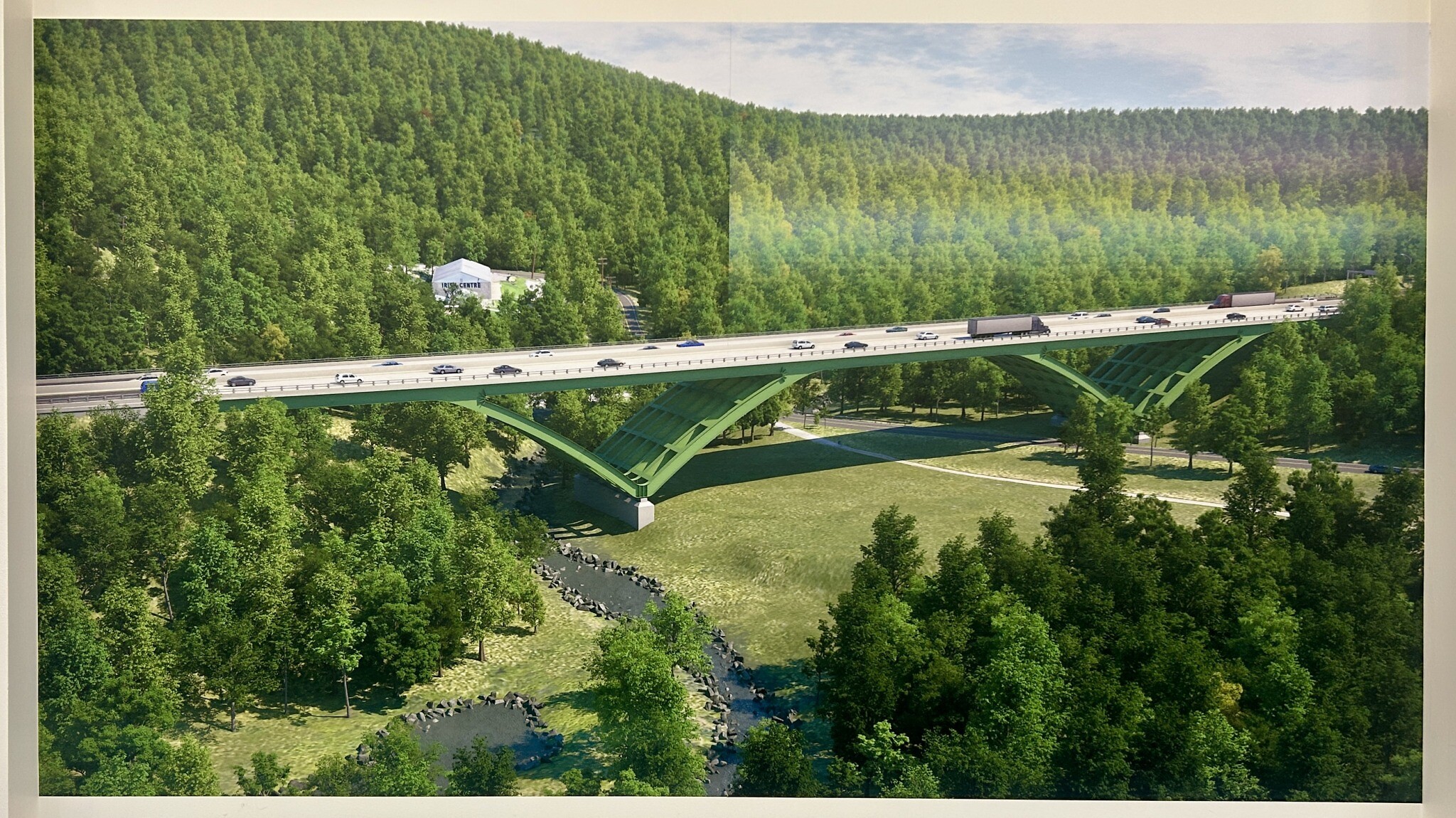
At first glance, a bridge replacement project and a community center seem worlds apart. But a new exhibition at the American Jewish Museum contends that both pursuits are built upon the same core principles: connection, collaboration and community.
On June 8, the museum, located at the Jewish Community Center of Greater Pittsburgh in Squirrel Hill, unveiled its latest exhibition: “Commercial Street Bridge: Pittsburgh’s Next Engineering Marvel.” The show runs through Aug. 8.
Through pointed documentation and visionary model-making, the show both interrogates and celebrates the “innovation, coordination, and skilled labor behind one of the region’s most essential yet often overlooked pieces of infrastructure.”
Get The Jewish Chronicle Weekly Edition by email and never miss our top stories Free Sign Up
Museum Director Melissa Hiller emphasized that the exhibit speaks to the importance of civic architecture as a “collective endeavor” that “amplifies connectivity and community.”
“We have a shared investment in what infrastructure in our communities looks like, and that in itself speaks to public life,” Hiller said. “Before the original bridge was built, the Pittsburgh Jewish community didn’t have a presence in the East Hills or in the South Hills. It’s really because of infrastructure like tunnels and bridges that communities — including Jewish communities — are able to expand into different spaces and build new communities.”
The City of Pittsburgh began building the Commercial Street Bridge in 1948, finalizing construction in 1951. Connecting Pittsburgh’s eastern suburbs to the downtown central business district, the bridge played a pivotal role in “making travel, access, and connection part of everyday communal life.”
The bridge has undergone three major rehabilitation projects within its 75-year history. However, according to officials from the Pennsylvania Department of Transportation, the nature of the repairs needed now makes any further rehabilitation difficult.
As a result, the bridge is being replaced through a PennDOT-led reconstruction project in partnership with Fay, S&B USA Construction, HDR Engineering and Michael Baker International.
“We looked at the impact that this would have on the traveling public, you know, at 100,000 vehicles a day, and that unfortunately makes it difficult to construct a project like this,” John Myler, senior assistant construction manager at PennDOT, told the Chronicle. “We use accelerated bridge construction techniques to try and minimize the amount of impact to the traveling public. This is at that very extreme level in its scale and scope, but it’s probably not the last time we’ll need to face these types of challenges.”
The exhibit carefully documents each step of the accelerated bridge construction process — a methodology that allows a new structure to be built adjacent to the original bridge before ultimately being slid in place. The bridge is set to close from July 10 to Aug. 3 for the replacement process to occur.
The JCC’s relationship with S&B USA began when the JCC hosted the 2025 Maccabi Games. From there, the partnership grew to involve other important stakeholders in the bridge’s construction and replacement.
“The JCC is our town square — it’s really the melting pot of where communities intersect with each other. It seemed natural that we create some type of partnership on this project,” Fara Marcus, the JCC’s chief development and marketing officer, said. “In conversation with some people from S&B, some of our JCC leaders and [people from] PennDOT came the ‘aha’ moment. We have an amazing art space … let’s make an exhibit highlighting the history of the Commercial Street Bridge project, but also the future of what it means for the Pittsburgh community and for our JCC members.”
Marcus noted that the exhibit gives the JCC community the opportunity to forge connections across generational lines.
“Our early childhood center is already learning and engaging and interacting [with the show] … the kids are curious and asking questions,” Marcus said. “It’s a great opportunity to have bridge-building conversations in the middle of looking at bridges.”
On the curatorial front, Hiller said her goal in conceptualizing the exhibit was to “wrestle with questions around what makes something Jewish” while offering a robust set of “visually oriented projects that are stimulating and interesting.”
“What this exhibition reveals to us is that when you are open to collaboration and collective thinking, you have an opportunity to think outside the box about what is art and what can go into what could be perceived as a traditional exhibition space,” Hiller said. “So many things are quite possible.” PJC
comments