
Arch of Titus: The monument that celebrated Jerusalem’s fall but became a Jewish emblem
Rome’s most famous ruins hold a Jewish story that many visitors, Jews included, never hear.
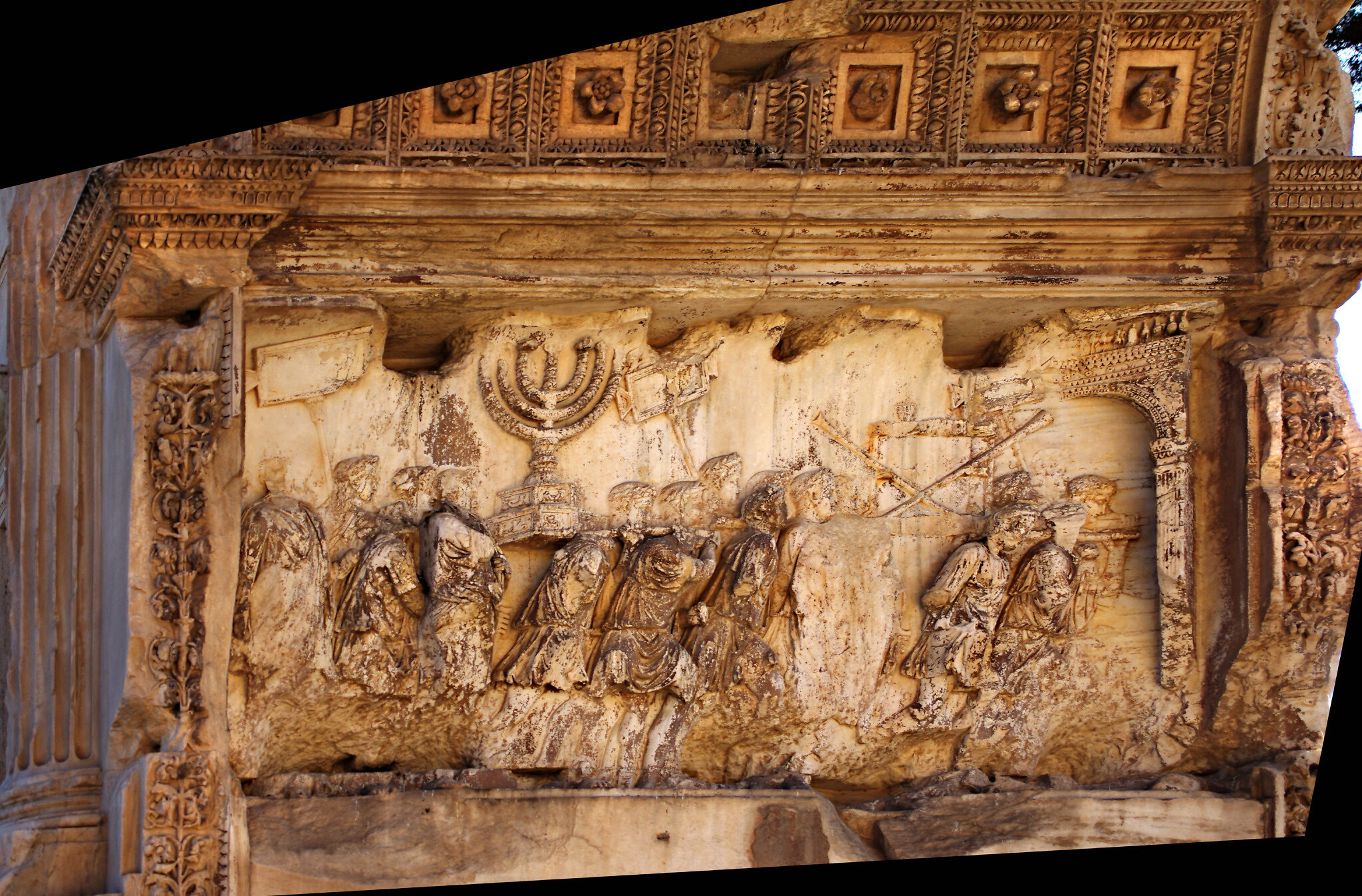
In The summer of 2025, Rabbi Daniel Cohen and 20 members of his congregation walked to the Arch of Titus in Rome and sang “Am Yisrael Chai.” They sang it at a monument built to celebrate Jerusalem’s fall, and it was the most moving moment of their 10-day tour of Italy.
Most visitors come to Rome for the Colosseum. The arch stands within walking distance, and it’s easy to treat it as a photo stop.
For our group — from Congregation Agudath Shalom, one of the largest modern Orthodox congregations in New England — it became a central point of reflection. Many of those on our tour had never heard the history of the menorah on its stone.
Get The Jewish Chronicle Weekly Edition by email and never miss our top stories Free Sign Up
In my view as a Jewish tour operator, Rome is one of the best places to understand Jewish history. And let me tell you why.
The symbol that isn’t a star
Ask most people for the symbol of Judaism and they’ll say the Star of David. But the ancient symbol is the menorah. When archaeologists excavate Roman-era sites, they aren’t looking for a star. They look for menorahs, Jewish coins and an absence of pig bones.
The Temple’s menorah was a golden, seven-branched candelabrum — one lamp for each day of creation. When Rome destroyed the Temple in 70 CE, the menorah was carried off to Rome, and the Arch of Titus shows it in the victory procession.
Historians believe the Colosseum was also built with Jewish slaves and with treasure taken from Jerusalem. By some accounts, Titus brought more than 30,000 Jewish slaves to Rome, as Irene Shaland has written in these pages.
Jews turn up in the arena in other ways. I have seen a menorah among the inscriptions found in the gladiator area. And I have read Talmudic discussions that allowed Jews to attend the games as spectators. As one of my top guides in Rome understands it, the crowd’s reaction helped decide whether a defeated gladiator lived. A Jew in the stands could vote to spare a Jewish fighter.
Taken together, the arena and the arch make a point that is easy to miss. Jewish history runs right through Rome. It’s intertwined with the city’s history.
What Judaism built instead
Jerusalem’s fall has a second story. During the Roman siege in 70 CE, Rabban Yohanan ben Zakai was smuggled out of the city, and he went on to establish a Judaism that did not depend on the Temple.
Instead of worship in one building, Jews would share a narrative — the Torah — wherever they lived. That compromise made the Diaspora stronger and more connected. The center of Jewish life shifted to the synagogue, the one place left, and that shift still shapes how Jews worship today. The menorah survived as the symbol of the Jewish people.
In the 20th century, the symbol came home. The state of Israel was founded in 1948, and in 1949 it adopted a menorah as its official emblem, drawn from the candelabra on the Arch of Titus. The image Rome carved to mark its victory now appears on the emblem of the Jewish state.
Standing at the arch, you can trace that whole arc, from the Temple to the Diaspora to the state.
Why Rome matters for Jewish history
Rome’s Jewish community has lived in the city without interruption since antiquity. On Friday evenings at the Great Synagogue, the chanting is said to preserve traditions that reach back to the Temple’s own songs.
A standard Rome tour covers the gladiators and the arch. But it won’t tell you what Jews did in that arena or what the menorah means for Jewish identity. It is impactful to tour the city from a Jewish perspective.
That context changes the whole city. The Colosseum becomes a place where Jews labored and watched. The arch becomes a record of loss and an emblem of survival. Even an ordinary Friday evening becomes a link to the Temple.
It is a big reason Rome earns its place among the top Jewish sites in Italy — in fact, I place it up there in the top-three places to visit.
Rome built the arch to mark an ending. Almost 2,000 years later, a congregation gathered there and sang that the people of Israel live on. Few places in the world can provide this kind of backdrop for a reflection on the history and resilience of the Jewish people. PJC
Asaf Peled is the founder and CEO of Shin Tours, which specializes in Jewish heritage travel to Morocco, Spain, Portugal, Italy, France and Israel. He has been a registered tour guide since 2012.
comments