
JGS Pittsburgh program explores how understanding past can shape future
'Isn't it an exciting journey to really understand how people saw the world?'

Sana Loue, a genealogical researcher and Case Western Reserve University School of Medicine professor, is interested in how people live and lived. The author, who holds multiple university appointments, is speaking with the Jewish Genealogy Society of Pittsburgh on Nov. 15 at 1 p.m.
Her Zoom-based talk will describe various resources and how best to use those materials to determine what people’s lives in the “Old Country” actually looked like before coming to the United States.
Loue, speaking by phone from Cleveland, Ohio, likened her process to creating a tree. Often, when genealogists do research, they construct a tree with branches, “and these branches have branches that explain the relationships between people.” The challenge, however, is “I visualize this tree as not really having any leaves,” she said. “We don’t understand the foliage that the tree may have, and we don’t understand where the tree is among other trees? Is it in a field?”
Context matters, Loue continued.
By examining Yizkor books, and information about transportation networks, epidemics, pogroms and industrialization, attendees will gain a greater ability to “fill in these leaves on the tree and figure out where this tree sits among other trees,” she said.
Constructing a family history is important, but so is understanding the quality of those lives, she continued.
Materials, including newspapers and photographs, can often provide information about the “dynamics of the town or shtetl” where people lived, and what the relationships were like within the Jewish community and beyond.
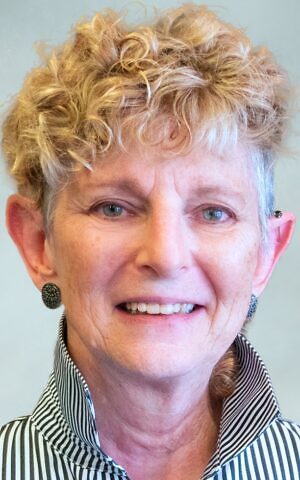
Loue’s primary genealogical research has focused on Poland and the Pale of Settlement, an area spanning modern-day Belarus, Moldova, Lithuania and Ukraine, as well as parts of Poland and Latvia. Along with authoring “From Public Policy to Family Dynamics: A Case Study of the Impact of Public Policy on Two 20th Century Jewish Immigrant Families,” Loue has written about eugenics in both Eastern European countries and the United States, as well as guardianship for adults with cognitive limitations.
Before pursuing these interests, the Clevelander practiced immigration law and AIDS law for about 14 years “during the beginning of the HIV epidemic,” she said.
Whether from practicing law, or researching and writing about her own family’s arrival to the U.S., Loue said she’s learned much.
“I think we make a choice about who we want to be as we die,” she said. “We don’t necessarily have a choice about what we die from, but I think we do have a choice about how we die. And some people die, and they’re quite bitter, and they’re quite angry, and quite hateful, and they take that with them. And other people, as difficult as life may be, they go through their death with gratitude, with an understanding, with a sense of dignity — even when their deaths are horrible — and I think we have the ability to make that choice.”
The other insight, Loue, 73, has gained from her research and years of schooling — she holds a JD, PhDs in epidemiology and medical anthropology, an MSSA in social work, and master’s degrees in education and theology — is “how we view the past very much shapes the future,” she said.
This does not “excuse horrific behavior or torture or anything like that, but if we look at the past in the absence of understanding, that lack of understanding is going to impinge on how we shape our futures,” she said. “Even on a personal level, what is it that we carry with us that we may not necessarily be aware of?”
Eugenics and epigenetics are not the same, but there is literature supporting the idea that “descendants of individuals who have experienced trauma somehow carry that trauma with them, even though they have not experienced it themselves,” she said.
So often, the question is, “how do we see the world,” Loue said. “Part of how we see the world comes from how the people before us saw the world.”
Figuring out that answer reveals more than how someone is “related to person A or person B,” she continued.
The quest involves asking, “What were their lives like? What shaped them? What made them happy? What did they look forward to in their day? Who did they reach out for? What were they afraid of,” she said. “Isn’t it an exciting journey to really understand how people saw the world?”
Steve Jaron, president of JGS Pittsburgh, said he’s looking forward to the Nov. 15 program and is encouraging people to register. Tickets for non-members are $5. Annual membership is $18 and includes free access to regular monthly programming, JGS Pittsburgh’s newsletter Z’Chor, access to a members’ portal, which contains recordings of past speakers and handouts, and access to member help sessions.
While Jaron hopes readers join the group, he also said it’s important to learn from Loue.
Knowing how “our ancestors lived their lives” is important, he said. Loue will primarily focus on Poland, but getting a sense of how to investigate the past, “gives us a window into today.” PJC
Adam Reinherz can be reached at areinherz@pittsburghjewishchronicle.org.
comments