
Gratitude is part of our name
Genesis 26:10 – 32:3
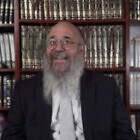

Sometimes, a lesson we are trying to teach walks through the door in the form of a person who has lived it.
This year at Yeshiva Schools of Pittsburgh, we chose hakaras hatov, gratitude, as our schoolwide theme. We want our students, and our staff, to develop the habit of noticing the good, recognizing its source and expressing appreciation.
Recently, that lesson took on a powerful meaning when Leibel Lazaroff visited Pittsburgh. He spoke at Chabad of the South Hills and then shared his story with our boys’ high school students.
Get The Jewish Chronicle Weekly Edition by email and never miss our top stories Free Sign Up
Lazaroff survived last year’s terrorist attack at the Chabad Chanukah celebration at Bondi Beach, Australia. While helping a wounded police officer, Lazaroff was shot and severely injured. His survival followed multiple surgeries and a difficult recovery.
Yet when he spoke, gratitude was central to his message. He feels a responsibility to thank G-d for the miracles that occurred that day and to help others recognize them.
He acknowledged the terrible loss of life and suffering. Alongside that grief, he asked us to notice the lives that were saved and the extraordinary circumstances that helped save them.
One story in particular stayed with me.
The organizers had planned to have inflatable bounce houses for the children. When those plans fell through shortly before the event, they arranged for a climbing wall instead. As Lazaroff described it, the change was frustrating and more expensive, another complication in the final preparations.
During the attack, that climbing wall provided cover for people fleeing the gunfire. What had seemed like an unfortunate change became a means of protection.
We cannot explain the terrible losses of that day. But we can listen to a survivorwho asks us to recognize the miracles
within it. His gratitude carries the weight of someone who knows how precious life is.
In this week’s Torah portion, Vayeitzei, we encounter gratitude expressed by someone whose life also contained pain.
When Leah gives birth to her fourth son, she declares, “This time, I will thank Hashem,” and names him Yehudah, Judah (Genesis 29:35). Rashi explains that Leah understood that Jacob’s 12 sons would come from four mothers. With the birth of her fourth son, she recognized that she had received more than her anticipated share.
There is something deeply human in that explanation. We tend to measure life against our expectations. When something falls short, we notice immediately. When it meets our expectations, we often take it for granted.
Gratitude asks us to look again.
The meal on the table. The teacher who patiently prepares for another day. The spouse who quietly takes care of something we never realized needed to be done. The friend who checks in. Another morning, with another opportunity to make a difference.
How much goodness becomes almost invisible simply because it is familiar?
Leah’s words are especially meaningful because the Torah describes her longing to feel loved by her husband. The birth of Yehudah does not come with an announcement that every difficulty has disappeared. Yet she recognizes a blessing and gives thanks.
We, too, can carry a burden and appreciate a gift. We can pray for what is missing while thanking G-d for what we have. We need not postpone gratitude until everything is the way we wish it would be.
Leah’s expression of thanks also became part of our identity. Our name, Yehudim, Jews, comes from Yehudah. It carries an echo of her thanksgiving.
What a remarkable inheritance to share with our children.
Today, conversations about Jewish identity often involve antisemitism. We explain why our schools and synagogues need security. We help young people respond to hostility. We worry about what they may encounter on a college campus or online.
Here in Pittsburgh, these concerns carry a terrible familiarity. Protecting Jewish life and confronting hatred remain essential responsibilities.
And we must also nurture the Jewish life we are working so hard to protect.
Our children need to hear why we love being Jewish. They need to experience the warmth of a Shabbos table, the excitement of understanding Torah, the satisfaction of a mitzvah, and the comfort of belonging to a community that cares.
When a child hears an adult say, “I am so grateful we have Shabbos,” that leaves an impression. So does watching a parent make time for a mitzvah with joy. So does hearing a teacher speak affectionately about the people and traditions that shaped their life.
Lazaroff brought that message to our students through his own example. A young man who had been targeted at a public Jewish celebration was standing before them, sharing his faith and encouraging gratitude. His presence helped them see the strength that can come from a deeply rooted Jewish identity.
Gratitude gives that identity practical expression. Appreciating Jewish education should move us to support it. Being
thankful for our community should move us to show up for one another. Recognizing the gift of our heritage should inspire us to learn more and bring more of it into our homes.
As Thanksgiving approaches, perhaps we can make room for these conversations at our tables. Who helped us today?
Whom have we thanked? What blessing have we grown so accustomed to that we barely notice it anymore? What part of being Jewish are we especially grateful for?
Leah gave her gratitude a name. Lazaroff is making gratitude part of his mission.
May we bring that same attention to the goodness in our own lives and give our children a Jewish life they will
cherish, live proudly, and pass on with love. PJC
Rabbi Yossi Rosenblum is head of school at Yeshiva Schools of Pittsburgh. This column is a service of the Vaad arabonim of Greater Pittsburgh.
comments