
‘Between Heaven and Earth’ brings Ilene Winn-Lederer’s art to Beit Kulanu
'With every new piece that I make, it only teaches me how much I don't know. I'm always learning something'
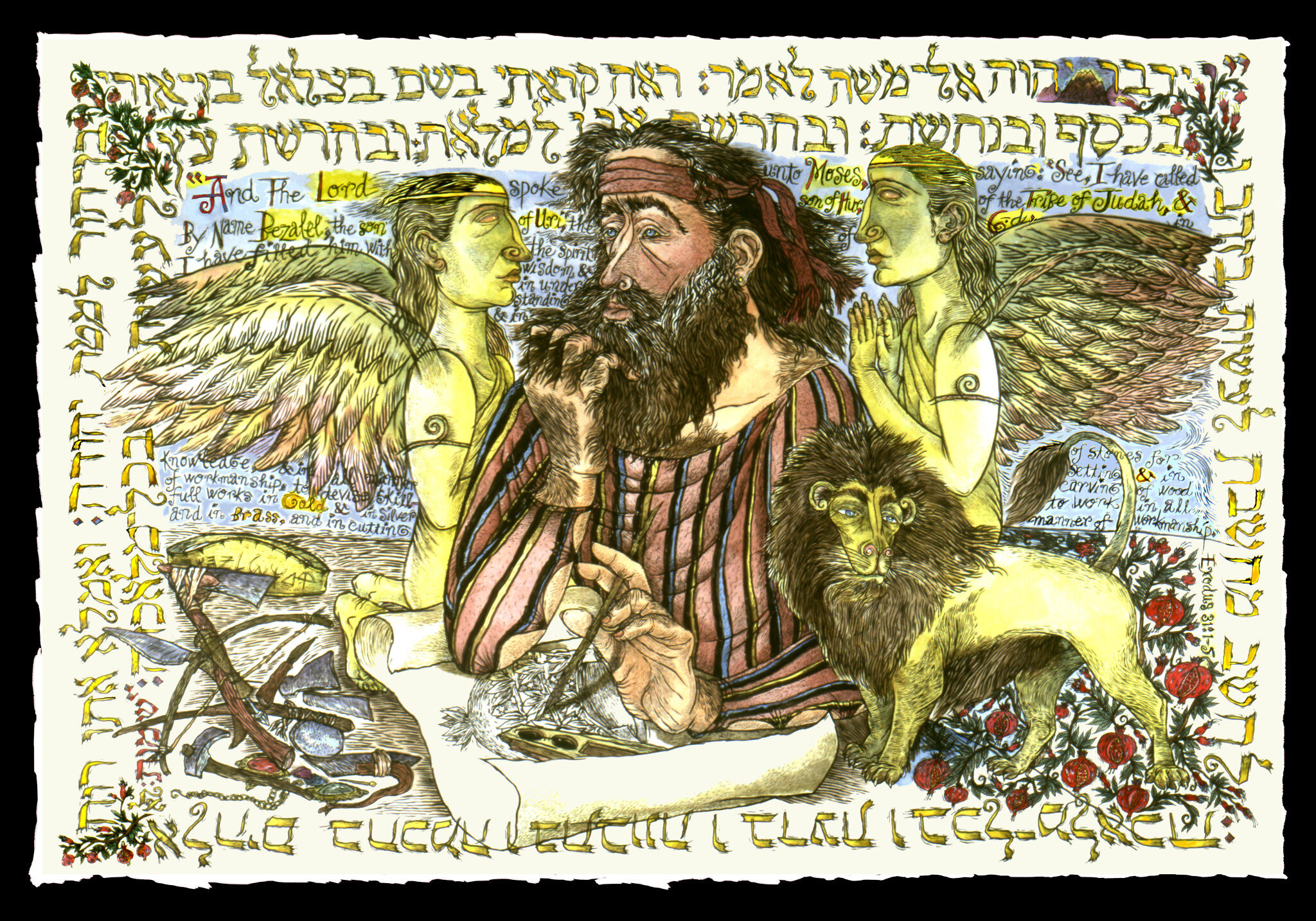
For decades, artist Ilene Winn-Lederer has explored Judaism’s intricacies through ink, paint, pencil and other materials. From Oct. 12 to Jan. 4, “Between Heaven & Earth,” an exhibition at Beit Kulanu, will showcase the artist’s nearly lifelong examination of Jewish themes.
Featuring dozens of pieces delving into historical Jewish personalities and practices, the Shadyside-based show is timed to help attendees “think more introspectively of the new year and the possibilities ahead,” Mayda Roth, Beit Kulanu’s director of development said.
Arriving weeks after Yom Kippur, the exhibition boasts several works, including “Abraham’s Altar,” a 1986 piece marking the first in a series of pieces by Winn-Lederer exploring the theme of the “Akedah,” the sacrifice of Abraham’s son Isaac; “Kedusha,” a 1982 work excerpting a liturgical passage recited during daily services; and “Bezalel’s Vision,” a 1989 piece focusing on the biblically-mentioned craftsman.
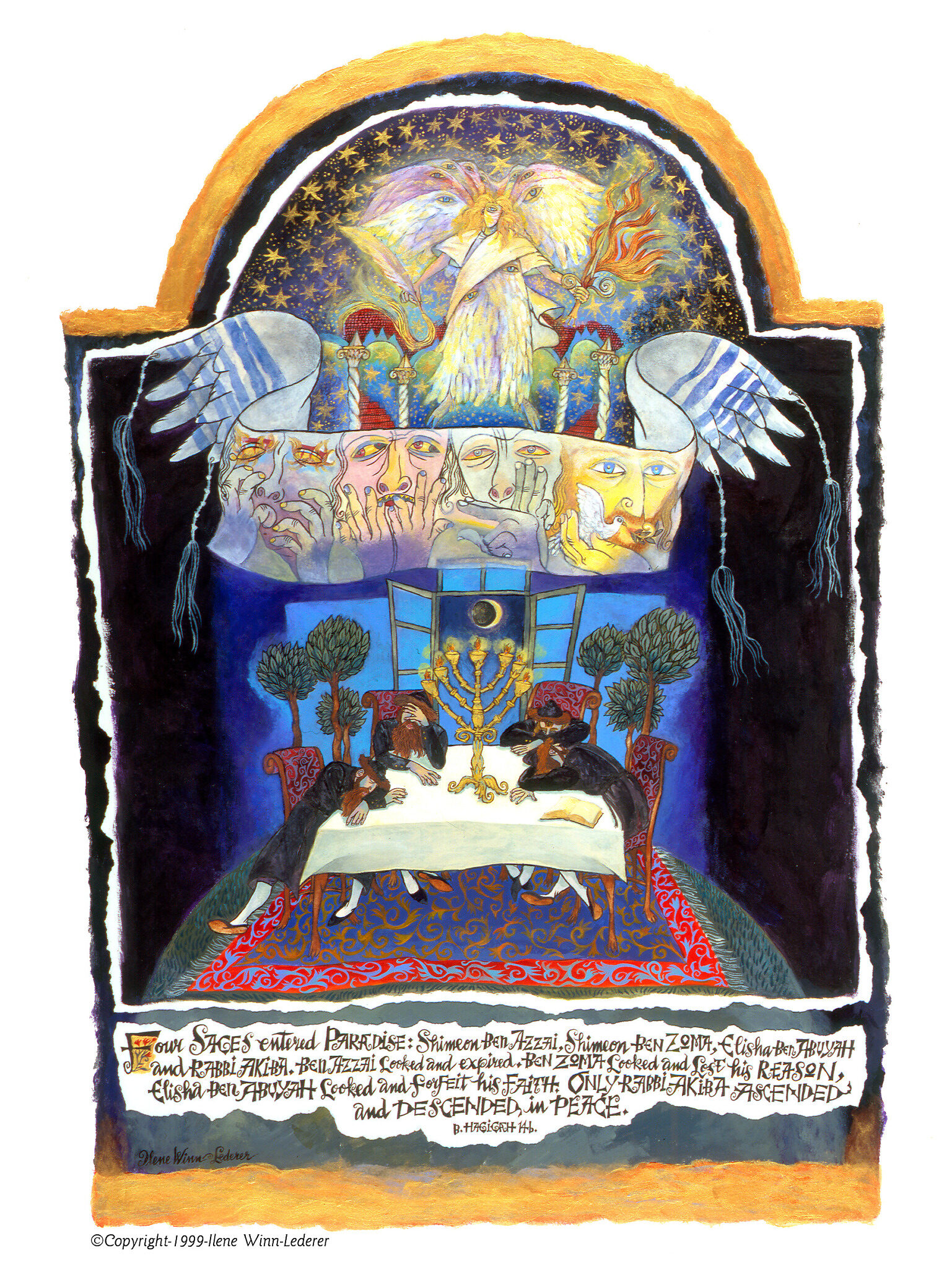
Also included within the exhibition is “Journey to Paradise,” a 1996 work revisiting a rabbinic tale about four Torah scholars who entered Paradise and the results of that visit; and “Deborah: Judge & Prophetess,” a 1998 creation grappling with Deborah’s place within ancient Jewish history given the absence of biblical descriptions regarding the judge and prophetess’ physical appearance, age or personality.
Speaking with the Chronicle as a lead-up to the show, Winn-Lederer, 79, said her connection to Jewish art began nearly 60 years ago.
Born in Chicago, and speaking solely Yiddish until age 5, “I was not raised in an Orthodox or strictly observant household,” she said. “My parents went to shul on the High Holidays and that was about it.”
Still, Winn-Lederer was involved in ATID, a Jewish youth organization based in Skokie, Illinois, and attended Camp Hadar in Clinton, Connecticut, at age 18.
Unlike her friends and campmates who had day school educations, spoke Hebrew and “knew a lot about Judaism,” Winn-Lederer did not, she said. “They christened me with a Hebrew name, and I began to learn.”
With help from a friend, Winn-Lederer pondered the second commandment, which forbids creation of sculpted images or any likenesses “of what is in the heavens above, or on the earth below, or in the waters under the earth.”
Already cognizant of her talents, Winn-Lederer said she “began to think about the gifts that I have and how I could best serve my faith.”
Over the years, she created individual pieces, published books and continued mining her abilities. Through private creations and public works, including banners representing the 12 tribes of Israel hanging above the Squirrel Hill Jewish Community Center’s pool, Winn-Lederer has enriched Jewish life.
“They’re just so poignant and beautifully designed,” Roth said of Winn-Lederer’s works. “The colors are beautiful. I can’t find enough adjectives to describe the feelings that I get from her artwork.”
In 2009, Winn-Lederer published a collection of illustrations covering the 54 Torah portions. Representing five years of research and labor, “Between Heaven and Earth: An Illuminated Torah Commentary” presents a two-page spread for each parsha, as well as an “Artist’s Notes” section in which Winn-Lederer explores the narratives, symbols and personal ideas propelling each illustration.
Although the upcoming exhibition shares the same name as that book, the show includes additional pieces while striking a familiar sentiment.
“Between Heaven and Earth” represents “where I am,” Winn-Lederer said. “I’ve got my head in one place and my skills in another.”
The artistic process requires more than taking pen to paper, she continued. “Making Jewish art involves a heck of a lot of research. I mean, there’s just so much. With every new piece that I make, it only teaches me how much I don’t know. I’m always learning something. I’m always open to new ideas, to new concepts.”
A retrospective is a chance to spread that sense and foster growth.
Hopefully, attendees will “go out and do their own research,” Winn-Lederer said. “We’re all on a voyage of discovery of one sort or another — and it’s not just sitting in a boat watching the waves pass by. It’s an act of participation, learning — and so I’m hoping that my works will inspire people to do that and maybe even create their own.”
She knows, she said, there will be some who question their own abilities: “I hear so many people saying to me, ‘Oh, I can’t draw a straight line.”
Such doubt prompts a simple response, the artist continued. “You know what, I can’t either without a ruler.” PJC
Adam Reinherz can be reached at areinherz@pittsburghjewishchronicle.org.
comments