
Pittsburgh painter Aaron Gorson revisited in new book and talk
He understood 'in a really gut way what was so powerful about Pittsburgh culture and the Pittsburgh environment back at the beginning of the 20th century'
A painter known for capturing early 20th-century Pittsburgh is receiving renewed attention. Aaron Gorson, a Lithuanian Jew who moved to Pittsburgh via Philadelphia, is the subject of Maxwell King’s “Fire in the Night Sky.”
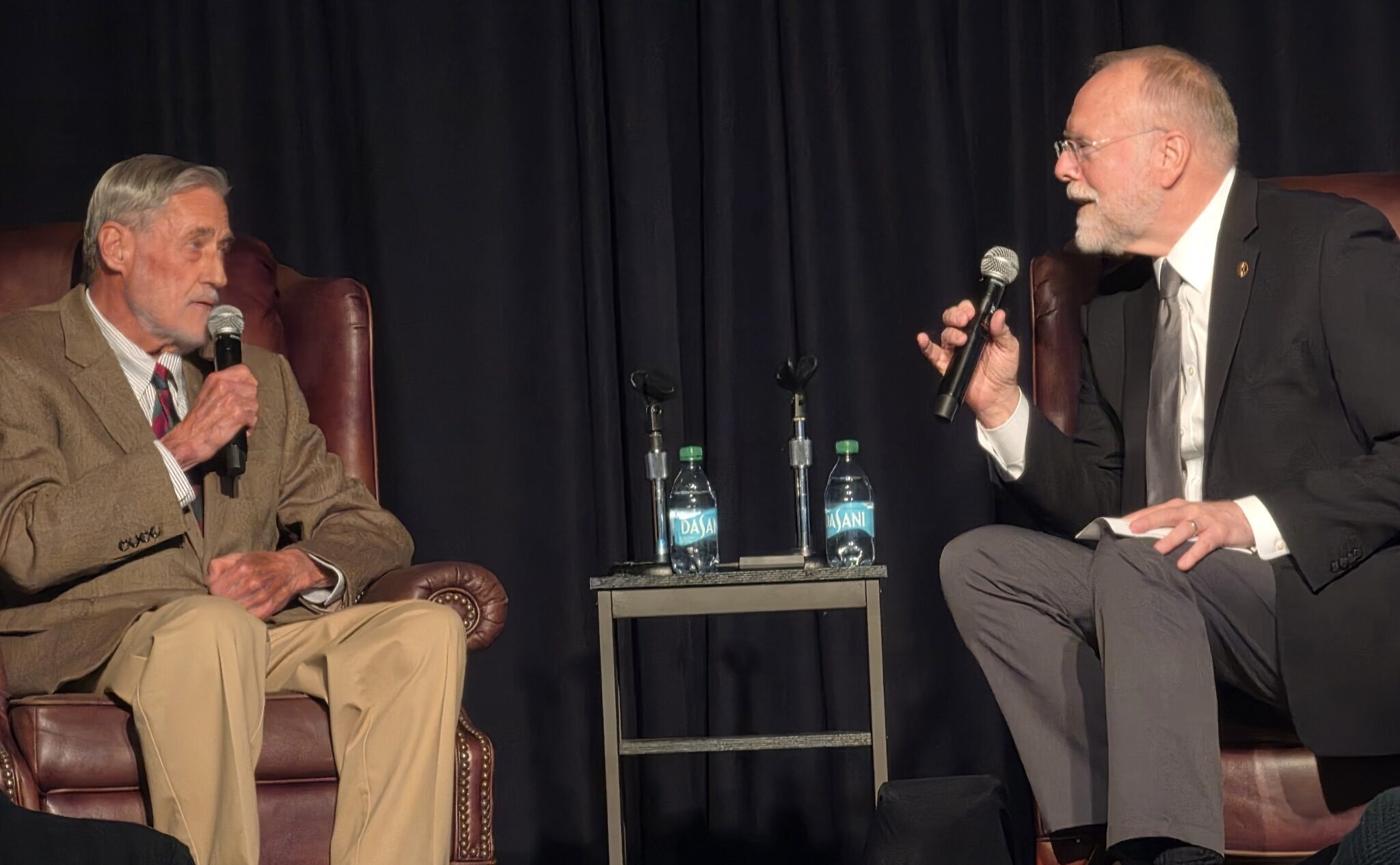
King, an author and former Philadelphia Inquirer editor, who has penned biographies of Fred Rogers and John Kane, discussed his newest book on Sept. 22 at the Heinz History Center.
“Gorson was a really big deal in this town,” 115 years ago, King said. “He was the leading industrial landscape artist of his time. He made his fame painting the steel mills.”
More than simply putting images on canvas, Gorson “got Pittsburgh,” King said. He understood “in a really gut way what was so powerful about Pittsburgh culture and the Pittsburgh environment back at the beginning of the 20th century.”
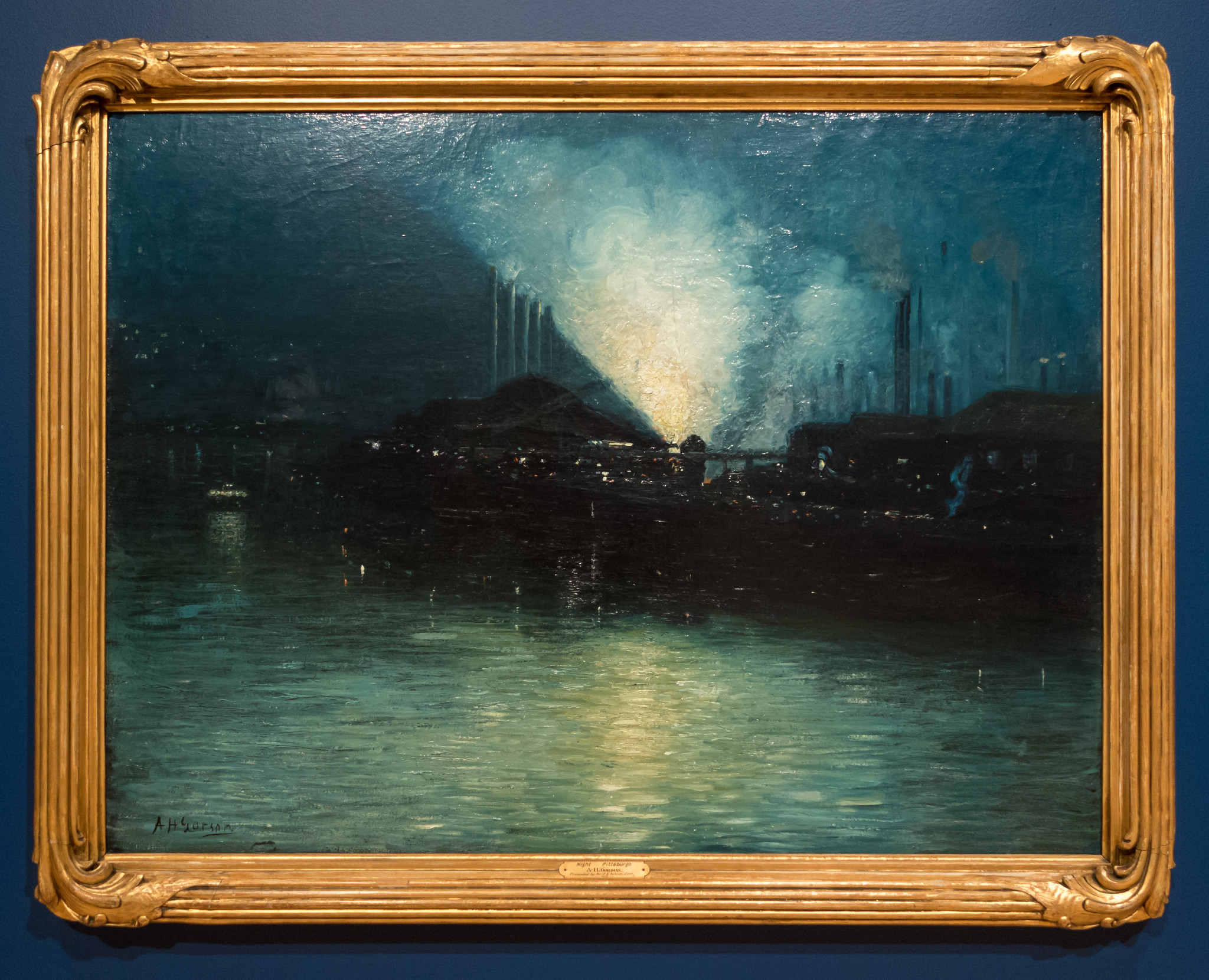
Gorson painted Pittsburgh between 1903-1921, a period when Pittsburgh “dominated the world in the production of steel, not just quantity of steel, but quality,” King said. “Steel was utterly changing civilization. Everything in the 19th century was wood and iron. In the 20th century, everything became steel. Bridges could be 20 times as long because they were made of steel — opening up America. Buildings could be 30 times taller because of steel infrastructure, leading to the building of metropolitan areas all over the country, fueling the change from an agrarian society to an urban society. Ships became steel — they could carry literally 40 or 50 times as much cargo because they were steel. Airplanes, automobiles, implements of war, machine goods, the things that people had in their homes, stoves, refrigerators, everything became steel.”
Gorson appreciated the majesty of steel and depicted it through his idealized portraits of the mills. And though the painter is best remembered for his commitment to showcasing industrialization, he actually had dedicated himself to portraits in Philadelphia first, King said.
It was there, in the City of Brotherly Love, that Gorson’s life forever changed, King continued.
J. Leonard Levy, a patron of Gorson’s, recognized the young painter’s talent and helped him enroll in the Pennsylvania Academy of the Fine Arts.
The Philadelphia-based institution, according to King, was the” leading art school in America.”
Levy then sent Gorson to the Académie Julian, a private art school in Paris, but when Gorson returned, Levy had moved to Pittsburgh to become the rabbi at Rodef Shalom Congregation.
“Gorson was struggling, and he let Levy know that. So Levy brought Gorson here to do two huge canvases, each one 7-by-12 feet, to go on either side of the bimah in the front of the synagogue,” King said.
Though the canvases were lost — presumably after Rodef Shalom’s move from downtown to Oakland — much of Gorson’s other work remains.
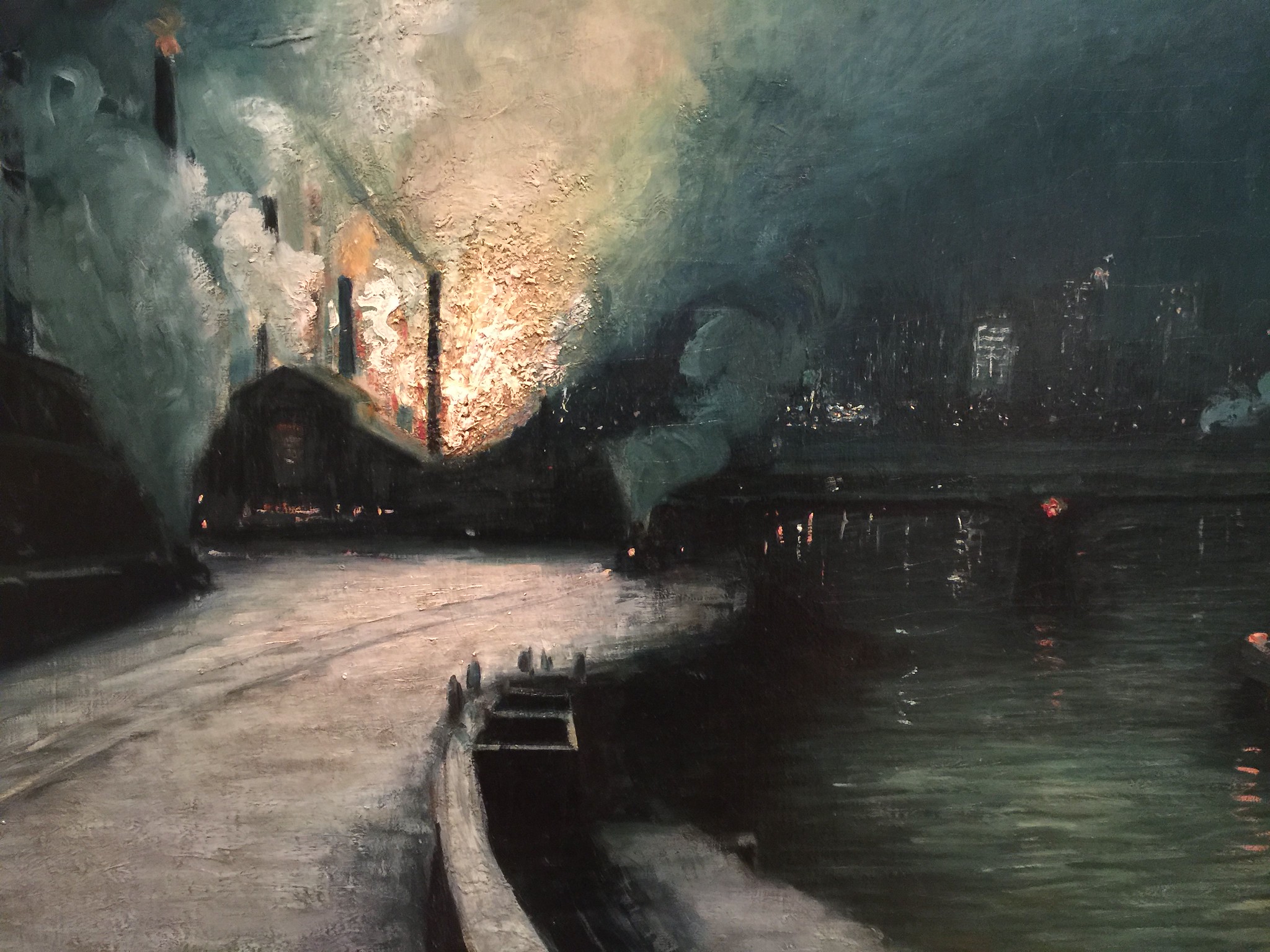
King said he viewed nearly 100 paintings by Gorson as part of writing “Fire in the Night Sky.”
Most of the works are “still in western Pennsylvania,” and though many are held by museums, institutions and universities, several private collectors have passed them down from generation to generation because the works represent “their history as a family,” King said.
North Side resident Susan Benn told the Chronicle she appreciated learning more about Gorson given her family’s Lithuanian Jewish history and former life in Philadelphia.
King’s presentation was not only inspiring but offered a “whole new way of looking at Pittsburgh,” she said.
Pittsburgher Ellen Roth described the event as “marvelous” and called King a “very thoughtful researcher and excellent presenter.” The talk was another reminder of how a talented Jewish artist “brought the steel mills to life.” PJC
Adam Reinherz can be reached at areinherz@pittsburghjewishchronicle.org.
comments