
Point Park graduate’s Poland exhibition illuminates little-known Jewish lens maker
'We won't always know everything about Lore’s story, but I think this sense of imagination and tenderness really fosters a sense of empathy and connection'
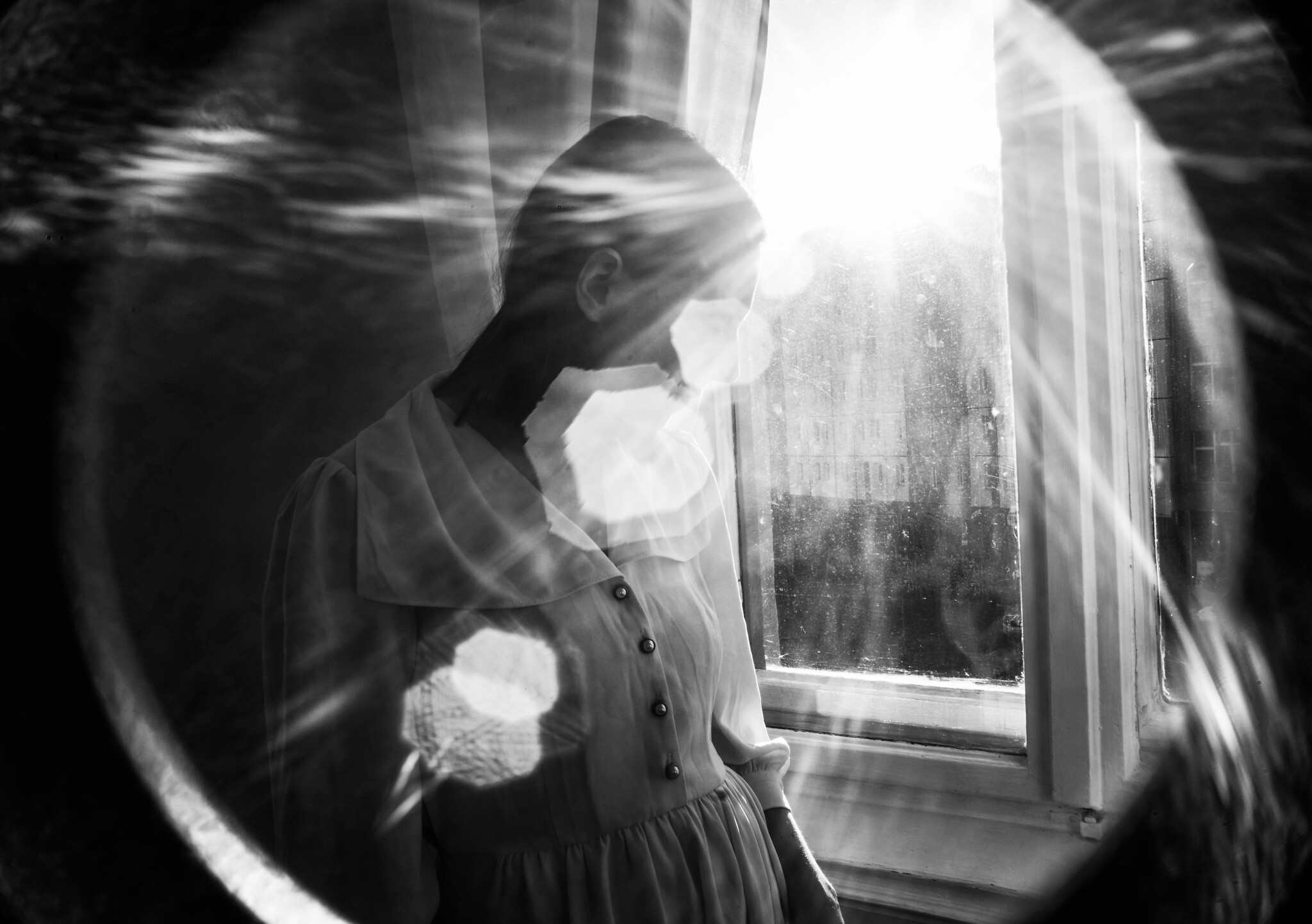
A Pittsburgh-trained photographer captured glimpses of a Jewish life lost nearly 80 years ago to horror. The images, which are on display at ARCHER at House 88 in Oświęcim, Poland, as part of the “Ground Glass” exhibition, concern Lore Sternfeld, an engineer at Astro-Berlin, a German optical company that made lenses used by Nazi propagandists.
Hannah Altman, a Point Park University graduate who majored in photography, partnered with the Counter Extremism Project, an international policy organization, to use historic Astro-Berlin lenses to depict, and imagine, Sternfeld’s final months before her Jan. 29, 1943, deportation from Berlin to Auschwitz.
At the time of her deportation, Sternfeld, 27, was a precision engineer at Astro-Berlin. In fact, “Astro-Berlin actually wrote to the Nazi Party to complain that they owed them money because she had a bunch of lenses in her apartment when she was deported,” Altman, 31, said by phone from New Jersey.
About a year ago, CEP acquired several lenses made during Sternfeld’s Astro-Berlin tenure. In collaboration with Focus Canning, a London-based company, CEP had the lenses restored and retrofitted to a modern camera. CEP contacted Altman and asked the Jewish photographer to use the pieces and retrace Sternfeld’s trek from Berlin to Auschwitz.
Although Altman had photographed “Jewish ritual objects and folklore for about seven or eight years,” she said she was surprised by CEP’s request. “I’m not a documentary photographer.”
Still, the former Pittsburgher was interested in Sternfeld’s story.
Altman, 31, said she and the late artist shared striking similarities: Both were Ashkenazi Jews who worked with lenses, both lost family in the Holocaust and “we were both quite young.”
In lieu of photographing the scant details of Sternfeld’s life, such as former residences, Altman said she told CEP that she “really wanted to take a more sort of storytelling, fictional, narrative approach to the work.”
CEP acquiesced, and the Jewish photographer traveled to Berlin.
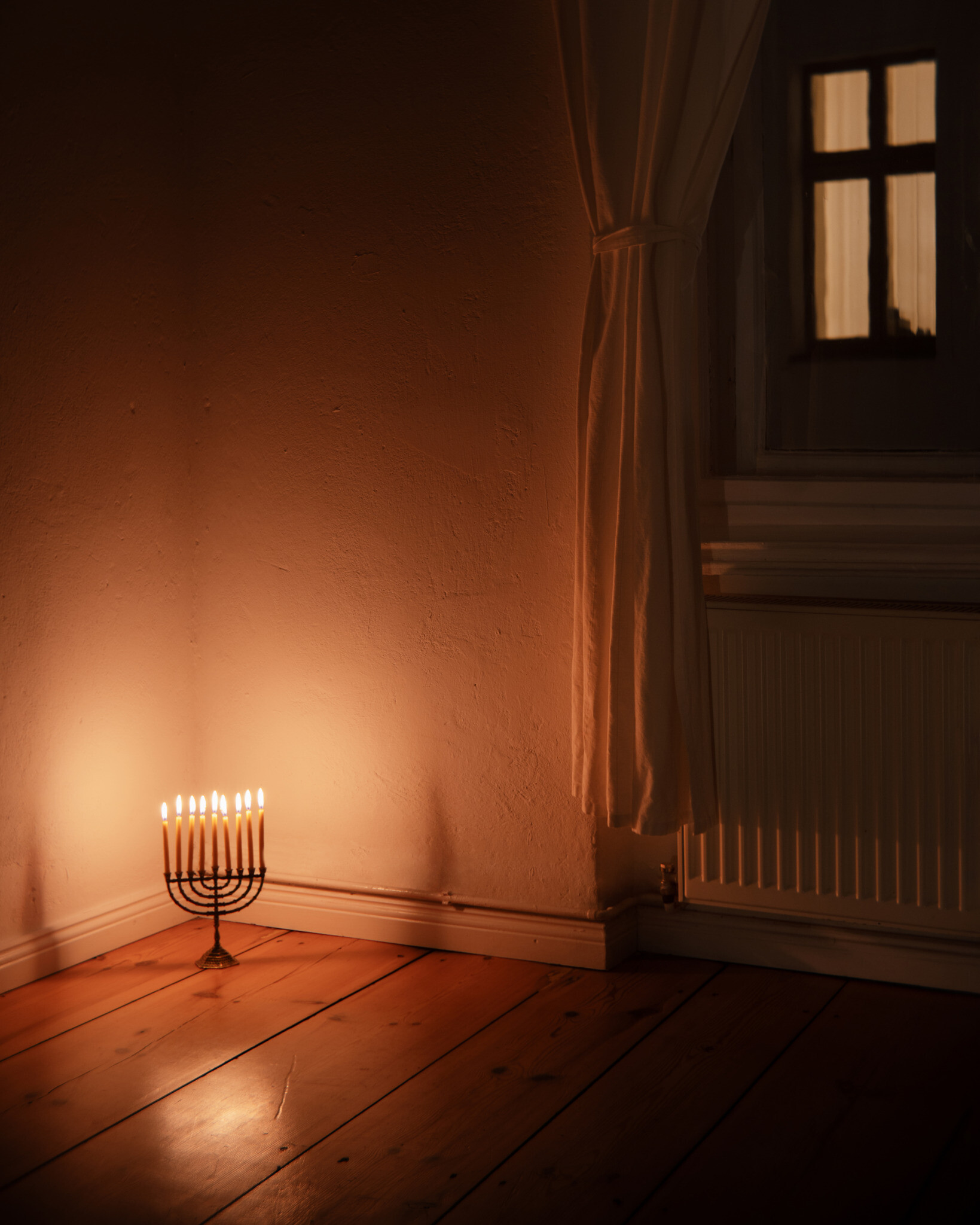
A wrinkle to the project, Altman said, is that CEP also acquired House 88. Located directly adjacent to the Auschwitz-Birkenau concentration and death camps, the home was formally occupied by camp commandant Rudolf Höss.
Given CEP’s various acquisitions, “all of these things started to come together,” Altman said. House 88 granted space to work and “tell a really interesting story about what we do know about Lore Sternfeld — and what we do know about the lenses — but also about what we don’t know.”
Altman’s quest to mine and wrestle with Sternfeld’s historical archive is evident throughout “Ground Glass.” The exhibition, which includes evocative self-portraits and haunting depictions of inanimate pieces, is a mashup of personalities relying on period-appropriate details.
“Every dress that I’m wearing, my haircut, my nails, every object that is included, all of the menorahs, all of the furniture, every single small detail that builds up the world of Lore Sternfeld is very intentionally sourced,” Altman said.
“Ground Glass” isn’t merely a cataloging of old items, nor is it simply a depiction of Altman, or even Altman as Sternfeld. The photographs exist in “this sort of strange space,” she continued. “Instead of being self-portraits or a formal portrait of somebody else, they’re just like our bodies combined, and there’s this real tension between what feels like it’s more me, and what feels like it’s more her.”
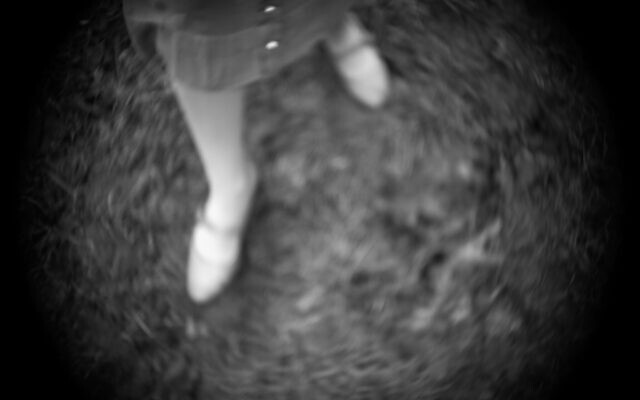
Adding complexity are the lenses themselves, which have “really unique characteristics because they were made before a lot of standardization,” Altman said. “They have a lot of interesting lens flares, and they have these moments of extreme vignetting and tunneling, and they have a lot of things that kind of fall out of focus.”
Sharpness and exactitude are purposely eluded in “Ground Glass,” Altman said. “It’s really this sort of collapsing of my body, her body, the camera lenses, and how they sort of interact with the environment and the light. I think that creates this kind of world.”
Further texture stems from the exhibition’s placement.
Although CEP has modernized some of the former Höss house for use as an exhibition space, rougher portions of the home solidify the educational experience, Altman explained.
Some areas have “peeling wallpaper, and it’s not quite abandoned, but it’s definitely a very raw space,” she said. “If you have the opportunity to see the work in person, it feels like a powerful reclamation to have it living in this house.”
Altman, whose “Ground Glass” photos were featured in The New York Times, said that she hopes the images inspire meaning wherever they are seen.
“There’s a very certain kind of method that has developed around Holocaust education,” she said. “A lot of it is focused on numbers and data, and finding out as much as you possibly can about people.”
In the absence of details, however, life remains.
“Ground Glass” conveys that with “gentleness and care and tenderness and poeticism,” she said. There’s an “acknowledgement that we won’t always know everything about Lore’s story, but I think this sense of imagination and tenderness really fosters a sense of empathy and connection.” PJC
Adam Reinherz can be reached at areinherz@pittsburghjewishchronicle.org.
comments