
A renewed Iran war is only a matter of time, Israeli experts warn
In a regional stalemate, Iran controls the Strait of Hormuz, while the U.S. applies economic pressure.
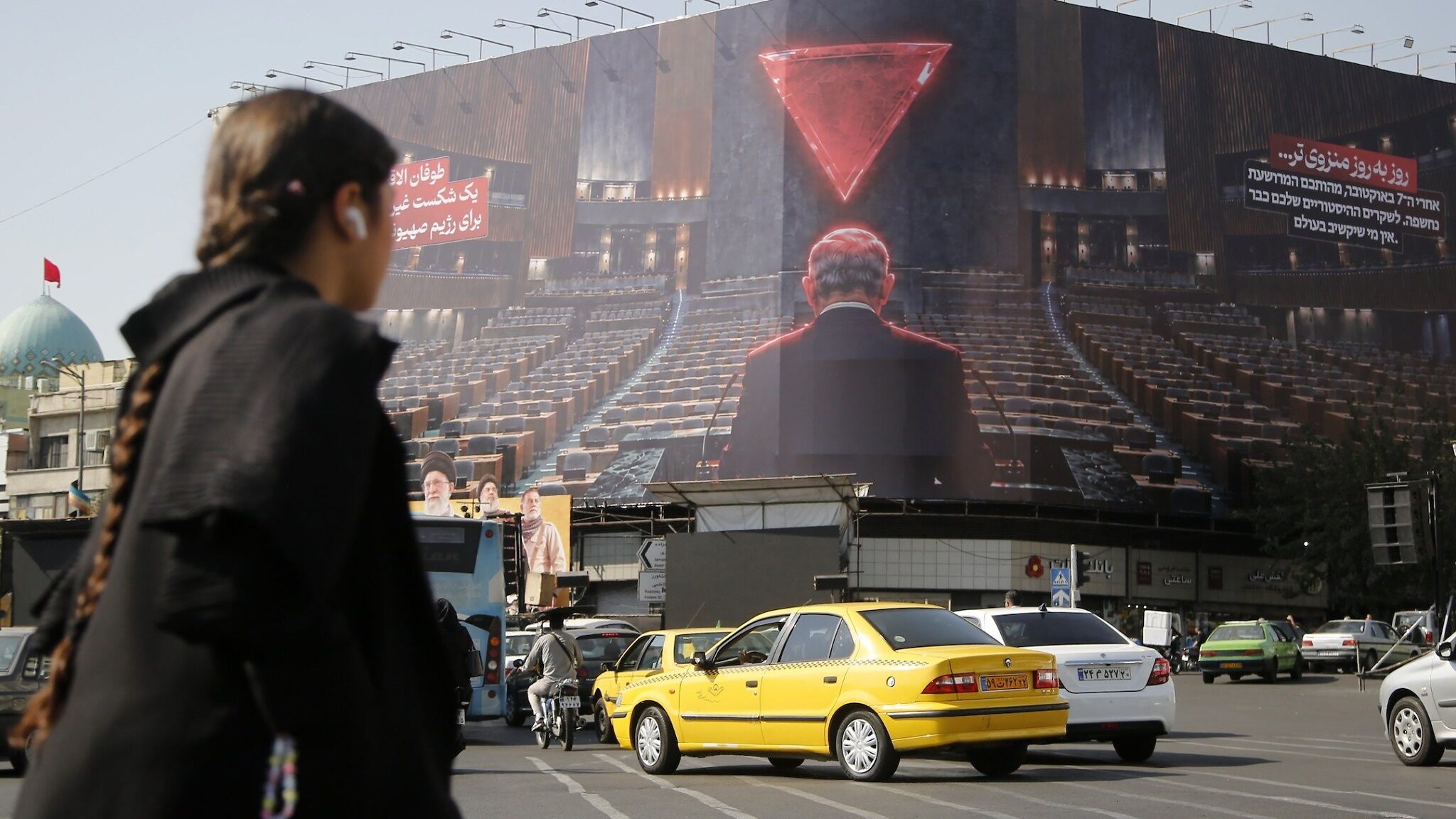
(JTA) — President Donald Trump and Israeli Prime Minister Benjamin Netanyahu have said they don’t want to see a renewal of the war against Iran – but they are issuing stark public warnings to Tehran that could bring the simmering conflict to a boil.
Trump endorsed Netanyahu for Prime Minister on Sunday, explaining that his leadership was critical to any renewed Iran campaign.
A third U.S. aircraft carrier is expected to arrive in the Middle East soon, amid signs that Washington is preparing for a possible resumption of hostilities, even though Israel’s Oct. 27 election and the American midterms on Nov. 3 are looming.
In multiple interviews, including with Channel 14, Netanyahu stressed that, “If Iran makes a mistake and tries to attack us, it will simply make the mistake of its life.” But he added, “It’s not convenient for us” for war to resume weeks before a national election in a country with no absentee voting.
Trump, for his part, told reporters in Atlanta last week, “Wait til you see what we do to Iran.”
Israeli experts have warned that renewed conflict is only a matter of time as an uneasy standoff has continued, with Iran disrupting shipping through the Strait of Hormuz from where 20% of the world’s oil flows. At the same time, the U.S. is maintaining its economic pressure on Tehran.
High oil prices have risen 46% to $104 per barrel since the Feb. 28 attacks, pushing gasoline prices up 46% to $4.36 per gallon.That increase could give Trump another incentive for another strike, which would renew the war that was paused in April.
“Without a diplomatic settlement, the chances of escalation are very high,” Danny Citrinowicz, a senior researcher at the Institute for National Security Studies, told JTA.
Trump has been unable to achieve a diplomatic agreement. Both Tehran and Washington believe they won the two-month war earlier this year. In practice, however, the Islamic regime is still in power with capacity to recoup its nuclear and ballistic missile losses and continues to exert some control in the Strait. All of which makes it difficult for Israel and the U.S. to show that they won.
“Trump cannot declare victory now, but he also cannot leave without doing something,” said Citrinowicz, who was also the former head of the Iran branch in the Israeli military intelligence directorate’s Research and Analysis Division. “On the other hand, the Iranians cannot allow the naval blockade to continue, so they will keep attacking tankers.”
Avner Vilan, a former senior Israeli security official and an expert on Iran, said “Trump has said he won’t attack before the midterm elections, and I think he has good reasons to hold off.”
He stressed, however, that the risk of escalation certainly exists. “We’re in a situation where both sides continue to exert pressure on each other, without any lasting agreement in place,” he said. “Everyone is on edge, and all it would take is one significant incident to send things spiraling out of control.”
Gil Murciano, CEO of Mitvim, the Israeli Institute for Regional Foreign Policies, said the unpopularity of the war with Iran among the American public makes a U.S.-initiated escalation before the midterm elections less likely. A Pew Research Center poll released last week found that 64% of Americans disapprove of how President Donald Trump is handling U.S. military action against Iran.
A poll conducted by the Institute for National Security Studies last month found that Israelis are divided over whether Israel should launch a preemptive strike on Iran, with opponents slightly outnumbering supporters.
The New York Times reported that officials in the Trump administration had discussed a short, intense campaign lasting about three days, focused on Iran’s missile and drone arsenal, potentially alongside strikes on energy infrastructure and Islamic Revolutionary Guard Corps headquarters.
The Atlantic reported that the White House has asked the Pentagon to develop strike options against Iranian targets that could be carried out ahead of the midterm elections.
“A three-day campaign that would, for example, include a strike on Pickaxe Mount would allow Trump to say that he had obliterated Iran’s nuclear project, won the war and was ending the conflict,” Citrinowicz said. “That is one option. Another is to strike Iranian infrastructure facilities.” He cautioned, however, that even a planned three-day campaign could lead to a much broader and more prolonged escalation.
Mitvim’s Murciano said the main factor that could lead the Trump administration and Israel to launch another military campaign is the concern that “Iran could rebuild its capacity to produce surface-to-surface missiles and restore its drone capabilities in a way that would allow it to attack Israel and other countries in the region, as well as strengthen its ability to disrupt shipping in the Strait of Hormuz.”
He added that another key concern for Israel and the U.S. is the possibility of Iran making a breakthrough toward developing a nuclear weapon.
Vilan, the former Israeli security official, stressed that Israel’s interests do not fully align with those of the U.S.. “For Israel, a nuclear-armed Iran would pose a paramount strategic threat, and Iran must not be allowed to acquire nuclear weapons,” he said.
“For Trump, preventing Iran from obtaining a nuclear weapon is an important goal, but he also wants to end the war, reopen the Strait of Hormuz and bring down energy prices,” he added. “Another military campaign could actually take him further away from those objectives.”
Trump and other administration officials have said publicly they believe Iran is at a point of weakness. “Trump may think that Iran is so weak that just one more push will make it collapse. I think that is a mistake,” Citrinowicz said.
The analysts believe an escalation is more likely after the midterm elections.
Murciano noted that if Trump loses the midterm elections and loses his ability to shape domestic policy without control of Congress, he may shift his focus toward cementing his foreign policy legacy.
Vilan cautioned that while some of the political constraints on Trump may ease after the midterm elections, that does not necessarily make another military campaign against Iran worthwhile.
“If the goal is to force Iran into a nuclear deal, it needs to be explained why another round of strikes would achieve what previous strikes have not,” he said. “It is hard to see how additional military force would change Iran’s position. If the goal is to bring down the regime, it is equally unclear how another round of strikes would bring that about — and, in particular, whether it could be achieved in the next two years, before a new president takes office in the White House,” the former senior Israeli security official said.
Iran could also initiate an escalation itself if it believes that Israel or the U.S. is preparing to attack, said Citrinowicz.
“It does not want to be caught by surprise for a third time. The likelihood of that happening is higher than it was in the past, but the Iranians still prefer a gradual escalation over a broad and immediate one,” he said.
Vilan added that “the Iranian regime is facing a dilemma. On the one hand, the economic pressure on it is immense, and time is not necessarily on its side. On the other hand, it knows that an all-out war could threaten its survival.”
Another factor that could come into play is the Houthis, Iran-backed rebels in Yemen who have seized significant territory along the Red Sea coast in recent weeks and disrupted shipping through the Bab el-Mandeb Strait, adding to pressure on the global economy.
“The Houthis are a very important factor in the regional conflict, and their recent gains illustrate the limits of American military superiority,” Vilan said.
Their impact on the prospects of another campaign against Iran could cut both ways, he added. “As the campaign in Yemen becomes more complicated, the Americans have less incentive to open another front. On the other hand, a major escalation by the Houthis could draw the U.S. into a broader military engagement, potentially bringing an escalation with Iran closer.”
Meanwhile, diplomatic contacts between the U.S. and Iran continue through intermediaries. The New York Times reported that the White House believes progress has been made in the talks. PJC
comments