
Connecting past and present: A seminar bridges Jewish history across northern Europe
Curricula addressing the Holocaust or European Jewry often include 'Auschwitz and Poland.' Less mention is made of post-war Soviet life and the struggles and strengths experienced today. With stops in Lithuania, Latvia, Estonia and Finland, a Classrooms Without Borders seminar wants educators to know 'this is the place'
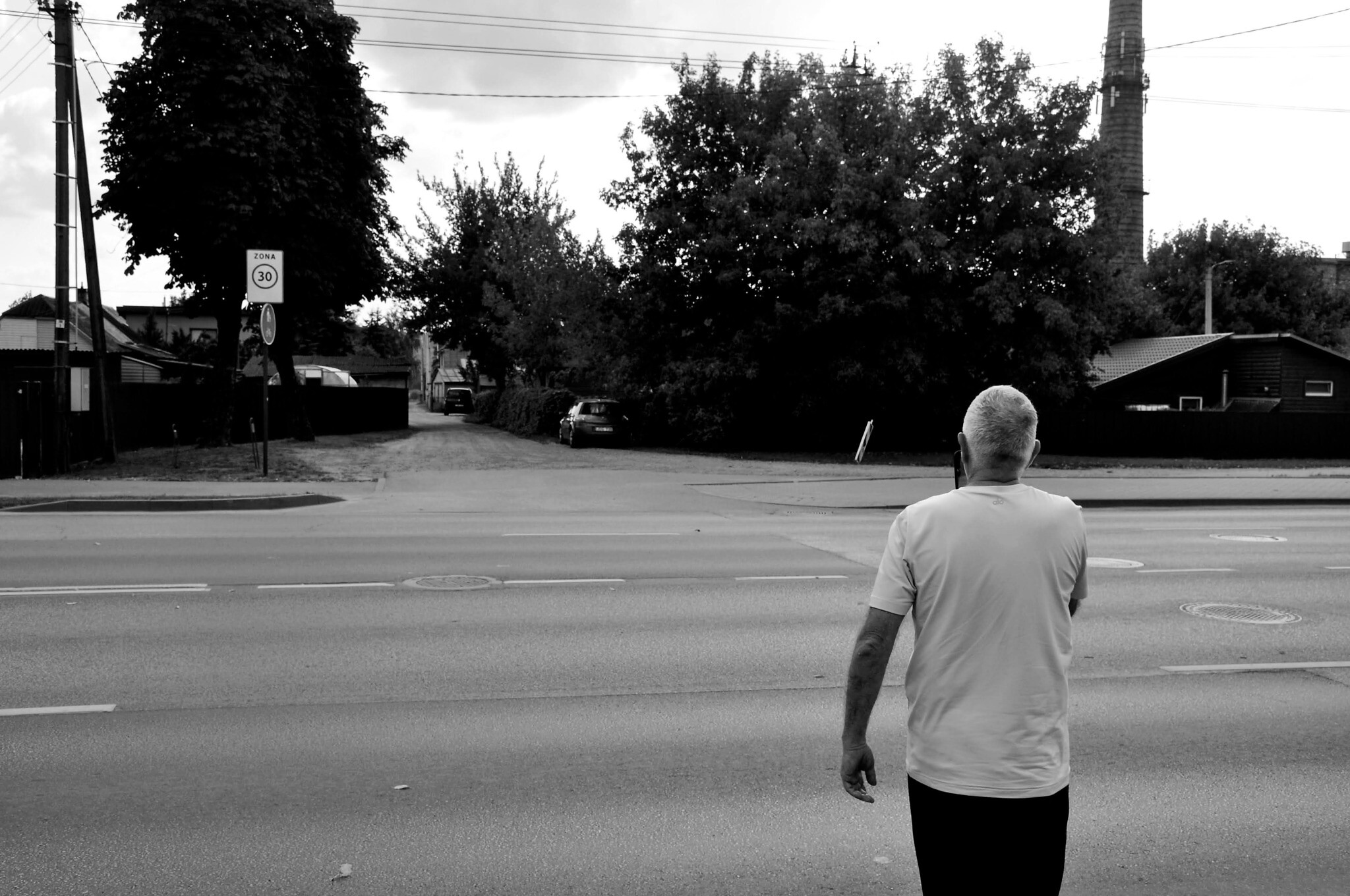
Pittsburgh Jewish Chronicle Senior Staff Writer Adam Reinherz accompanied educators and lay leaders on a two-week trip to northern Europe. Traveling through Lithuania, Latvia, Estonia and Finland, Reinherz reported on modern Jewish life, vanished communities and the quest to create a new European Jewish story. Coverage relied on dozens of site visits and more than 75 interviews. This is the first of a five-part series.
A September seminar to northern Europe confronted some of the horrors of Jewish history while highlighting paths for a better future. Operated by Classrooms Without Borders, a Pittsburgh-based organization providing experiential professional development for educators, the tour introduced participants to Lithuania, Latvia, Estonia and Finland through the eyes of guides, historians and local residents.
Fourteen travelers — including this reporter — began the program on Sept. 7 in Vilnius’ Old Town, where they traversed Pilies Street, a historic thoroughfare that guide Ernest Irens called the “main artery of the city for 600 years.”
Though Lithuania’s Jewish presence dates to the 14th century, the 1918 adoption of the Act of Independence gave Lithuanian Jews a new start, said Irens, an educator at Vilnius’ Sholom Aleichem ORT Gymnasium. Breaking from the Russian Empire, independence represented the “promise of autonomy.”
While Lithuanian Jewish history includes periods of persecution, there’s also a storied past. Between the intellectual contributions of 18th-century sage the Vilna Gaon, the 1886 printing of the Vilna Shas (the definitive edition of the Talmud), the city’s maintenance of 130 synagogues before World War II — when its Jewish population totaled 80,000 — Vilnius was considered Yerusholayim d’Lite (Jerusalem of Lithuania).
Educators cannot properly teach history, or begin explaining the Holocaust, without understanding Vilnius’ former “vibrancy,” CWB founder and executive director Tsipy Gur said.
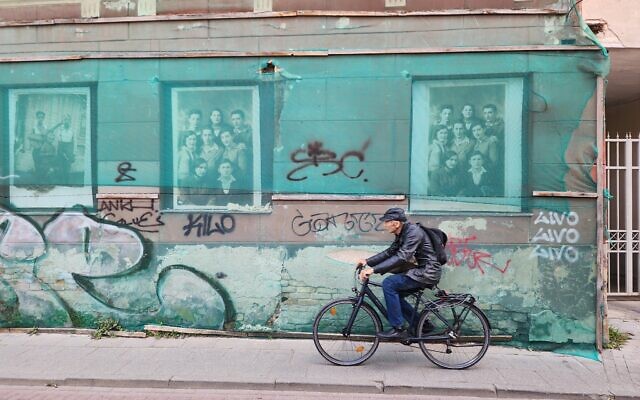
For months, Gur and CWB staff designed an itinerary to showcase a culture that had changed drastically.
Walking tours through the former Jewish quarter and ghetto can help people make meaningful connections, said Daniel Gurevich, 46, co-owner of the Vilnius-based travel company Jerulita Travel. “People who travel here for the first time — this is a magic moment of touching the ground of their ancestors.”
Helping illuminate the past was Hadas Kalderon, an Israeli actress and playwright, who served as artistic director of Israel’s National Theater between 2019-2024.
Kalderon, 49, flew to Vilnius from Tel Aviv to describe a faded landscape once inhabited by her grandfather, Abraham Sutzkever, a Yiddish writer whom The New York Times called the “greatest poet of the Holocaust.”
“This was his city,” Kalderon said.
Speaking near the stage of the ghetto’s still-standing theater, Kalderon said the venue once gave “life” to poets, painters, musicians and intellectuals.
Between April 26, 1942, and Sept. 23, 1943, the theater welcomed 38,000 spectators and hosted 120 performances, according to Yad Vashem, the World Holocaust Remembrance Center.
“That’s how they fought against the Nazis,” Kalderon said. “This was the light in the darkness.”
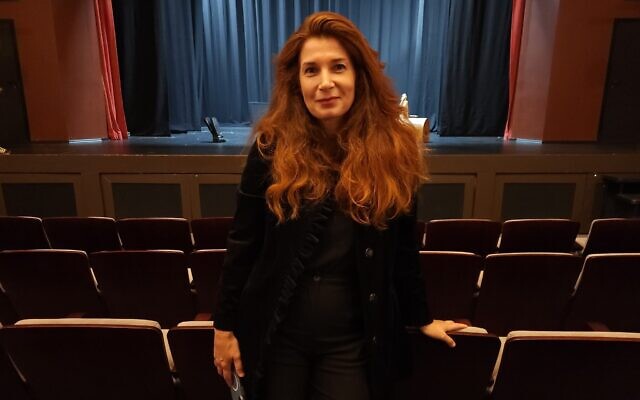
Kalderon escorted CWB participants outside the theater toward the ghetto library.
With nearly 45,000 books and thousands of patrons, the library offered refuge, Kalderon said. “People came here, sat here and found a safe place for their soul.”
On September 23, 1943, as the ghetto’s final liquidation began, the library was forced to shut down. Most ghetto residents were killed at the nearby Ponary Forest.
By late 1944, as many as 75,000 people were murdered at Ponary, “the vast majority of them Jews,” according to the U.S. Holocaust Memorial Museum.
Standing near a memorial in the wooded area, CWB participants listened to “Shtiler, Shtiler,” a Yiddish song, whose translated lyrics begin, “Quiet, quiet, let’s be silent, dead are growing here. They were planted by the tyrant, see their bloom appear. All the roads lead to Ponary now, there are no roads back. And our father too has vanished, and with him our luck.”
“I love trees,” seminar participant Veronique Sriqui, 68, told this reporter. “But I think I’m never going to look at trees the same way.”
On the road again
For much of the nearly two-week trip, CWB travelers moved between sites by bus.
After visiting the Rudninkai forest, 15 miles south of Ponary, seminar participants saw grass-covered bunkers once occupied by partisans.
At their “height,” Irens said, there were fewer than 1,000 partisans.
Understanding an unimaginable time can only begin by “visiting the sites,” Gur said.
In Kaunus, Lithuania’s interwar capital, seminar participants explored the city’s Jewish heritage.
Mario Czonstkowsky, one of several lay leaders and CWB board members on the seminar, noted, “This is the place that my mother, my grandparents and my family were part of.”
Standing on his mother’s former street, Czonstkowsky, 70, recalled her being “very kind” and a “beautiful woman” who struggled with hunger, as did many Kaunus residents at the time.
Czonstkowsky said his mother told him that despite hardships, the city had a “strong Jewish community.”
After crossing the road beside his wife, Rebeca Czonstkowsky, and FaceTiming relatives, Mario Czonstkowsky said it was important to tell his family about his visit to Kaunus, “to let them know that we were here.”
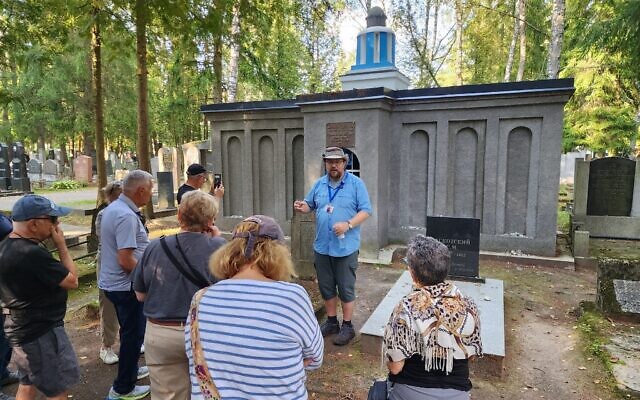
In Riga, Latvia, guide Lena Shpungina, described a recent history similar to Lithuania’s.
Latvia declared independence in 1918, however, Soviet and German occupation followed. After World War II, and another spell of Soviet occupation, Latvia again declared independence in 1991. Since the early 1990s, Riga has experienced a small rebirth of Jewish life, but the growth comes after a bygone existence was largely obliterated then erased again.
Life, death and life
Standing near the Old Jewish Cemetery, which operated between 1725-1920, Shpungina said at the end of August 1941 local newspapers published notices of a ghetto being opened near the site.
By October 1941, 30,000 Jews were imprisoned there.
The ghetto was the “poorest part of the city,” Shpungina said. “For ghetto prisoners, there was no medicine, no equipment … only one food store, one public bath house. Jews were not allowed to go to cinemas or theaters after the Nazis took control.”
In late November and early December 1941, Germans announced ghetto residents would be resettled “further east,” according to the U.S. Holocaust Memorial Museum. Within weeks, German SS, police units and Latvian aids shot at least 25,000 Jews in the nearby Rumbula forest.
“There were different rumors in the ghetto about what was waiting in the forest,” Shpungina said. “By the time they got there, they could hear the shooting.”
In 1944, to destroy evidence, Germans forced prisoners to reopen mass graves and burn bodies. The Germans then killed the prisoners. The Soviet army liberated Riga on Oct. 13, 1944. Nearly every local Jewish resident had been murdered. The Old Jewish Cemetery, which served as part of the city’s ghetto, was later bulldozed by Soviets and made into a park.
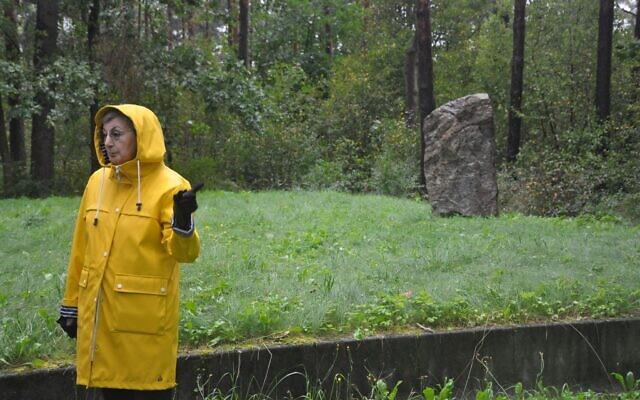
“Jewish life that existed after the war was different,” Shpungina said. Growing up in Riga, under communist rule, “we knew we were Jewish … but only one member of the family had a siddur (prayer book).”
He was from Poland, she added. “After 1991, Jewish life here changed. Our kids had different options than we had.”
Get your education
Inside the JCC Riga, director Inna Lapidus-Kinbere described a slew of in-house programs, nearby Jewish camps and two Jewish schools.
“After the break from Soviet times, we’re trying to rebuild,” she said. “We’re doing it step-by-step.”
Similar tactics and sentiments were expressed by communal leaders and JCC staff in Tallinn, Estonia.
Upon greeting seminar participants at Beit Bella, a modern synagogue boasting large glass windows and open spaces, Rabbi Efraim Shmuel Kot likened Tallinn’s community to a shofar.
“It started out narrow but step-by-step, it’s growing,” he said before sounding the ram’s horn in honor of the approaching Jewish new year.
Among 1.3 million Estonians, about 2,000 are Jewish. Engagement rates, according to the JCC, are “higher than anywhere else in the Baltic states.”
The JCC’s youth center welcomes 360 kids and teens for weekly activities and camping experiences. The Tallinn Jewish School has 365 students. A private Jewish kindergarten has 45 students. Beit Bella has 150 members. More than 1,000 adults participate in one of nearly 250 events per year.
Efforts are made to support the welfare center’s 500 clients, but the community’s focus is on raising the next generation of Jews, JCC director Irina Shlick, 40, said. “Informal education here is their path to a Jewish life.”
During both weekly and holiday programs, Shlick and her small staff work with mental health professionals to ensure the city’s Jewish adolescents feel safe and welcome.
“This is the place to create and express Jewish identity,” she said. And in order to maintain a “sustainable community, it’s important to invest in youth.”
Recipe for community
Seated inside Cafe Kesher, a newly opened kosher bakery in the basement of the Helsinki Synagogue, Chaya Votkin, 52, shared her vision for community: “I want to see this place as a home for everyone.”
Votkin, who was elected president of the Jewish Community of Helsinki in May, spoke to this reporter over the clamor of numerous nearby activities. Within earshot a volunteer welcomed visitors to the library, parents discussed an upcoming trip to Israel for students at The Jewish Community School of Helsinki, challah bakers prepared Shabbat loaves in memory of the mother of the community’s rabbi, adults studied Hebrew or reviewed rabbinic texts, and a choir of Jewish and non-Jewish singers practiced Yiddish songs.
The hubbub, which continued the following evening when teens used the space for a BBYO meeting, follows the community’s biggest question, Votkin said: “How do you create engagement and ownership?”
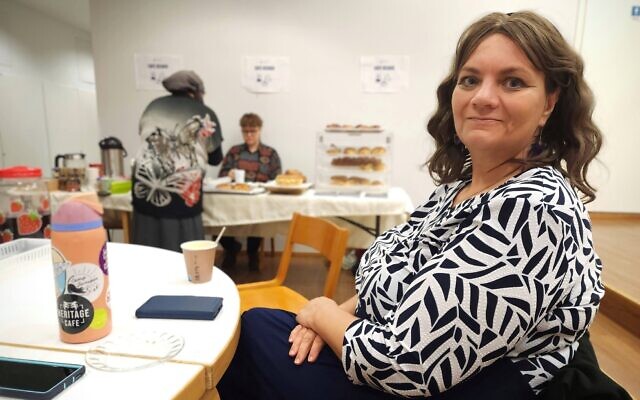
Helsinki has fewer than 1,000 Jews.
Votkin, the first woman to lead the community in nearly 175 years — she’s also observant and a convert — offered a message leaders beyond Finland would recognize: “I just want to encourage people to take initiative, to take responsibility.”
Shortly before leaving Helsinki on Sept. 18, Gur said the Jewish story can’t be understood without tracing its path.
Curricula addressing the Holocaust or European Jewry often only include references to “Auschwitz and Poland.” There’s little mention, she said, of post-war Soviet life and the “struggles” and strengths experienced today.
Classrooms Without Borders plans on offering a similar seminar in 2027. Founded in 2011, the organization has taken hundreds of educators abroad to help develop their instructional tools.
“Teachers don’t travel. They teach in a box. Educators and students must know more,” Gur said. “They need to understand this is the place.” PJC
Adam Reinherz can be reached at areinherz@pittsburghjewishchronicle.org.
comments