
Writer E.G. Silverman returns to Pittsburgh to read at JCC
'When you're writing, it's all internal. It's all in your head. It's all you know on paper. It's all very much just isolated. But when you're doing a reading, you can actually connect with people.'

Decades after leaving Squirrel Hill, a Taylor Allderdice High School graduate is returning to the Jewish Community Center of Greater Pittsburgh to read from his newest collection of published short stories. On Oct. 8, E.G. Silverman, who grew up on Darlington Road and attended Rodef Shalom Congregation, will share excerpts from “Your Only Best Hope.” Released Aug. 11, the work features seven short stories, including “Beacon Home,” a Pittsburgh-based tale involving a middle-aged man who revisits his childhood home after the death of his mother.
Speaking by phone from New Jersey, Silverman said his writing is purely “fiction — it’s not thinly veiled autobiography — but I do use settings that are kind of taken from real life.”
The author’s description of East End residences and a market with scant “available inventory” is familiar. Similarly, his characters — one of whom references former Pittsburgh Pirates — converse and act with recognizable tropes.
“They seem like real people,” but they’re not, he said. “Like most writers do, even though they may not admit it, we take characters, people that we know, and we make them into characters in other settings.”
The individuals presented in Silverman’s newest collection run the gamut. There are teachers, doctors and real estate agents. Some speak caustically. Some are drinkers. Some are grievers.
Silverman said he read a review which praised his work for possessing “something like easy dialogue or natural dialogue or something like that.”
The review made him laugh, he said. “That easy or natural dialogue probably took me hours, and hours, and hours of revision, and revision, and revision to get it to sound easy and natural.”
Writing is arduous, he said. The process involves “creating a work where every word is right. Every sentence is right. Everything is structured, and you’re kind of working for that end of the story or the novel: When the reader finishes the story or the novel you want them to sit back and sort of take a deep breath and go, ‘Yes, yes, I get it. I get what the writer is doing.’ To me, that’s a really important thing.”
Even greater, however, is when the reader comes away with a particular question.
The goal, Silverman explained, is to place characters in situations where they grapple with honesty and truth. Enabling the reader to see that emotional toil and to “be inside their heads and experience what they’re thinking, maybe that helps them deal with their own struggles and decision making.”
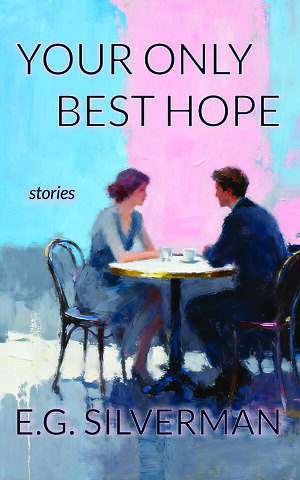
Silverman has been a full-time writer for about 30 years, he said.
His short stories have been finalists, semi-finalists or long-listed for the Flannery O’Connor Award for Short Fiction, Ohio State University’s Non/Fiction Collection Prize, Snake Nation Press’s Serena McDonald Kennedy Award, Livingston Press’ Tartt First Fiction Award (The University of West Alabama), and Regal House Publishing’s W.S. Porter Prize.
His novels have been finalists for Black Lawrence Press’ Big Moose Prize, Columbus State University’s D.L. Jordan Prize for Literary Excellence, and Callisto Gaia Press’s Joshua Tree Novel Prize.
Though returning to Pittsburgh is an opportunity to deepen ties, Silverman is curious to see what comes of the reading.
“I’m interested in how people react,” he said, adding that he works “in isolation.”
“A writer is in a lot of ways the loneliest occupation there is. I sit in a room in front of a computer. There’s nobody there. And yes, before the book comes out, I work with an editor, and we go back and forth, so it’s not entirely a solo thing, but once you put stuff out there you’re never really sure what people are going to see in it or not see in it.”
Reading before an audience — especially some of whom he hasn’t seen in decades — is a different literary experience, he continued.
“When you’re writing, it’s all internal. It’s all in your head. It’s all you know on paper. It’s all very much just isolated. But when you’re doing a reading, you can actually connect with people. You got to look at the words, but you can also look at people, and you can see their faces, and you can see their eyes, and you can feel whether you’re connecting with them or not,” he said. “It’s a really gratifying feeling.” PJC
Adam Reinherz can be reached at areinherz@pittsburghjewishchronicle.org.
comments