
Books, beauty and beginnings will be addressed this Rosh Hashanah on Pittsburgh’s pulpits
'How do we move through uncertainty? How do we thrive when the future is frightening?'

For many Pittsburghers, the season of synagogues and sermons has arrived. With Rosh Hashanah days away, and congregants shortly heading to the pews, Jewish clergy are giving thought to what matters.
“The thing that’s really on my mind is how phones are degrading our religious experience and parenting,” Shaare Torah Congregation’s Rabbi Yitzi Genack said. “I’ve been speaking about it and plan to continue.”
Up the street in Squirrel Hill, Congregation Beth Shalom’s Rabbi Seth Adelson is also considering a somewhat analog approach to addressing the holidays.
Between Rosh Hashanah and Yom Kippur, the rabbi will deliver four sermons thematically tied to “What’s on your bookshelf?” he told the Chronicle. “It will be an exciting romp across Jewish literary history, with an eye to understanding where we came from intellectually and why the essential titles on the Jewish bookshelf continue to help us thrive as a people and as individuals.”
Vitality is certainly an aspect of Rosh Hashanah, but challenges and impediments to life’s grandeur are driving Congregation Dor Hadash’s Rabbi Amy Bardack High Holiday talks.
“We’re living at a time of huge uncertainty, where the world as we’ve known it is heading in unknown directions: climate change, the dismantling of democracy, AI,” she said. “How do we move through uncertainty? How do we thrive when the future is frightening?”
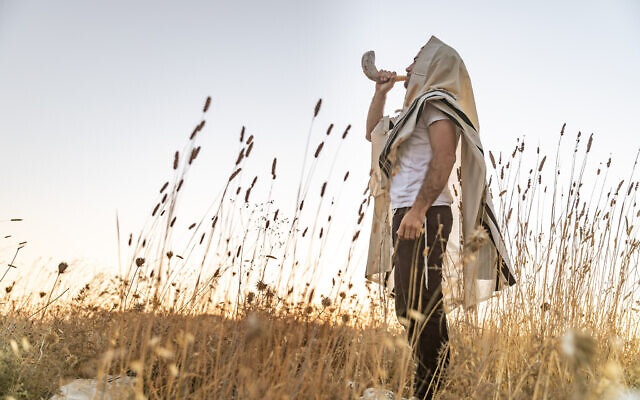
Rabbi Yisroel Altein of Chabad of Squirrel Hill said he’s looking to the calendar for inspiration and hopes others do as well.
“Good starts are usually a good way to gauge how things are going,” he said.
With Rosh Hashanah beginning on Shabbat there’s a need to remember “we’re really in Hashem’s hands, and that Hashem created the world. Hashem says, ‘Rest,’ so you rest,” Altein said. “It’s our job to remember that God put us on Earth to make it a Shabbos to a world, a holy world, and that that’s what our focus needs to be.”
The moment calls for genuine understanding, Cantor Kalix Jacobson, of Temple David, explained. “Obviously things are very serious, and there’s a lot to worry about.” Still, “I find myself engaging with people and reminding them that life is beautiful, and whimsical, and not always that deep.”
The High Holidays are a time for honest repentance, when “we’re going back and thinking about how we could have been better, and apologizing to people,” Jacobson said. “We should be doing all of that, absolutely, and also reminding ourselves that it’s not that deep. We’re human. We’re going to make mistakes. That’s why we were gifted this opportunity to have this meaningful time of teshuva every year.”
“On a personal level, being a Jew in the world today is significantly more challenging than it was a decade or two ago,” Beit Kulanu’s Rabbi Dan Fellman said. With Rosh Hashanah approaching, the rabbi said he’s been thinking considerably about what it means to “be a Jew in the world, and — in addition to reimagining on the macro level of institutions, reimagining Jewish life on an individual personal level — what does it mean to be a Jew in American public discourse? What does it mean to be a Jew in relationship with Israel? What does it mean to be a Jew in relationship with other Jews?”
Wrestling with questions has provided insight, he explained.
“I’d like to invite people to think about how Jewish life can bring joy and about the value and the beauty of Jewish life,” Fellman said. “Whether we do that individually or collectively, or both, I want people to look around in the world and say, ‘Yes, we have challenges and difficulties. We obviously have to own our realities, but it’s also a wonderful time to dream.’ The challenges don’t preclude the dreaming; on the contrary, the challenges invite more dreaming. And so we can get bogged down with all the tsuris, or we can say, ‘Wow, what a golden opportunity we have to create and reimagine, we can build and connect.’ That’s what my real hope is for the High Holidays.”
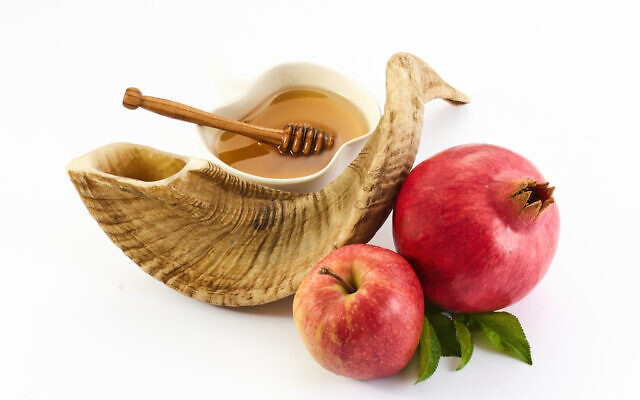
Rosh Hashanah and Yom Kippur offer meaningful opportunities, Temple Emanuel of South Hills’ Rabbi Aaron Meyer said.
“I’m really looking forward to getting to be together in community at a time when it feels like we could use it the most,” he said. “I suspect this is something we’ve been saying year after year, but it is a challenging time for Jews in this world, and to be surrounded by friends and family and values-aligned individuals to whom you don’t have to explain yourself is going to be a mechiyah (life saver) this time around.”
During the High Holidays, while surrounded by fellow landsmen, Meyer will deliver a talk about what he’s been reading: “Out of the Sky: Heroism and Rebirth in Nazi Europe,” by Matti Friedman.
The book, according to Meyer, has a passage exploring Hungarian poet Hanna Szenes’s final work:
Blessed is the match consumed in kindling flame.
Blessed is the flame that burns in the secret fastness of the heart.
Blessed is the heart with strength to stop its beating for honor’s sake.
Blessed is the match consumed in kindling flame.
Those verses spur thoughts about hiding and involvement, Meyer said. “I think many American Jews right now are living through a challenging time where they are debating who they want to be in the public sphere, how they can support causes that are important to them; and so to read this story of Jewish empowerment has been really interesting to me and something I look forward to bringing to the congregation.”
In Greenfield, B’nai Emunoh Chabad’s Rabbi Elchonon Friedman is also looking back for future use.
The upcoming year marks 100 years since the establishment of B’nai Emunoh, he said. “One hundred years ago was also when the Chabad movement began really its journey to America, with the arrest and ultimately liberation of the previous rebbe [Rabbi Yosef Yitzchak Schneersohn] from prison in 1927,” he said.
It’s instructive to consider last century’s familiar challenges. “There was a split in the Jewish community between people who were trying to maybe be communist and those who wanted to keep the Jewish faith and the strength of the Jewish faith,” he said. Breakdowns, “whether it’s right and left, whether it’s Haredi and other Jews,” are occurring today. “For us to truly survive, we have to recognize the power and the importance of each Jew, and the unity with all Jews.” PJC
Adam Reinherz can be reached at areinherz@pittsburghjewishchronicle.org.
comments