
Decorated, drawn on and filled with guests, Pittsburgh sukkahs share communal story
This is a way of being 'very public about being Jewish, and about being proud of being Jewish. And I think that's a wonderful thing that we want to celebrate'
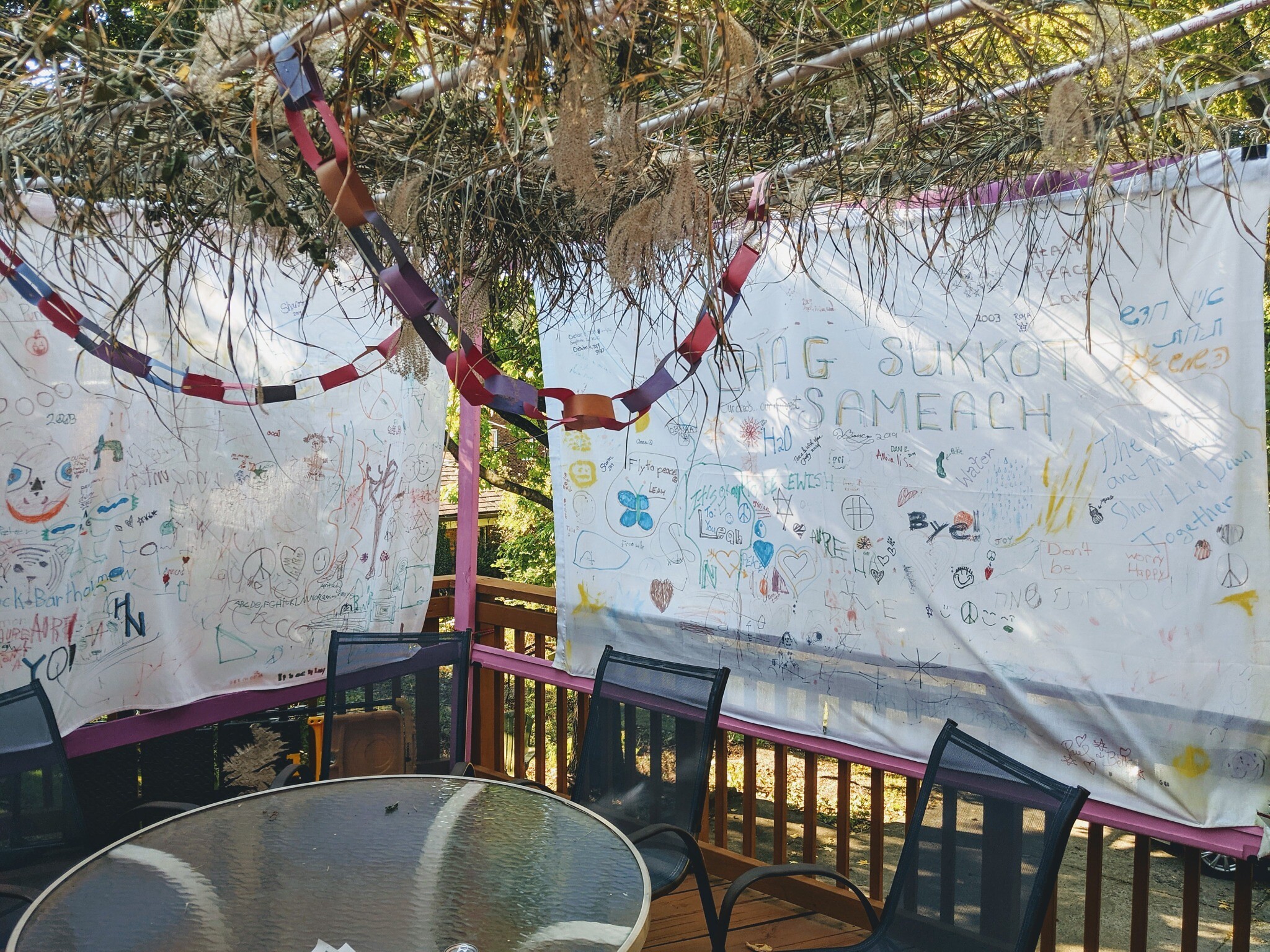
Before the wind has its way and the rain soaks neatly painted projects and colorful paper chains, Pittsburgh sukkahs are beautiful representations of home. Complete with personalized designs and knickknacks hanging from poles, these western Pennsylvanian dwellings reflect their erectors and years of inhabitants.
When Sukkot arrives on Sept. 25, Rabbi Larry Freedman will enter an outdoor booth he’s built numerous times before; bolstering the hut, and testifying to the structure’s longevity, however, is a particular post.
“I always knew that my career would have me moving a few times, so instead of measuring the kids’ height on a wall in the house, which we would one day leave, we measured our children on one of the posts for our sukkah,” he said.
Decades ago, Freedman started inscribing single marks. The practice continued year after year and move after move.
“I still have that post, and I still have that sukkah five houses later,” he told the Chronicle.
Long before making Pittsburgh his home, Rabbi Elisar Admon used to make intricate sukkah decorations with his parents in Israel.
“We did art projects that took hours and hours,” the Squirrel Hill resident said.
As a way of furthering the generational practice, he and his wife adorn their sukkah with their children’s artwork. Whether the pieces were created in school or at home, “it means a lot to the kids when you decorate your house with their decorations.”
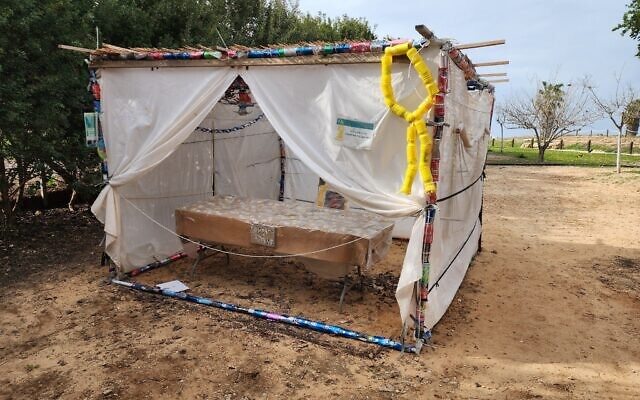
Colorful creations aren’t the only thing lining the Admons’ sukkah walls. Within the East End sukkah are also photos of rabbis. Some are relatives, some are famous leaders of the Jewish people, Admon said. “The idea is that we will do what our rabbis did and what their rabbis did — that we are continuing the tradition.”
Whether with fruit or other beautiful items, rabbinic literature maintains it is a mitzvah to decorate one’s sukkah.
For Rabbi Henoch Rosenfeld, the concept has particular meaning.
“Decorating a sukkah is a very fine Jewish custom that has great sources,” he said. “In Chabad, instead of focusing exclusively on the physical decorations that one would hang or put on their sukkah, we focus on decorating the sukkah with the mitzvah of the sukkah itself.”
The idea, he continued, is that by “bringing other people into the sukkah, and experiencing the warmth and the spirituality of the sukkah, that itself decorates the sukkah’s environment.”
Seeing guests as the adornment isn’t specific to Chabad. For Dor Hadash presidents Carl Fertman and Barb Murock, the sukkah tells a unique story.
More than 30 years ago, the Squirrel Hill residents began hosting a holiday party.
“We would set up a Sukkah in the backyard and we wanted to let people send messages to each other — kind of across the years,” Fertman said.
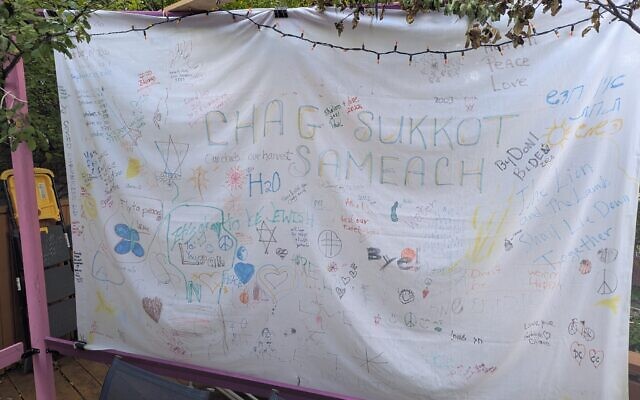
The married couple made their sukkah walls from white bed sheets and placed markers on a nearby table.
Signing the sukkah “became the activity for the evening,” he said.
For years, the sukkah party, which also featured plenty of hot beverages, continued. Along the way, Dor Hadash began featuring the booth during its religious school sukkah hop.
“Kids would come here and they would write on the sukkah,” Murock said.
“Depending on the year, some [inscriptions] will be political. Some will be just really heartfelt,” Fertman said.
Next to an “Obama ‘08” is a “Vote for peace and Social Justice 2020.” Several inches below, scrawled in green are the words, “It’s okay to be JEWISH.” Several feet to the right of one sheet, in blue and yellow are the Hebrew words, “,אין חדש תחת השמש” a reference to Ecclesiastes 1:9, which translates to “there is nothing new under the sun.” On another side appears, “Friends make the best neighbors.”
Since Fertman and Murock began the exercise nearly 30 years ago, dozens of people have written their names on the sheets.
“It’s been so many years now, it’s not unusual for someone in their 30s or 40s to come back and say ‘Oh gee whiz, there I was,’” Fertman said.
Depending on the location, there are rules about signing one’s name to mark one’s presence. At an East End orthodontist’s office where patients mark the end of the dental process, or some summer camps where graffitied cabins denote generations of campers, scrawling over another’s signature is bad form.
Inside their sukkah, Fertman and Murock aren’t so worried that one person’s writing will erase another’s. That’s kind of the point.
“Over the years it fades,” Fertman said. The sheets are washed, some names and messages disappear. New ones are written, and the process imparts a message that “life changes.”
There have been people, he continued, who have come back to the sukkah and purposefully written over their past work.
With the holiday arriving shortly, the Squirrel Hill residents have their markers ready.
Affording guests this opportunity, “gets people involved,” Fertman said. Within a sukkah, it’s nice to make friends and talk, “but to actually get up and to write something down changes the dynamics a little bit.”
More than private messages, the writings represent communal regard, he continued. Coloring and inscribing the walls of a sukkah is a “way of being very public about being Jewish, and about being proud of being Jewish. And I think that’s a wonderful thing that we want to celebrate.” PJC
Adam Reinherz can be reached at areinherz@pittsburghjewishchronicle.org.
comments