
Through image and word, Judith Robinson continues exploring life’s meaning in ‘The Painted Poem’
'We're here for a finite amount of time, and to have lived is a privilege'
Poet Judith Robinson would no doubt find a more graceful turn of phrase than a simple platitude, but in the truest sense, the Oakland resident’s latest work proves she has saved the best for last.
“The Painted Poem,” published Dec. 22, represents the Pittsburgher’s newest artistic endeavor.
Long regarded for both her painting and writing, Robinson has once again paired the two by featuring vivid images and rich text on alternating pages.
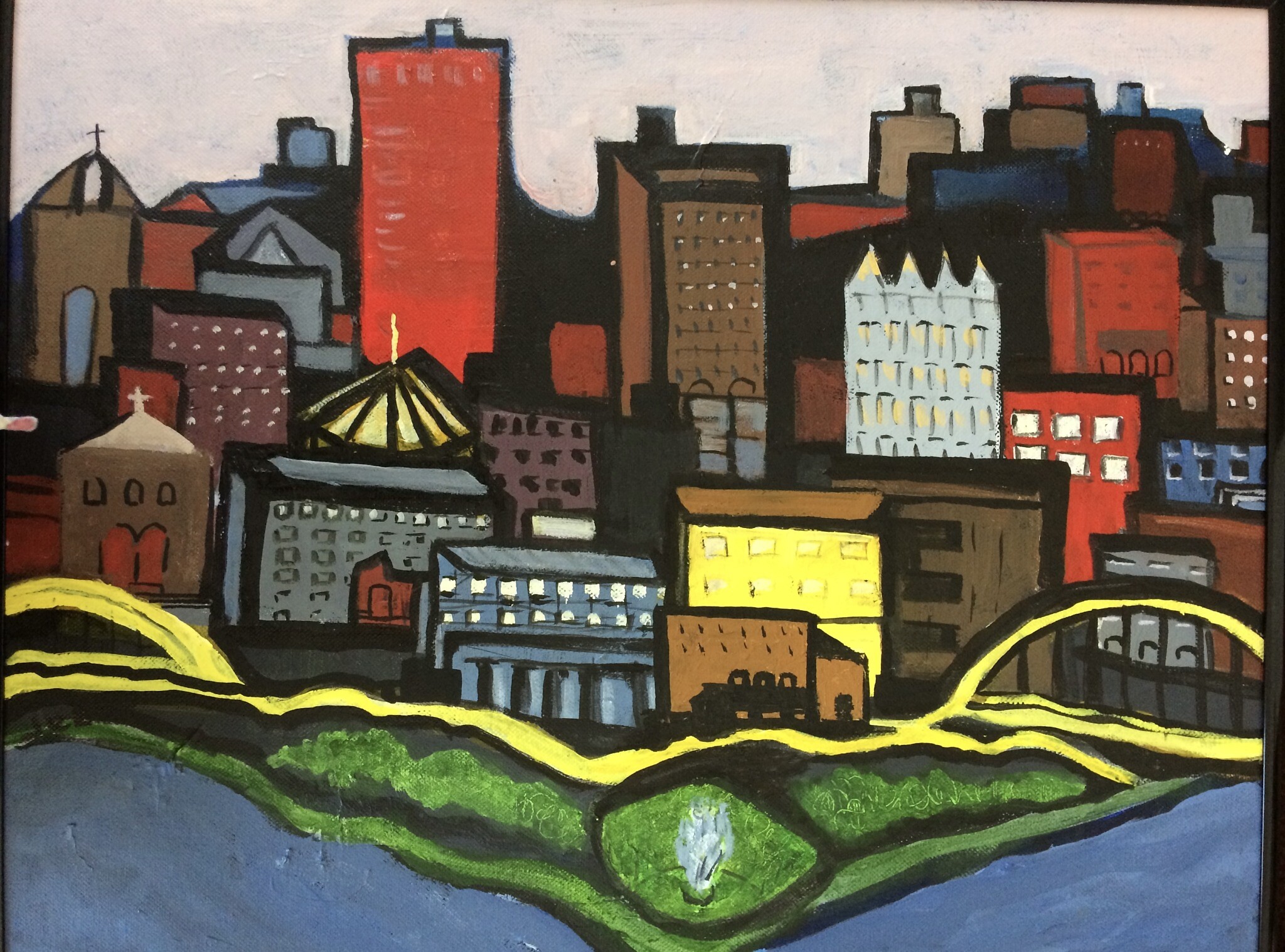
Early in the 78-page book, a colorful portrayal of Pittsburgh’s skyline is placed near a poem (titled “Pittsburgh”) whose opening stanza reads:
What land is this, what city?
Aren’t other places as precious to those who dwell within them?
Probably they are. Well, perhaps.
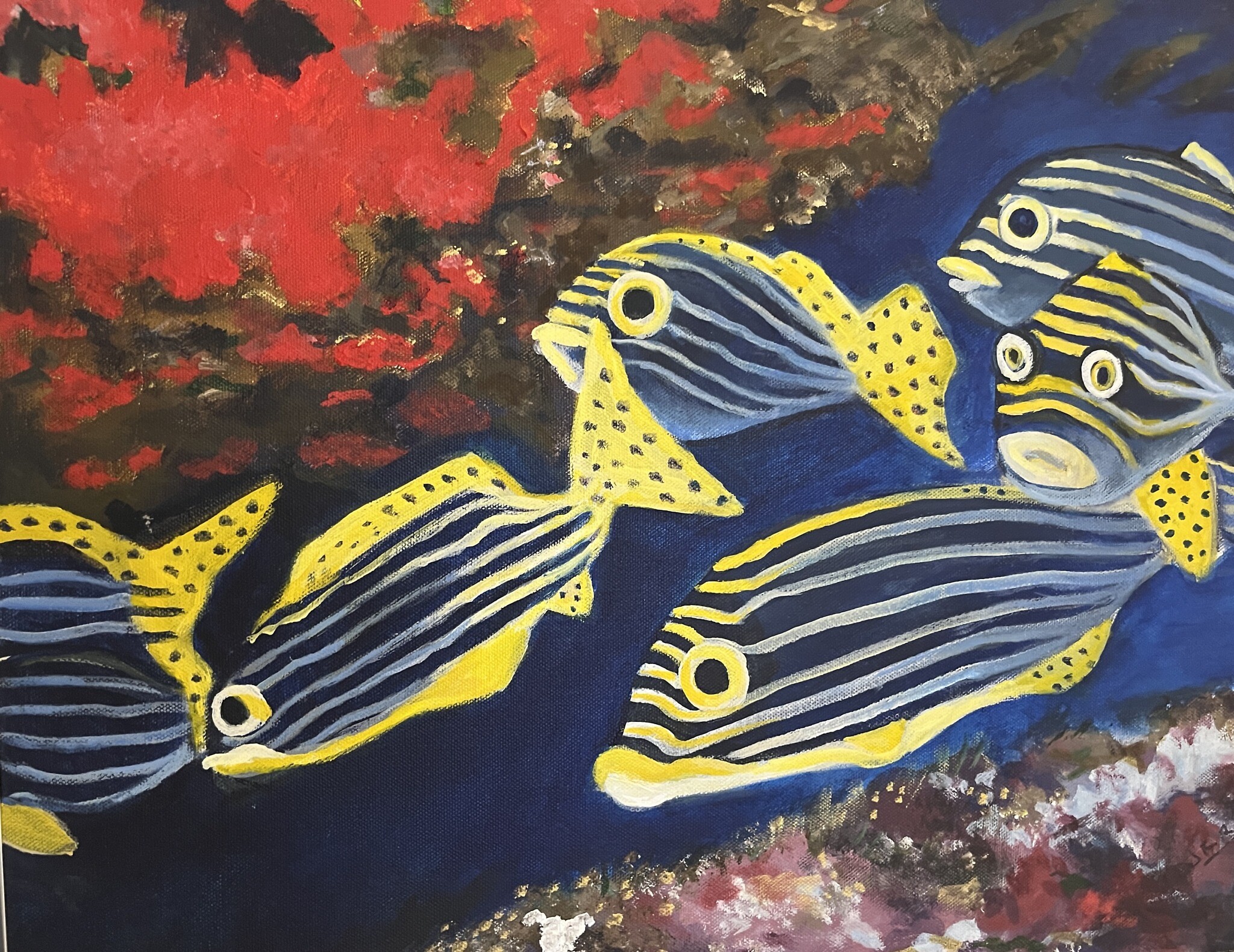
Later in the work, a blue and yellow school of fish rests near the closing lines to “Into the Depths of the Sea,” a poem about the annual Tashlich service performed on Rosh Hashanah, which reads:
We pray we pray we pray
One more year one more year one more year.
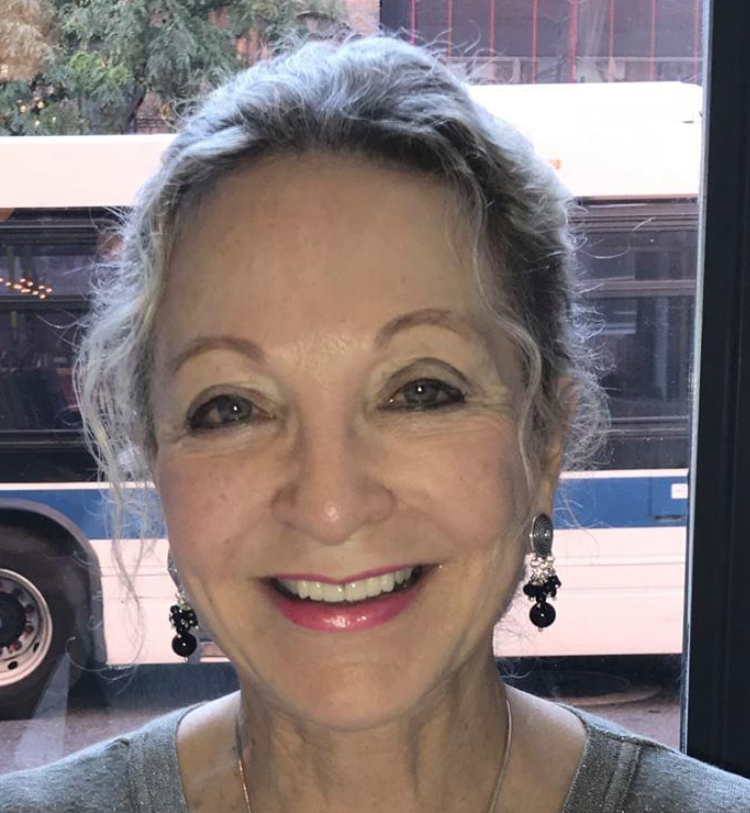
Robinson, an award-winning poet, said there’s no pattern to whether she paints before she composes; both practices, she continued, reflect a desire the late writer John Updike best articulated: “The itch to make dark marks on a white surface is shared by writers and artists.”
Whether one first takes a pen or brush to hand doesn’t matter, Robinson said. “It all begins in your mind. It’s your imagination. And I think a lot depends on where you are and what’s available to you at the moment.”
Throughout her life, Robinson has concentrated on familiar subjects, including Pittsburgh and Judaism.
“I love this city. I always have,” she said. “I don’t think there is any place else that’s as little as we are, but as blessed as we are with all the wonderful attributes of a much bigger city. And we also have this fascinating history.”
Not just in a city-specific or regional sense, she said, but “so much of the history of this country starts right here. In World War II, all that manufacturing that went on to help save the world from Hitler happened around Pittsburgh, in the mills around here.”
By 1942, Pittsburgh had become the world’s leading steel producer, according to the National Park Service. Among war-related materials, 20% of landing ships, tank fleet were made in Pittsburgh along with sub chasers and other transport craft.
Although most of the steel mills eventually closed and residents left, those individuals “took Pittsburgh with them,” Robinson said.
That affection for the city and its way of life remains whether one walks the streets of Squirrel Hill or hundreds of miles beyond the local limits, she added.
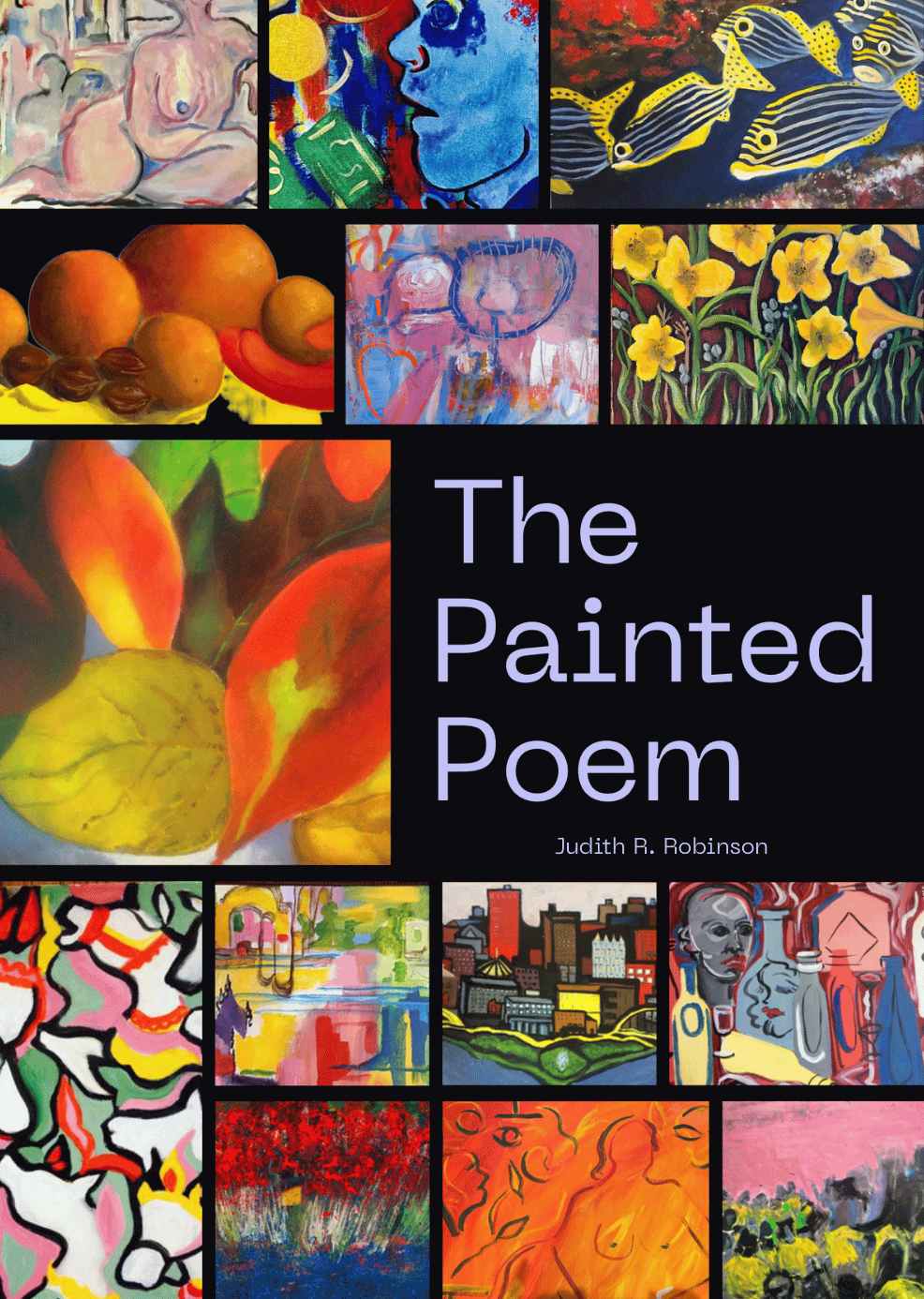
Like her earlier works, “The Painted Poem” signals Robinson’s love of Judaism.
“I’m very much a Jewish poet and painter. “It’s just my sensibility. It’s just who I am and what I care about,” she said. “I care so much about our people.”
Speaking with the Chronicle, Robinson, a self-described “100% Zionist,” didn’t shy from sharing political views; however, the purpose of her work, she said, is less to ignite conversations about geopolitics than to ignite an understanding.
“The beauty of this life — the fact that it’s worth living — there is a lot to celebrate, there’s a lot to think about and a lot to celebrate,” she said. “We’re here for a finite amount of time, and to have lived is a privilege. What matters, finally, is what you leave behind, and if it is something that stirs someone or something that gives someone comfort, or something that someone remembers, then you’ve made something of yourself and your life.”
That articulated sentiment, Robinson said, is somewhat paraphrased from a recent writing.
“I believe that I, as do we all, feel an urge to say something, to show something, to share something. So we who can paint and write do it this way. Other humans build, buy, sell, endow, teach, race, electrify, compete, compose, procreate, and/or find meaning in multitudes of other ways,” Robinson noted in the afterword of her newest book. “We all feel the need to express evidence of existence, to declare that yes, I have observed, I have felt, I have imagined this or that: I have lived.” PJC
Adam Reinherz can be reached at areinherz@pittsburghjewishchronicle.org.
comments