
Friendship Circle encourages teens and parents to talk about drugs — and to continue talking
'If we don't allow ourselves to have conversations that just feel normal and casual, everything is going to feel like a big secret'
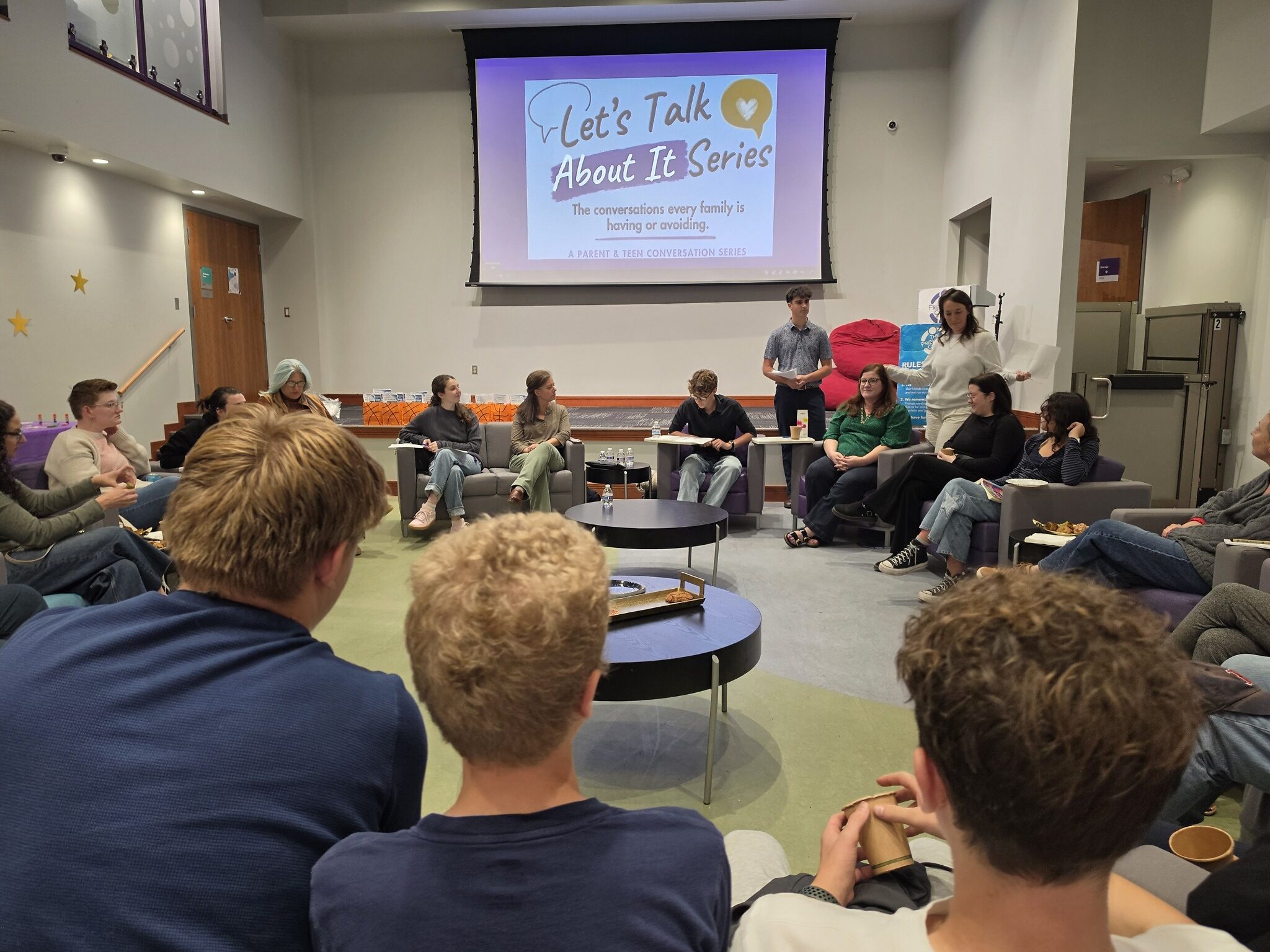
Dialogue around drug use isn’t just about saying “no.” Medical professionals and researchers told teens and parents that healthy communities, and beneficial relationships, require something more: conversation. Seated inside the Friendship Circle of Pittsburgh on Oct. 21, nearly 40 teens, parents, physicians and other medical professionals discussed the realities of teen drug use and how communication can not only yield safer outcomes but deeper bonds.
Guiding the discussion was Pittsburgh Allderdice student Chayim Massart, 17.
For nearly an hour, the Friendship Circle member and teen leader encouraged participants to share experiences and advice.
Dr. Rachel Friedman, an emergency medicine physician at Allegheny Valley Hospital who has treated overdoses and alcohol withdrawals, said drug use largely “comes down to an access issue.”
Alcohol, nicotine and prescriptions found at home are often “easiest for kids to get their hands on,” she said. Harder drugs likely require not only money but the need to “go out and seek them.”
When people do purchase drugs, it’s usually unclear what’s actually being acquired, Christa Kirk, an assistant professor of pharmacy at Duquesne School of Pharmacy, said.
Kirk pointed to research regarding fentanyl, a synthetic opioid, and xylazine, a sedative approved for veterinary use, and said that given xylazine’s frequency of being added to other drugs, such as fentanyl, it is often ingested without knowledge.
Mixing xylazine and fentanyl places users at a “higher risk of suffering a fatal drug poisoning,” the U.S. Drug Enforcement Administration reported.
In Philadelphia, fentanyl was detected in 94% of all opioid-related overdose deaths, according to the city’s health department.
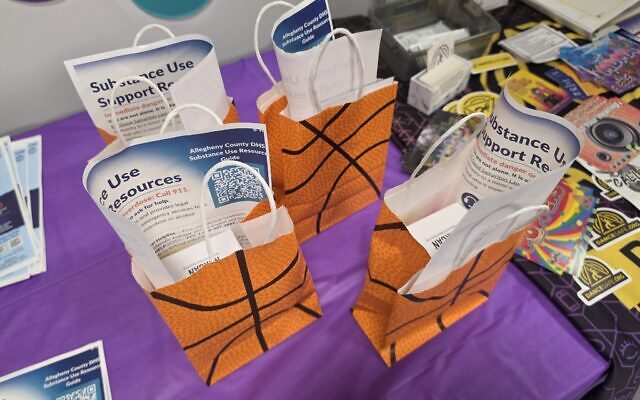
Pointing to a collection of neatly wrapped gift bags resting on the Friendship Circle stage, Kirk encouraged teens and parents to take home testing strips designed to determine whether drugs contain fentanyl. Also inside the bags were boxes of Narcan, a medication that reverses opioid overdoses.
Imagine a scenario where there’s a party, and “everybody’s been doing something, they’ve been drinking, and you don’t know what’s happened,” Kirk said.
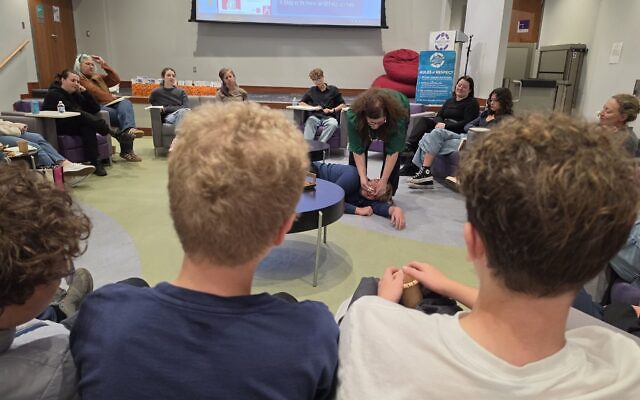
An individual is seemingly unconscious on the floor, and “you can assume that maybe they took something that’s very bad for them.” Try administering Narcan, she said, as “it doesn’t have a negative effect. You can use Narcan on really anybody.”
With help from a teen volunteer, Kirk then inserted the nasal spray a person’s nostril.
Several teens credited the demonstration and discussion with providing practical insight on a taboo topic.
“For me, heading into high school, just kind of learning about how you encounter it at a party with one of your friends, or when you see someone unconscious, is very helpful,” Rooney Kirk, 14, said.
Often when it comes to drug use, “you can’t really stop other people from doing it, but you can help them if they are in need,” Owen Clark, 14 told the Chronicle.
Throughout the evening, participants swapped stories and statistics regarding drug use.
“Teens are interested not only in this topic, but, just in general, learning more and educating themselves on topics that actually matter,” Chayim said.
As a lead-up to the Oct. 21 event, Chayim spent months working with Friendship Circle staff to create a three-part series titled, “Let’s Talk About It.”
Kicked off in September, the program, which is supported in part by the Jewish Healthcare Foundation, concludes Dec. 1 with a discussion titled, “Social Media, Body Image and Building Healthy Identity: Scroll, Compare, Repeat?”
Squirrel Hill resident Cara Shuckett attended Friendship Circle’s Oct. 21 program with her family. She described it as a “conversation starter.”
“You’re all hearing the same thing, and it makes these conversations less crazy,” Shuckett said.
“There is so much information out there on how to be a parent, how to be a teen, what things are good for you, what things are bad for you, and making decisions is incredibly difficult,” photographer and public health researcher Lindsey Palmer said. “If we don’t allow ourselves to have conversations that just feel normal and casual, everything is going to feel like a big secret.”
The problem with keeping topics bottled up, she continued, is “that’s where fear comes in. You’re afraid of saying the wrong thing. You’re afraid of exposing your kids to something too soon, when in reality, kids as young as tweens are getting experience with this on social media.”
Chayim and fellow organizers were intentional about titling the program, “Drugs Today: Facts, Safety and Conversations That Matter.”
Following the discussion, Squirrel Hill resident Rachel Clark credited Friendship Circle with enabling participants to do something daunting.
“Sometimes it’s just really hard to have conversations with your teenagers where they’re actually listening and engaging with you,” she said. “At a certain age they’re past the point of listening to you for information, and they seek information from other places like the internet and social media.”
By creating opportunities for people of all ages to engage in meaningful conversations, teens and parents can learn from “trusted sources, and then we can talk about it,” Clark added.
Continuing the conversation is key, several teens told the Chronicle.
“There’s always ways to help other people,” Owen said.
“There are ways to help, and there are ways to find things out,” Rooney echoed. “You’re never blind in these situations.” PJC
Adam Reinherz can be reached at areinherz@pittsburghjewishchronicle.org.
comments