
Not so sweet: Kosher certification ends at Squirrel Hill Dunkin’
'It felt good to have a mainstream brand like Dunkin’ be kosher in our neighborhood...Our community felt seen and supported that we had this place to go to'
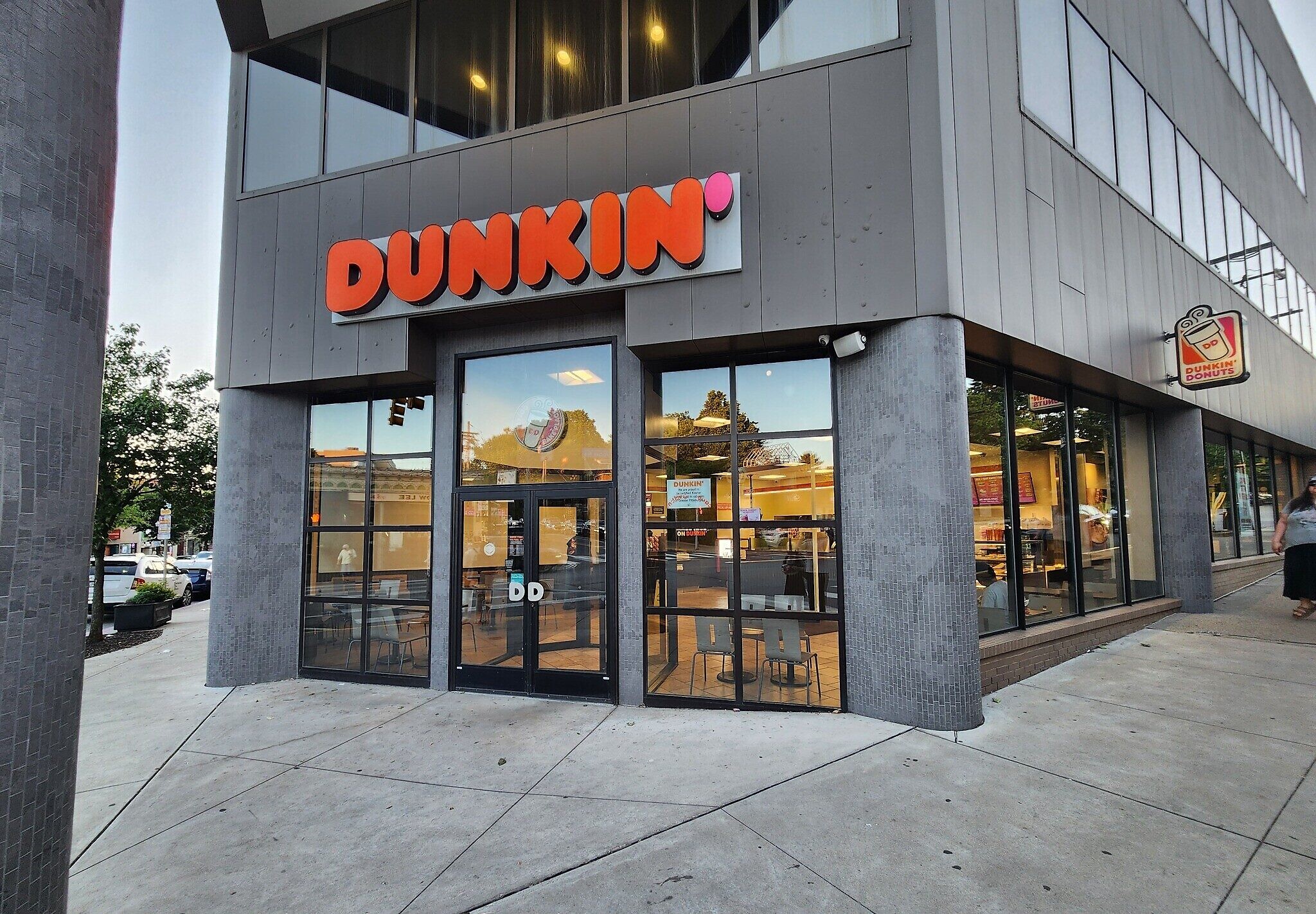
For Naomi Martel, most mornings began the same way: She and her siblings would go with their dad to Dunkin’ for breakfast. Menu items at the Squirrel Hill-based fast-food restaurant range from neatly packaged hash browns to avocado toast. Sandwiches include tuna salad, grilled cheese and sweet black pepper veggie bacon. Patrons, like the Martels, could order customized drinks, assorted doughnuts and other treats.
Squirrel Hill is lined with coffee shops and restaurants; what distinguished this haunt — more than its spacious seating — from nearly every other local eatery was the laminated sheet hanging near the register. Signed by local rabbis, the paper indicated Squirrel Hill Dunkin’ was a kosher-certified establishment. On May 31, the sheet was removed.
The loss of Dunkin’s kosher certification does more than limit dining options; it removes a central gathering place that has long connected members of Pittsburgh’s Jewish community.
“Where else am I gonna hang out and get food?” Naomi, 13, said. “It’s big. It’s fun. The vibes are just so fun.”
Miri Shaw, 15, described the change as an end to “normality.”
“It felt good to have a mainstream brand like Dunkin’ be kosher in our neighborhood,” she said. “Our community felt seen and supported that we had this place to go to.”
Another hill to climb
There are approximately 47,000 Jews in greater Pittsburgh. For 100 years, Squirrel Hill has been the region’s geographic Jewish hub. Buttressed by Schenley and Frick parks, the walkable neighborhood, complete with schools, synagogues and locally owned shops, boasts about 28,105 residents — nearly 40% are Jewish — according to the Squirrel Hill Urban Coalition.
Almost 80 restaurants are in Squirrel Hill. Only a handful are certified kosher. Attaining that status requires approval from the Vaad Harabonim of Pittsburgh, an organization founded more than 50 years ago by Orthodox rabbis. Led by volunteers, including Shaare Torah Congregation’s Rabbi Yitzi Genack, the Vaad utilizes halacha (Jewish law) to “strengthen and maintain the institutions of a Torah community.”
Along with overseeing kosher certification, the rabbinic group manages the eruv (aneighborhood boundary enabling observant Jews to carry or push items outdoors on Shabbat) and adjudicates religious legal disputes.

Genack said he began meeting “recently” with Dunkin’ about continuing its status as a kosher-certified restaurant. “Unfortunately, despite good faith efforts on both sides, we were unable to reach an arrangement that worked.”
Squirrel Hill Dunkin’ is one of 80 locations operated by Heartland Restaurant Group, a Dunkin’ franchisee with sites in Pennsylvania, Ohio and West Virginia.
Anthony Braun, Heartland’s former CFO and COO, told the Chronicle he serves as a strategic adviser to Heartland’s leadership team and had “quite a few conversations” with Genack and Rabbi Chaim Itkin, a kosher administrator at the Vaad.
“This was not an easy decision for us,” Braun said. “We worked hard to meet both objectives.”
Squirrel Hill Dunkin’ was kosher-certified for nearly 17 years; however, “new products are continually coming down the pipeline, with a bunch of promotional offerings, of which none are kosher-certified,” Braun said. “The brand invests heavily in influencers, both social media and television, and spends a lot of money on electronic media, as well as other medias, advertising these new products, featured products, and what we’ve been running into, and we have for quite a while, is we have quite a few guests that visit, and we can’t provide the offering that they would love.”
Dunkin’s newest product line is slated for launch the first week of June. Though reluctant to detail specific menu changes, Braun said the line will likely include bacon, non-kosher meat and other items previously unavailable at the Squirrel Hill site.
“We talked to the rabbis a few times, and we really left the decision in their hands,” he said. Proposals were made by both sides and “the result ended up being that when we finished our call up, we just couldn’t figure out a way for both sides to really make that work.”
Genack agreed and said, “Ultimately we were unable to find a solution that met both our standards and their operational needs.”
The way we were
Countless relationships end in breakups; teenagers know that better than most. Seeking possible reunification between the parties, Hillel Academy of Pittsburgh students collected hundreds of signatures — in print and online — from those hoping Squirrel Hill Dunkin’ would remain kosher.
“I feel like if we get a bunch of people, then we could probably make them see what we’re seeing,” Adina Goldberg, 15, said.
At least once a week, Adina frequented Dunkin’. Sometimes it was after workouts. Other times it was to meet up with peers. During most visits, Adina was there for more than an hour.
“A few years ago, I used to do homework or study there with a friend,” she said.
More recently, her engagements changed. Going to Dunkin’ became a social endeavor.
“I just like hanging out, discussing random topics under the sun, over food,” she said. “Just sitting there and hanging out was nice.”
“Me, my family, my friends, and definitely a lot of the Jewish community love going there,” Naomi said. “It’s literally like the best hangout spot.”
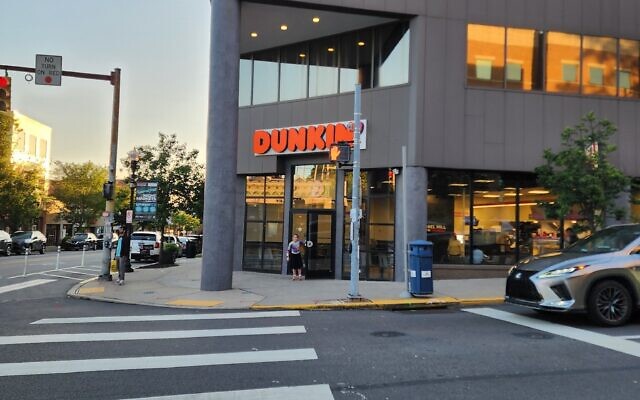
Separated from the intersection of Forbes and Shady avenues by floor-to-ceiling windows, Dunkin’ occupies the ground floor of a nearly 20,000-square-foot property. Movable seating covers portions of the store’s almost 6,700 square feet. Across the street is a Starbucks. Down the road are other coffee shops.
Dunkin’ is different.
“There’s not usually a big crowd, and even if there is, there’s a bunch of tables spread out, everywhere, so you could just chill,” Adina said. “This place was a place for everybody, including Jews.”
“We’d go there — even for just a lunch break — you could walk there,” Miri said. Given its location and kosher-certified status, it was a “space to go and know everything’s approved” for her and her friends to eat.
Before the law
Kosher cognizance is a source of Pittsburgh pride. More than a century ago, Heinz Vegetarian Beans became the first packaged food to receive formal certification from the Orthodox Union. In Pittsburgh, and other kosher-conscious communities, a mashgiach, kosher supervisor, works with companies and food service professionals to ensure products and venues comply with halacha. At kosher-certified establishments, a mashgiach observes operations and ensures that various practices, such as the separation of dairy and ritually slaughtered meat, are observed.
For years, stickers and signage noted Squirrel Hill Dunkin’s commitment to kashrut. On a wall near the pick-up counter, one printout read, “Dunkin’ We are proud to be Kosher Certified by the Vaad Horabanim of Greater Pittsburgh.” An adjacent sign stated, “Our mission: To ensure every guest leaves happy & completely satisfied.”
Squirrel Hill resident Lindsey Strassman said the June 1 change negatively impacts her work and family. Strassman is the senior finance analyst at the Jewish Federation of Greater Pittsburgh. She and colleagues often met at Dunkin’.
“It’s an easier, fast-food type of place with a much more casual vibe, and it’s a bigger setting, so it’s more comfortable for newer or prospective donors,” she said. There are plenty of nearby places to get a cup of coffee, but if it’s “also your breakfast time, or you’re meeting at lunchtime, you could grab lunch at Dunkin’.”
There are plenty of affordable options. A bagel and cream cheese costs $3.53. Tuna melts are $4.89. A “$6 meal deal” includes a medium coffee, veggie bacon, egg and cheese sandwich, and hash browns.
Strassman, 34, keeps kosher. Her parents and siblings do not. “For us, Dunkin’ Donuts has always been an even playing field, and a place where we can all go and eat comfortably, quickly, affordably,” she said.
The Squirrel Hill resident, with a penchant for economic insight, noted calculations require dollars and sense.
“It doesn’t always cost money, but there is a cost to making a decision based solely on finances,” she said. “It’s also about the people. It’s also about the place. It’s also about the community. That costs too.”
Forget about the price tag
Squirrel Hill resident Robert Itskowitz, 48, said he bought coffee about twice a month from Dunkin’. His teenage kids, on the other hand, frequented the venue multiple times per week.
Itskowitz called it a “shame” to see Dunkin’ lose its kosher certification. “It’s a wonderful place to gather: for kids to get food before school, for individuals to meet up for study breaks. It’s really unfortunate to lose that anchor.”
On May 27, the Vaad issued a statement that Squirrel Hill Dunkin’ would no longer be kosher-certified post-May 31: “The store will be introducing non-kosher products and should be treated as non-kosher. The Vaad thanks the community for their continued partnership in kashrus awareness.”
Itskowitz wishes there had been more time between announcement and execution, to inform decision makers about Dunkin’s communal significance.
More than 30 years ago, sociologist Ray Oldenburg coined the term “third places” to describe spaces outside the home (the first place) and the workplace (the second place) where people relax, talk and connect with community. The value of “third places,” according to University of Chicago researchers, is they not only offer sites to gather with friends or acquaintances, but there’s the possibility of meeting people “you have never encountered before.”
With Dunkin’ losing its kosher certification, Adina questioned where her peers would go.
Strassman wondered too. “This is not what Pittsburgh is about,” she said. “Pittsburgh is about inclusion.”
Kosher-conscious consumers have dietary needs. When there’s an inability to comfortably meet alongside others without judgment or awkwardness, the challenge becomes clear, Miri said. “You need to work hard for what you want, so if you want something to happen, you have to put the work into it.” PJC
Adam Reinherz can be reached at areinherz@pittsburghjewishchronicle.org.
comments