
NFL draft in Pittsburgh becomes stage for unity, service and community impact
'You never know what you’re going to learn, or what people will learn about you, and there’s no harm in just going and having a new experience'
With the NFL draft welcoming an estimated 805,000 people, the National Football League and community members used Pittsburgh as a platform to promote unity, grit and care for others.
“We like to believe in the National Football League that we can bring communities together,” NFL Commissioner Roger Goodell said.
Speaking on April 22 at a unity dinner in Oakland, Goodell told community members, including a group of Jewish student leaders, the draft could be a mechanism for avoiding distractions and creating “commonality outside of maybe our daily lives.”
Pennsylvania Gov. Josh Shapiro, who attended the dinner, said that tikkun olam (repairing the world) is the “very essence of what my parents taught me, what my faith teaches me, that leads me to doing this work for you as governor.”
Hearing those words was an impetus to telling peers to “be more open and willing to go into spaces that they may not think is for them,” University of Pittsburgh student Noa Solomon, 19, said. “You never know what you’re going to learn, or what people will learn about you, and there’s no harm in just going and having a new experience.”
For days, that trope was echoed throughout the city as Pittsburghers were encouraged to use sports as a catalyst for change.
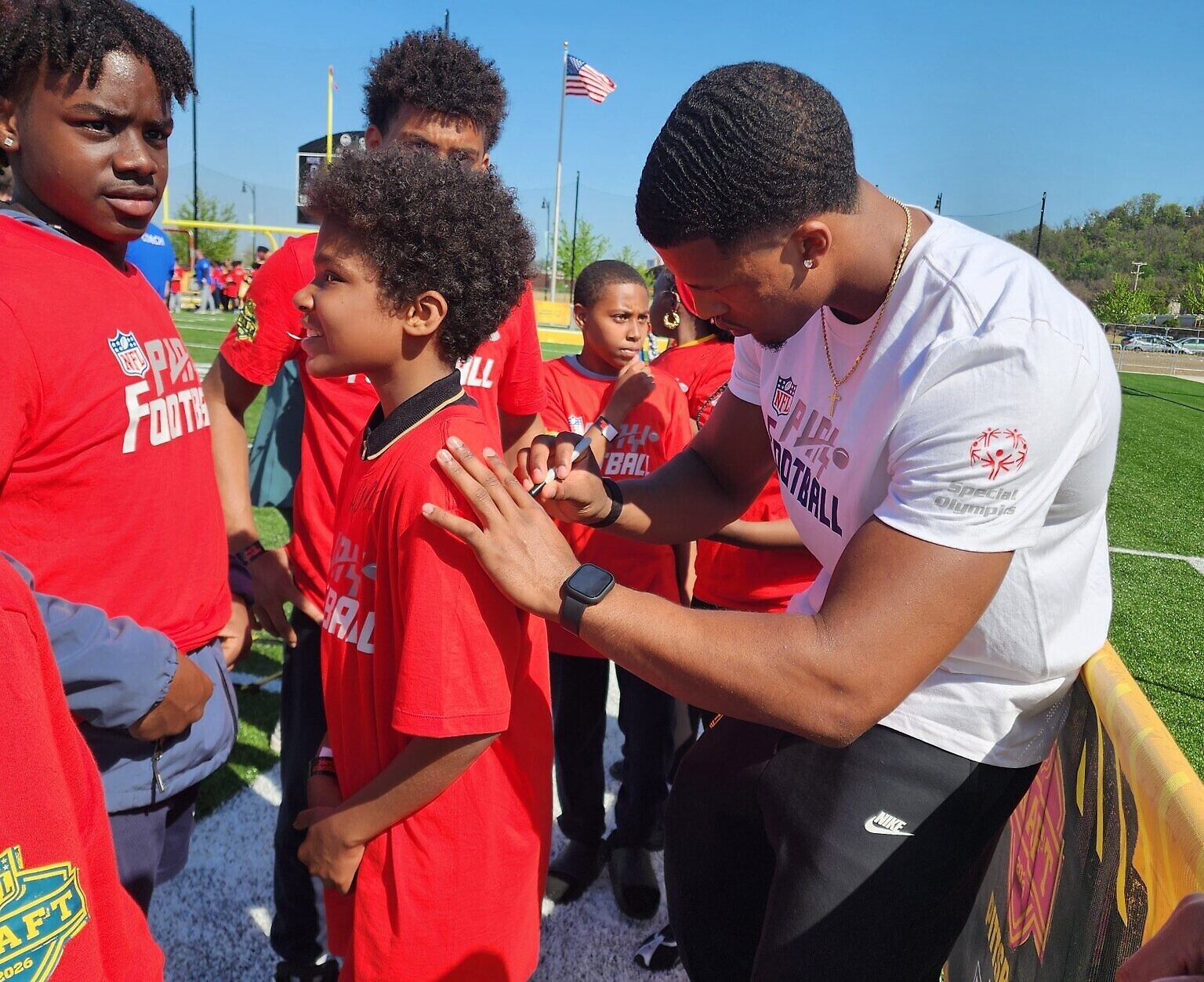
An April 22 clinic connected young football players and local Special Olympics athletes with draft prospects. For nearly an hour, the Hazelwood-based program afforded opportunities to throw passes, tackle and talk.
Even with the draft one day away, Jeremiah Love — a running back who was selected third by the Arizona Cardinals — told the Chronicle that whether it’s an inquiry about faith, family or football, it’s a “great honor” to be asked questions by children.
“Kids are kids. They’re worried about things they got going on,” he said. “When a kid comes up to me with a question like that, or just a question in general, I take it very seriously because they mean it. Being able to answer a question like that means a lot. I want to make sure I’m giving them good advice, making sure that I’m telling the right things, so they can be a better version of themselves.”
Impacting others for the better is part of the draft’s beauty, former Pittsburgher Burton Morris told the Chronicle on April 22 at “Taste of the Draft,” a Downtown fundraiser to combat student hunger in Pennsylvania.
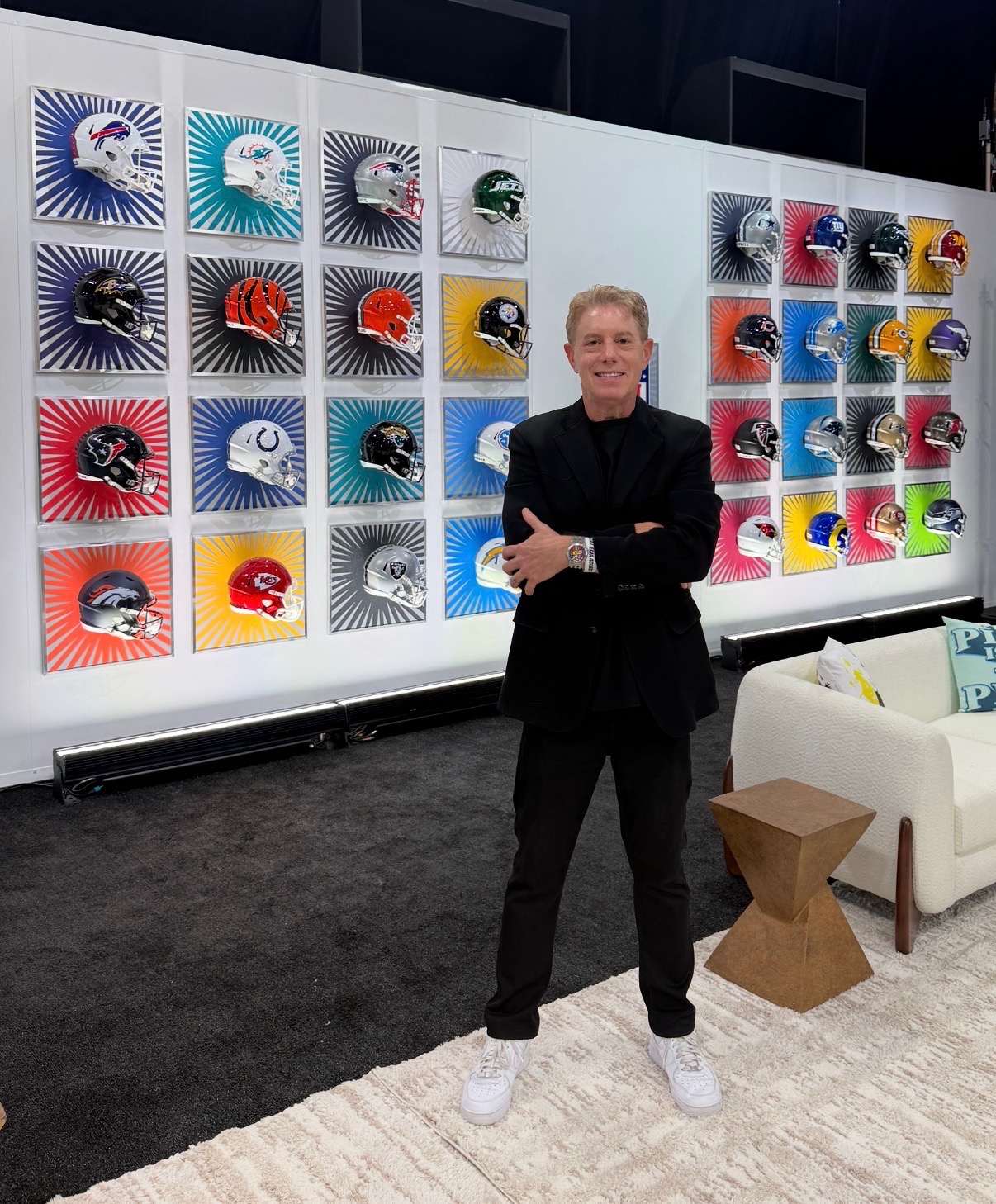
Hours earlier, the Jewish artist unveiled his NFL-commissioned installation in an area near Acrisure Stadium. Displayed in the Prospect Green Room, Morris’ work included 32 custom NFL helmet sculptures, with each piece built on steel to “represent the City of Pittsburgh,” he said.
Morris, whose art has represented the Olympics, FIFA World Cup, the U.S. Open and the MLB All-Star Game in Pittsburgh in 2006, said every setting reminds him what his parents, Sonny and Bunny Morris, made clear years ago: “One thing you have to do is to give back and help those less fortunate.”
“And look, as a Jewish person, especially in today’s world, we have to help,” Morris added.
During an April 23 event at the Greater Pittsburgh Community Food Bank with NFL executives, members of the Pittsburgh Steelers and local students, the Food Bank’s president and CEO Lisa Scales said that distributing food isn’t an abstract endeavor: “It’s only nutritious if it’s eaten, and so for us to have culturally appropriate foods, whether it’s halal meat or kosher chicken, it’s really important that we have the food that people need so that they can lead healthy, active lives.”
Having spent five years in western Pennsylvania, “I truly understand the importance of this community that works together in so many different ways,” Goodell said.
Before joining volunteers to pack first-aid and hygiene kits, Goodell told the Chronicle, “What football’s so great at is bringing people together.” While numerous differences create social rifts, football brings fans “together as a team, and that’s what we need to do.”
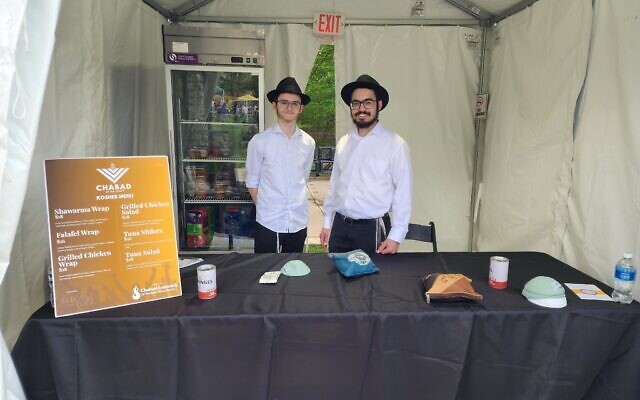
Hours later, thousands of people arrived for the start of the draft. Among those greeting visitors was Meir Levi Weinstein. Standing beneath a white tent in Point State Park labeled “Chabad,” Weinstein said he was there to help “anybody who wants to come and do a mitzvah.”
Beside him was a refrigerator full of kosher food, a pair of tefillin and take-home tzedakah boxes. The latter — yellow plastic boats, which Weinstein called “kindness arks” — allowed people to insert coins “and express some kindness in their own way, at home, and express some light.”
Closer to the stadium, Alex Freeman, director of sports engagement at the Anti-Defamation League, hoped to harness fandom for betterment. Along with colleagues and representatives of The Tree of Life, an organization committed to uprooting antisemitism by “remembering those taken from us and building relationships across difference to repair our world,” Freeman encouraged passersby to step up to a 360-degree photo booth and join a “Same hope. Different jersey” campaign.
“What’s missing with a lot of our society today is that you’re not asking questions, you’re not seeing people from different communities come together and have conversations to learn more,” he said. “You have a ton of people here who are not familiar with the ADL or what’s been happening with the Jewish community.”
Along with distributing reading materials regarding antisemitism, Kelly Fishman, regional director of the ADL’s Cleveland office — which covers Pittsburgh — said the group’s goal was to “lift up the joy.”
“We’re all different, but we all want the same things,” Fishman said.
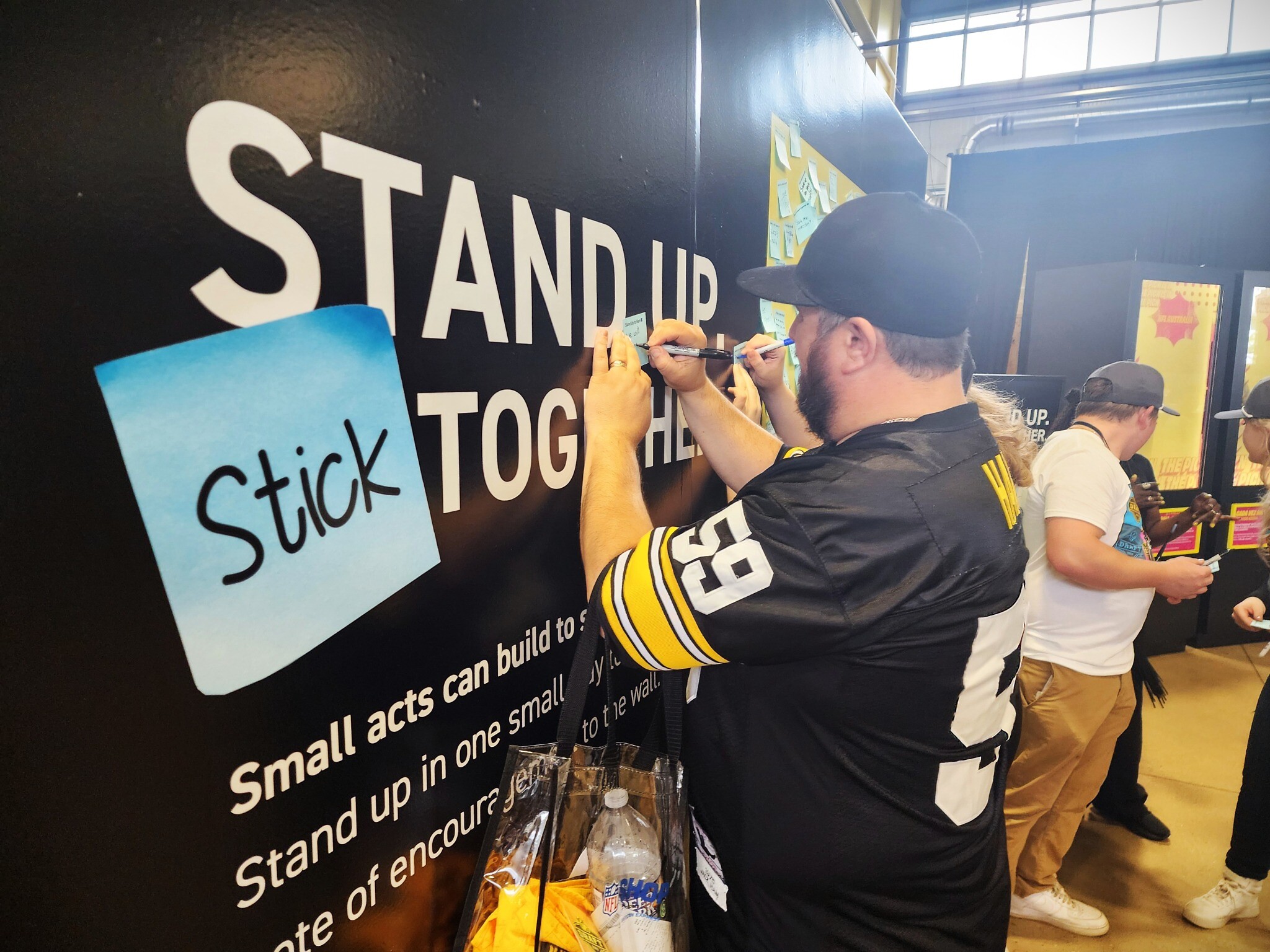
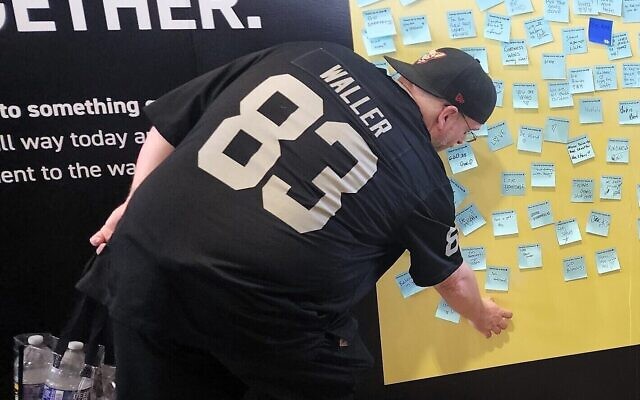
Several feet away, Clara Schwartz, director of partnerships and strategy at the Blue Square Alliance Against Hate, welcomed visitors to a “Unity Wall.”
This is an opportunity for people to “take a moment out of their sports fandom and grab one of our blue square sticky notes and write a message of what it means to stand up — a hopeful message — what does allyship mean to them,” she said.
For hours, Schwartz and colleagues engaged visitors in conversations about antisemitism.
“There continues to be an awareness gap with the majority of Americans, who are just not familiar with the alarming numbers of antisemitic attacks in this country,” Schwartz said. By creating dialogue and encouraging people to “take a small action to stand up to hate, to promote positivity, inclusivity and allyship, that’s really what the blue square stands for.”
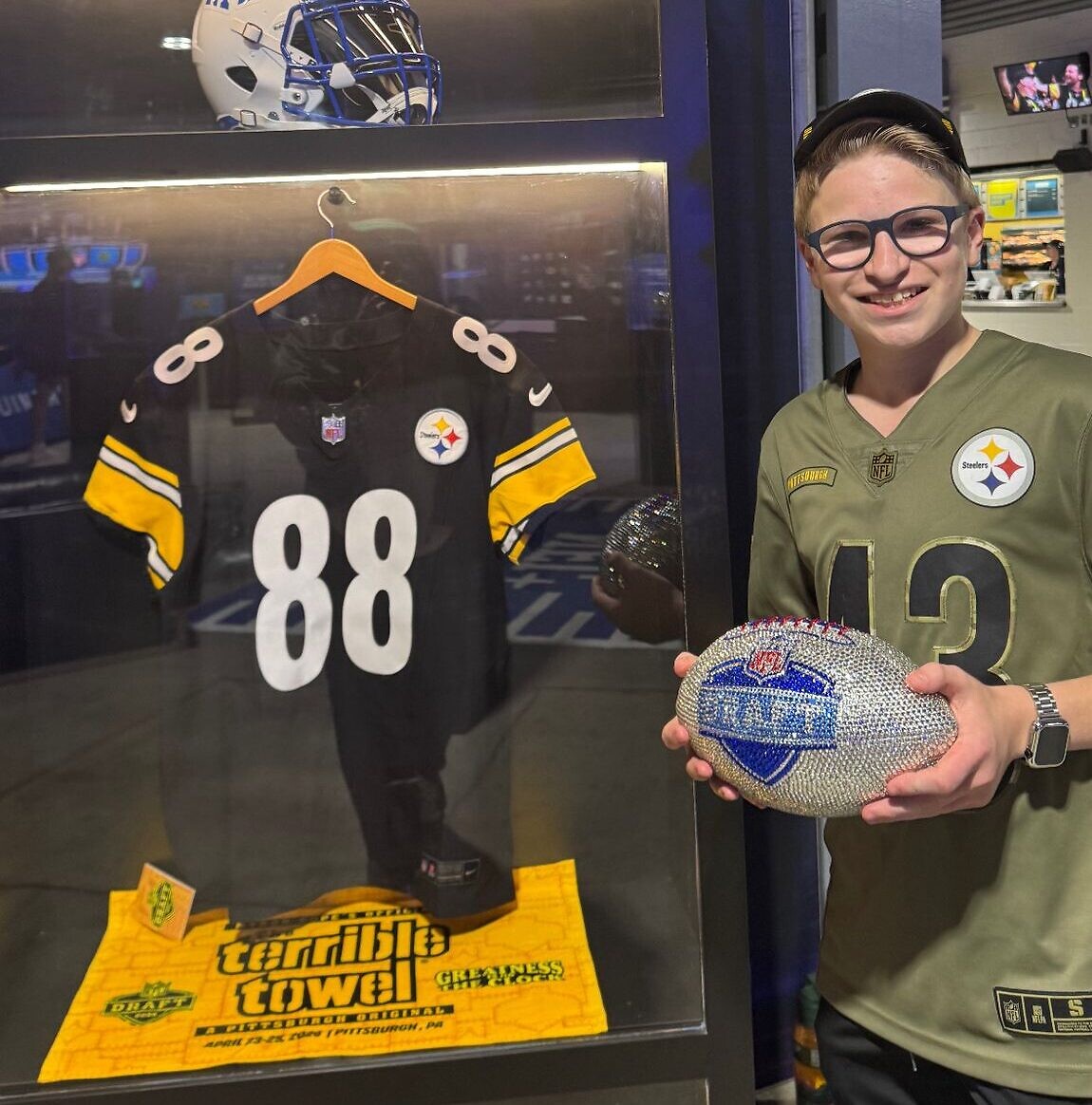
As the draft’s first round unfolded on April 23, Squirrel Hill resident Mikey Karoll, 16, explored various booths. At one, he held a diamond encrusted football. At another, Mikey stood near a podium designed to replicate the set of “NFL RedZone,” an NFL Network program.
Referencing various ways organizers fostered engagement, the Hillel Academy of Pittsburgh student said he learned much from attending the draft.
That emphasis on education was shared by David Bailey, who during a press conference after being selected by the New York Jets with the second pick in the draft, responded to the Chronicle’s question about earning a degree from Stanford University in three years and how it impacted him as a football player.
“Balancing my academic responsibility and also my football responsibilities taught me how to be mature and cognizant of my time,” Bailey said. “There’s really only so much time in each and every day, so I’m taking advantage of each moment to prepare.” PJC
Adam Reinherz can be reached at areinherz@pittsburghjewishchronicle.org.
comments