
‘Talking to Irwin’ explores grief, legacy and the life that might have been
The writing of former Chronicle Editor Lee Chottiner, in his first chapbook, "moves from the simple and conversational to the profound."
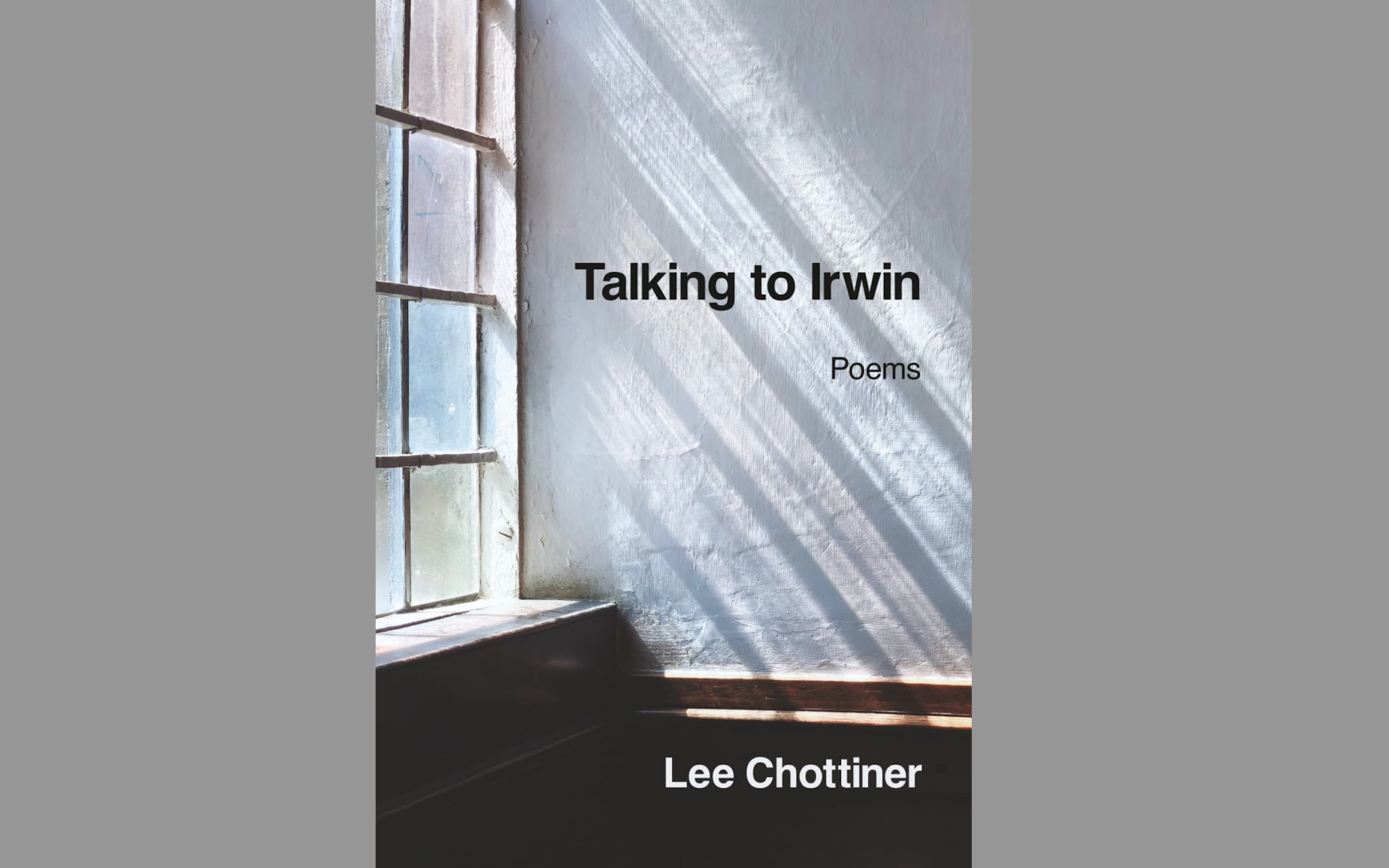
“Talking to Irwin”
Lee Chottiner
Kelsay Books, 2026
Through 20 accessible, deeply resonant poems unfolding over just 58 pages, “Talking to Irwin,” the debut chapbook from journalist Lee Chottiner, is a thoughtful exploration of loss, rebirth and the imagined life of the uncle whose name the author carries.
The book is dedicated to Irwin Lee Moskowitz, Chottiner’s uncle, who “died tragically in 1929 in Clairton, Pennsylvania, when he was 4.”

Both the responsibility and anxiety the author feels in his role as a namesake for his mother’s brother is revealed in the three-line prologue:
“Being named for a dead child is like living
for two souls, fearing the fate of both
when you, too, finally die.”
A photo of young Irwin appears at the beginning of the book, depicting a curly-haired moppet barely beyond toddlerhood. We learn through the book’s first section the general circumstances surrounding the child’s tragic death after being struck by a truck, and that the author’s mother was conceived as a “replacement life” — a prescription from the doctor treating Irwin’s grieving mother. In the opening poem, “Blank Space,” Chottiner writes:
“Your mother’s hair
turned white overnight,
they say, so her doctor
prescribed another child,
a replacement life, to be
so blunt, who grew up,
had me, gave me your name
to wear like a tarnished ring.”
Chottiner’s writing in “Talking to Irwin” moves from the simple and conversational to the profound. In “I Won’t Talk About How You Died,” for example, he writes:
“I heard your brother held
your hand before the end.
Either he let go, or you did.
Time drops curtains like this.”
It is customary for Ashkenazi Jews to name a baby after a relative who has died. In most cases, that relative died in adulthood, so their life story becomes part of their namesake’s legacy. But when the person being honored in death is a child, their story has barely begun. Chottiner delves into the questions and meanings and imaginings of a life cut short, and its effect on future generations.
One of the most poignant outcomes of Irwin’s early death is Chottiner’s mother’s birth — and therefore Chottiner’s own. Her realization that but for her brother being killed, she wouldn’t be alive, is simultaneously bone-chilling and sweet.
In “The Price to Pay,” Chottiner writes this to his uncle, about his mother:
“She knew well
growing up
why she was
alive in your house
when she heard
her mother say
how a son was
her price to pay
for the daughter
she always wanted.”
Readers, particularly those of a certain generation, may be especially moved by Chottiner’s awareness of his own mortality and his commitment to ensuring Irwin is not forgotten.
“Talking to Irwin” will likely keep Irwin’s memory alive for years to come. PJC
Toby Tabachnick can be reached at ttabachnick@pittsburghjewishchronicle.org.
comments