
Pittsburgh district defends ethnic studies course, doesn’t address materials comparing Gaza to Warsaw Ghetto
Pittsburgh Public Schools also stated that it “does not train students to become political activists or require them to adopt particular political positions.”
Pittsburgh Public Schools, which has about 18,000 students in about 55 schools, told JNS that it stands by its ethnic studies curriculum but didn’t comment on an assigned reading comparing Gaza and Judea and Samaria to the Warsaw Ghetto.
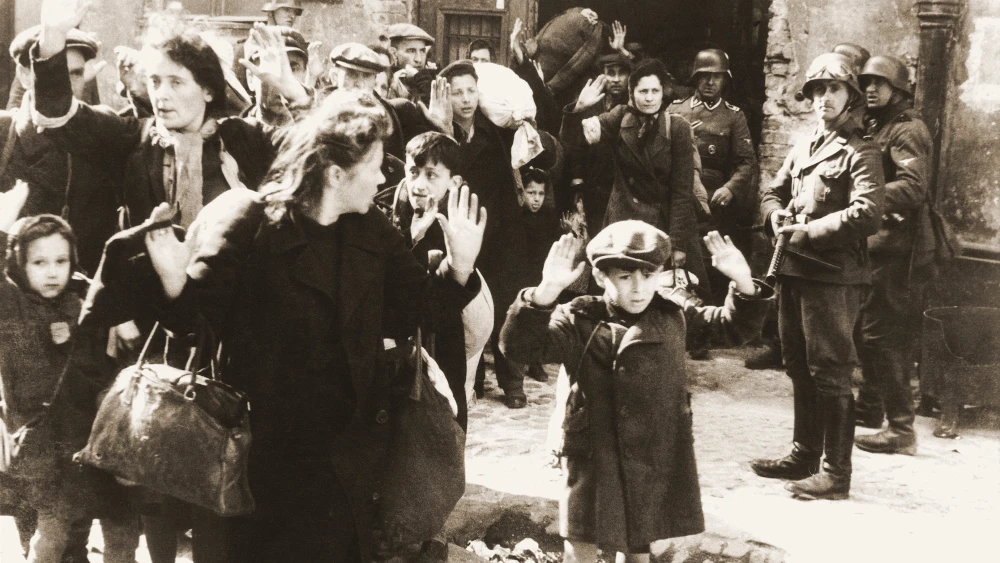
A syllabus for a college-credit course at Pittsburgh Science and Technology Academy, a public school in the district, assigns a 20-year-old academic article that suggests that Gazans are trapped in the Strip like Jews were in the Warsaw Ghetto during the Holocaust, JNS reported on Wednesday.
The North American Values Institute, which obtained materials from the district in a records request, told JNS that it was concerned about that article and about a unit titled “whiteness, privilege and antisemitism” and an assignment that says that “antisemitism, like other forms of racial oppression, has been used to divide marginalized communities and maintain systems of power.”
The public school district told JNS in a 550-word statement that it “strongly disputes the inaccurate and misleading characterizations of its ethnic studies curriculum presented in a recent report by the North American Values Institute.”
“The report draws sweeping conclusions from materials that do not represent the full district curriculum and mischaracterizes the purpose, content and instructional approach of the course,” the district said.
It told JNS that its 12th grade ethnic studies course is “grounded in inquiry-based learning and designed to expand students’ understanding of history, culture, identity and the diverse experiences that have shaped American society.”
The district says that it doesn’t aim to “promote a particular political or ideological viewpoint” and wants to “equip students with the knowledge and critical thinking skills necessary to examine complex issues, evaluate evidence, consider multiple perspectives and develop their own informed conclusions.”
It said that its ethnic studies curriculum “does not categorize Jewish Americans as oppressors or reduce Jewish identity to questions of race or privilege.”
“Rather, it recognizes the complexity and diversity of Jewish experiences and includes instruction on Jewish history, culture, resilience and contributions to American society,” it told JNS. “Importantly, students examine the devastating impact of antisemitism through Pittsburgh’s own history, including the Oct. 27, 2018, attack at the Tree of Life synagogue.”
The district said it teaches oral histories of survivors of the attack and has “lessons exploring Jewish traditions, cultural identity and historical memory.” It also engaged local Jewish community members, it said.
Steve Rosenberg, Philadelphia regional director of NAVI, told JNS that “Pittsburgh Public Schools has issued a lengthy statement defending its Ethnic Studies program,” but “remarkably, it has managed to do so without meaningfully addressing the actual curriculum documents and syllabus uncovered by the North American Values Institute.”
“The problem with Pittsburgh’s ethnic studies curriculum isn’t that it teaches students about racism, injustice or the experiences of different communities,” Rosenberg added, in an email to the Pittsburgh Jewish Chronicle. “Those subjects belong in every serious history classroom. The problem is that the materials NAVI uncovered raise serious questions about whether students are being taught to examine history or to interpret it through a predetermined political ideology. When a curriculum repeatedly emphasizes power, oppression, privilege and resistance, and includes a reading comparing Gaza to the Warsaw Ghetto, parents have every right to question whether historical complexity is being sacrificed for political messaging.” PJC
Toby Tabachnick contributed to this report.
comments