
Hazelwood event explores rebuilding Black–Jewish bonds
'You have to be more willing to listen than to talk. That's how we learn'
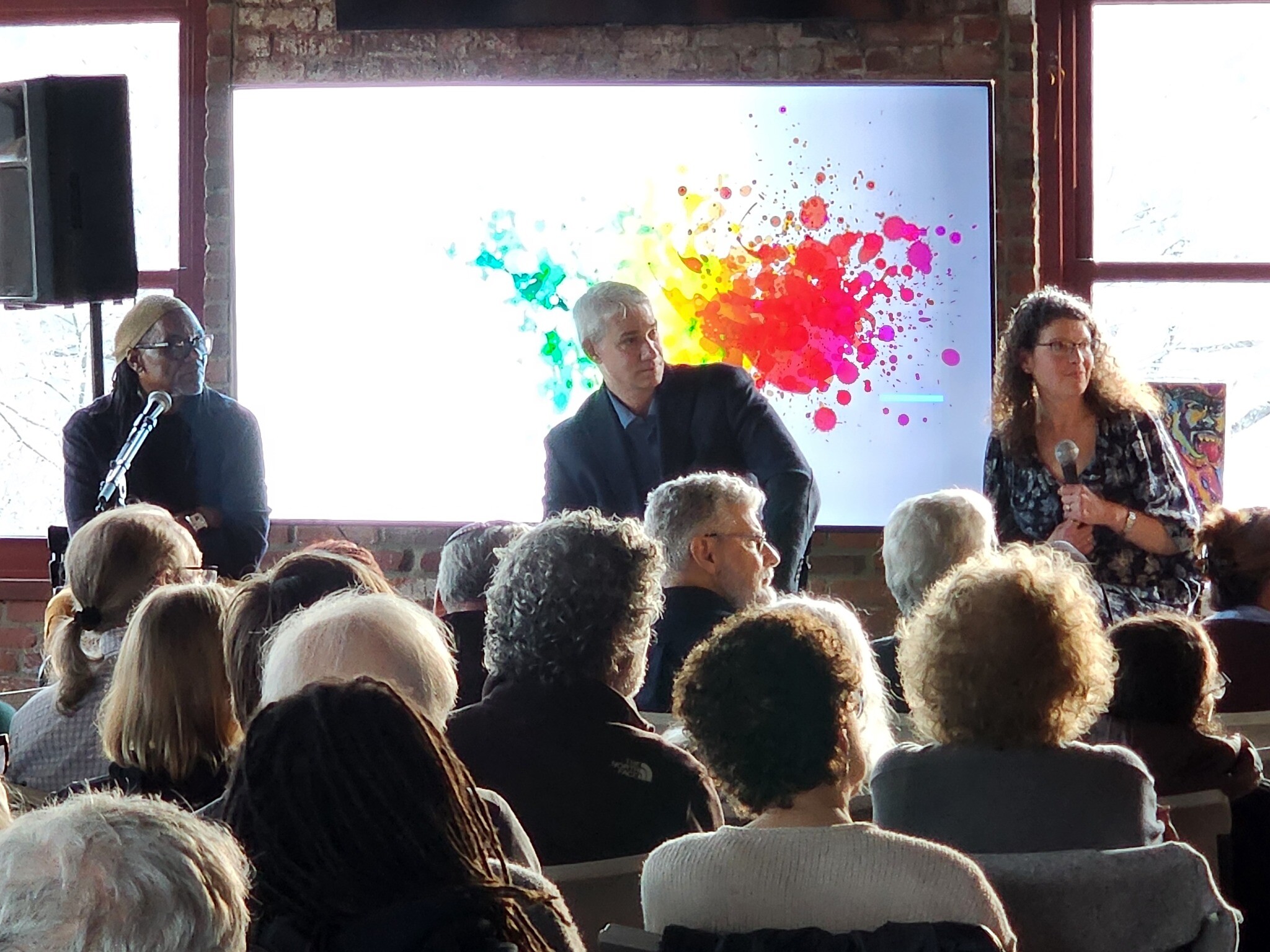
A program predicated on repairing relationships offered a simple, clear directive: listen.
“(Re)Building the Bridge: a conversation about the Black–Jewish relationship,” hosted by the Holocaust Center of Pittsburgh and Center of Life, featured dialogue between Center of Life’s the Rev. Tim Smith and Avi Dresner, a Massachusetts-based writer and filmmaker whose father was civil rights activist Rabbi Israel “Sy” Dresner. Moderated by the Holocaust Center’s Emily Loeb, the March 19 event included reflections on the African American-Jewish relationship and advice on using those bonds to thwart hate, racism and antisemitism.
For nearly 90 minutes, Smith, a self-described “baby boomer,” and Dresner, 56, answered questions from Loeb in front of about 120 attendees at Hazelwood Brew House. Throughout the evening, the panelists often recalled their childhoods, framing their fathers’ actions as models for today.
Smith’s father was pastor of Keystone Church in Shadyside and experienced continuous acts of racism throughout the 1960s, according to Smith. Residents who were displeased with a Black church in a predominantly white neighborhood smashed the building’s windows, vandalized its sanctuary and set it on fire.
With help from local college students, and Mordechai Applebaum, a bass clarinetist with the Pittsburgh Symphony Orchestra, Smith’s father partnered with a diverse band of helpers, rebuilt the church and “changed people’s minds,” Smith said. “These human connections make a difference, and they are that ripple that spreads out and touches everybody else.”
Dresner began his comments by showing a sizzle reel from “The Rabbi and The Reverend.” The documentary, a work in progress, is produced by Dresner and describes the relationship between his father and the Rev. Dr. Martin Luther King Jr.
Israel Dresner, according to his son, was the “most arrested and jailed rabbi during the Civil Rights Movement.”
King first spoke at Israel Dresner’s synagogue, Temple Sha’arey Shalom, following kiddush during Friday night services on Jan. 18, 1963.
Over the years, Avi Dresner said, King and Israel Dresner’s friendship grew, with Dresner becoming an interfaith partner of King and the Southern Christian Leadership Conference.
In 1965, Israel Dresner not only joined King and more than 2,000 people in a march to the Edmund Pettus Bridge, but, following King’s request, delivered a public prayer, while protesters knelt on the bridge and prayed, according to Stanford University’s Martin Luther King, Jr. Research and Education Institute.
Numerous lessons can be learned, but one takeaway from those years, Avi Dresner said, is the need to understand movements and individuals.
“Dr. King, without a movement, would have gotten nowhere; and the foot soldiers in the movement without Dr. King wouldn’t have gotten anywhere either,” he said. “It takes both.”
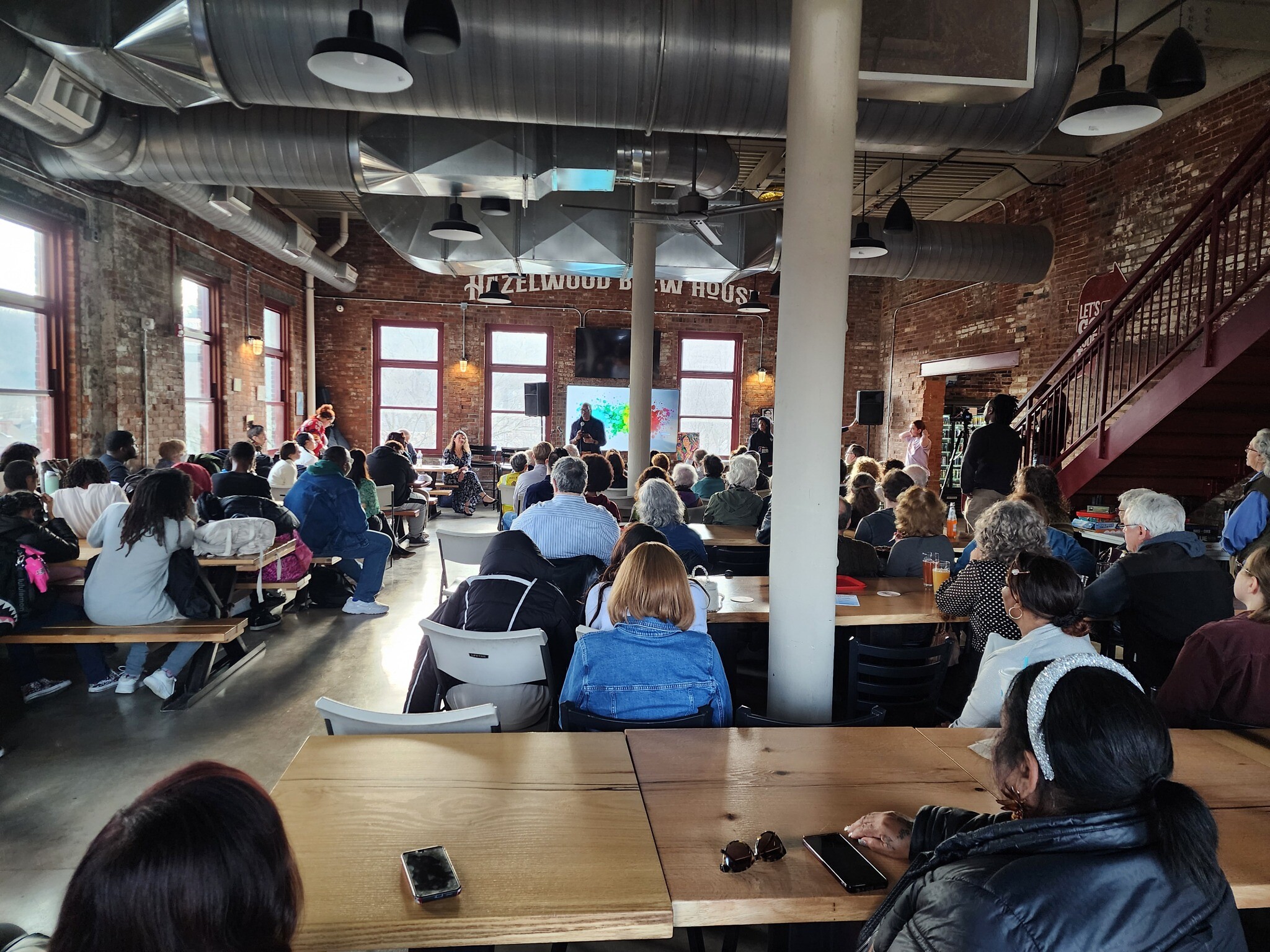
Throughout the program, Smith and Dresner implored attendees to share stories, listen and learn.
Tonight’s goal, Dresner said, is for people to chat, exchange contact information, eventually meet for coffee and build interpersonal bonds.
“That’s how it starts,” he said.
“I think it’s good for us to be reminded — good for us to pause and reflect on who we are as people — and then begin to ask ourselves, or as people, to begin to come together to learn more and build genuine relationships,” Smith said.
But fraternization is only so valuable.
“You have to be more willing to listen than to talk. That’s how we learn,” Smith said. “You ask questions, but we learn by listening and observing.”
Dresner’s visit to Pittsburgh, Loeb told attendees, was part of the writer and filmmaker’s national project, “Black–Jewish Reconciliation: (Re)Building the Bridge.”
The endeavor, which promotes community-based dialogue about the value of the Black-Jewish alliance, is supported by the Ford Foundation.
Shadyside resident Amy Singleton, 66, attended Thursday’s program and said she vividly remembers both King’s murder and “protests” from decades ago.
Although progress has been made, “a lot of ugliness” remains and “it’s pulling us apart,” she said.
People should see this event as a tool, Squirrel Hill resident Bill Isler, 79, told the Chronicle shortly before exiting Hazelwood Brew House. “Getting out into the community, getting people together, talking about the issues — people aren’t afraid to talk, we just have to give them the opportunity to do it. And that’s what happened tonight.” PJC
Adam Reinherz can be reached at areinherz@pittsburghjewishchronicle.org.
comments