
At the edge of the pool Coach Al Rose delivers perspective
After nearly seven decades helping athletes, Al Rose says there's only one question every coach should ask: ‘Is that really good for my kids?’
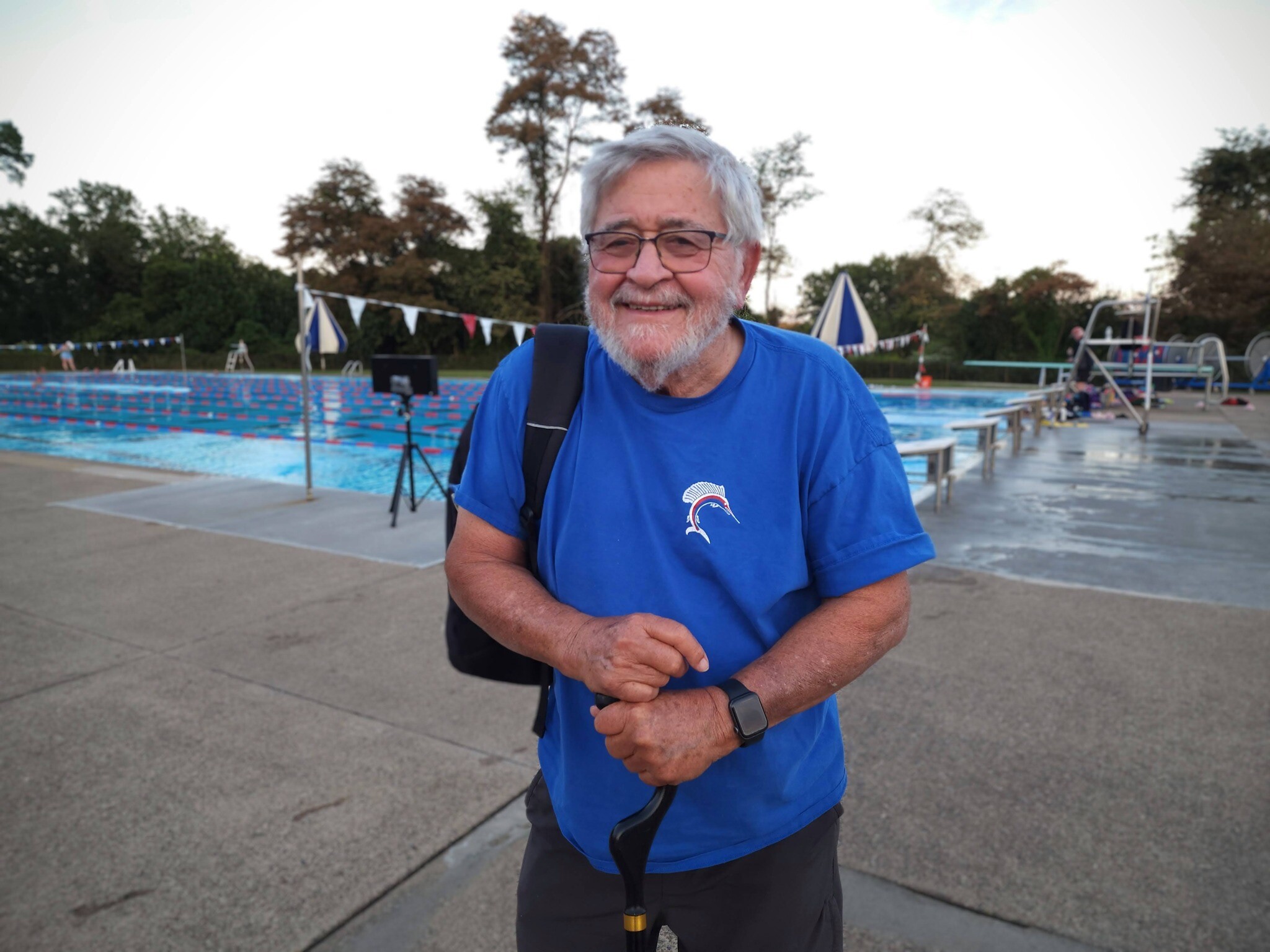
Coach Al Rose hasn’t taken his last lap, but the pool’s end is in sight. After 67 years with the JCC Sailfish, Rose stepped down from leading the team in September. Since then, he’s continued coaching athletes at the Olympic Swim and Health Club in Penn Hills.
On Saturdays and Sundays he oversees a few swimmers in a single lane. It’s quite the change from administering daily 5 a.m. practices for scores of promising teens, but it “works out,” Rose said. He’s still correcting strokes, helping swimmers come off the wall and, most importantly, prepare for what’s next.
For longer than many people live, Rose’s swimmers have reached the apex of accomplishment. During the past seven decades his athletes have won Olympic gold, qualified for the Olympic trials, won national championships, been recruited by top-ranked college programs, received Division 1 scholarships and routinely bested personal records.
The Forest Hills resident, who grew up swimming at the YMWHA in Oakland (a precursor to the JCC), recognizes the totality of his swimmers’ achievements, but asking him to parse a lifetime at the pool bring some surprising turns. At points, speaking with the aquatic savant feels like returning to math class. With a cup of tea in hand, he mentioned stroke count, distance, time and tempo. Practices, he continued, required carefully planned workouts, staggering athletes of differing abilities in adjacent lanes and adjustments, or tapers, for upcoming races.
Listening to Rose, one might think his formulas are solely dependent on calendars, calculators and stopwatches. Success, however, is measured with the fewest of tools; he sees it in his swimmers when they “do the best they can,” he said.

Pushing athletes just enough requires a lifetime of learning.
Trips to the Olympic trials and conversations with other coaches helped. Exceptional coaches, like athletes, Rose, 87, said, exhibit a combination of “natural ability” and dedication. Something that separates the best, though, is recognizing a family’s role in the process.
A partnership between parent, child and coach places the latter in a unique position. If parents are lax, a coach can be tough; but if parents are especially demanding and a coach matches that intensity, most kids will fail. Rose explained that the pressure to meet both sides’ expectations often pushes swimmers to go too fast — leaving them anxious and prone to mistakes.
“You can’t have me pushing you and your parents pushing you,” Rose said. “It doesn’t work.”
A healthier approach requires grinding and good times. As an example, during out-of-town meets, Rose incorporated tours or activities, so swimmers didn’t only associate travel with competition. Likewise, before any meet — be it a small race or a major invitational — he urged his swimmers not only to perform repeats, but also to take a moment to pause.
One exercise, Rose recalled, involved “visualized training.” Before practice, athletes would stand on the pool deck, close their eyes and imagine the race. Even with 20 or 30 kids present, it would be quiet and “we’d talk about the stroke, the push off, the start.”
Sometimes, while swimmers were in the water, Rose would ask his athletes to take five seconds, close their eyes and imagine the event.
Visualized training is about “bypassing the brain and making the muscles do what’s automatic,” he said. “Perfect practice helps you not do it wrong in a meet.”
First splash
Rose was born in the Hill District and moved to Oakland at age 6. As a child, he swam at the YMWHA and later with Schenley High School’s team. After swimming for Westminster College, Rose returned to the YMWHA to become its aquatics director.
At the time, Dick Bower was coach. The two overlapped for about a year before Bower (who later went on to lead Tulane University) altered Rose’s life. Recalling one of their final conversations before Bower’s departure, Rose was told, “Al, I’m done. I’m going to Bethel. It’s yours.”
Taking over the program wasn’t necessarily seamless. Bower was a great recruiter.
“He had all these really, really, really good swimmers. And at the end of the summer, I got one or two of them,” Rose said with a laugh. “The rest left and went to Bethel Park.”
A mass exodus of swimmers didn’t negate expectations.
“There was a lot of pressure to keep up the tradition,” he said.
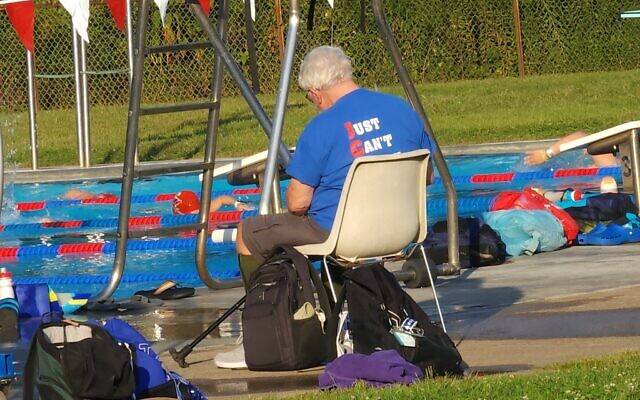
Established in 1928, the swim team was a known entity. With origins dating to the Irene Kaufmann Settlement, the club was just one of several sporting outlets catering to driven athletes.
Rose took the team under his wing. He eventually stepped down as aquatics director but remained coach. Mornings and evenings were spent aiding young swimmers. Remaining working hours were dedicated to running B&R Pools and Swim Shop with members of the Bonavita family.
Coaching and maintaining a small business was an ideal tandem, Rose explained.
Travel time for tournaments amounted to almost two to three months per year. With a schedule like that, “what boss would want me to stay around?”
Sign of the times
Given his almost 70 years of coaching, Rose has seen nearly everything. Program sizes have waned and boomed. Championships have been won and lost. Equipment and facilities today are wholly different from what they were, he said. Swimmers used to stand on the deck and “use weights that we made with tin cans filled with concrete.”
The current pool, which was built in 1986, is a welcome reprieve from its predecessors.
In 1966, Sports Illustrated wrote about Brad McKean, a talented Pittsburgh teen. While the national magazine touted Rose, McKean’s coach, as a “soft-voiced young man with a nice eye for the subtleties of stroke and a capacity for combining zeal with patience,” it described the YMWHA pool less graciously. “It is a shallow, narrow 25-yard chlorine pit of the late Weissmuller period. In the winter the heating ducts suspended from the ceiling occasionally gasp and sigh, as if despairing at the impossible task of drying out an atmosphere as constantly dank as a Central American swamp. A year or so ago a weight lifter on the floor above dropped his barbell, and 35 square feet of ceiling fell into the pool.”
Yes, the pool changed after the center moved to Squirrel Hill, but so did those who practiced sports, Rose said. Most people entering the JCC now aren’t eager to join a basketball or swim team, let alone to box or play handball. They are interested in “fitness and not the competitive aspect.”
Some changes are good. Others not so much. The role of a coach is to appreciate trends and substance. Fads and tips can be beneficial, “but as a coach you have to look at them and say, ‘Is that really good for my kids?’”
Answering that question helped Rose leave his long-held post. With the bulk of the Sailfish squad far from high school, Rose called it a good time to step away.
“I looked at it — there are a lot of kids, young kids, on the team,” he said. “They have the ability to be better, and I’m not going to be around. I hope I’m alive, but I’m not going to be around coaching at 95 when they go to high school.”
On weekends, in a single lane in Penn Hills, Rose is still happily offering instruction. Between correcting strokes and helping swimmers off the wall, he’s sharing a message he put into practice for nearly 70 years.
“There’s a place for everyone in athletics and academics. They teach you so much about life, that sometimes you don’t get,” he said. “There’s always winners, there’s always losers, there’s always those people in between, and doing the best you can — no matter what it is — is important, and family is important to help you.” PJC
Adam Reinherz can be reached at areinherz@pittsburghjewishchronicle.org.
comments