
From Squirrel Hill to Seoul, military mohel makes global trip for bris
'We live in a community where there’s food, restaurants and everything. These people do holy work for us. We should help them'
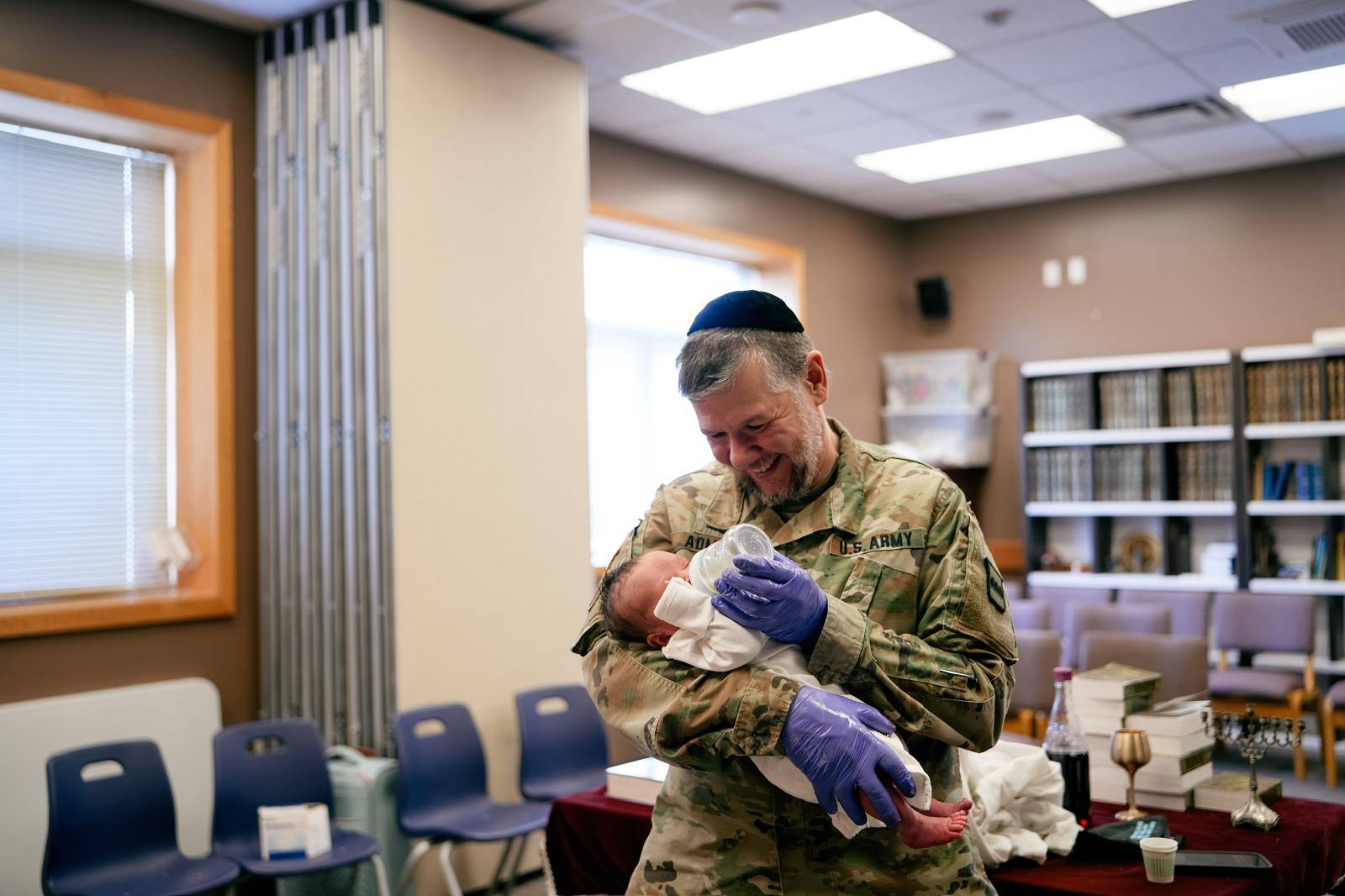
Commitment to a covenant led Rabbi Elisar Admon 6,800 miles from home. After receiving news that a military pilot’s son needed a bris, Admon, a mohel and chaplain major in the U.S. Army Reserve, flew from Pittsburgh to Seoul, South Korea, to perform the ritual.
Now back in Pittsburgh, Admon described a whirlwind journey filled with clearances, kashrut concerns, dateline quirks and renewed appreciation for the U.S. military’s regard for religious observance.
The story began, Admon said, nearly three months ago when he was informed that a pilot and his wife were expecting a child. Stationed at Camp Humphreys, the largest U.S. Army garrison in Asia, the Jewish family quickly discovered “there was no military mohel in the area.”
After the pilot submitted a request for religious accommodation, and received approval from his command, Admon, a mohel who also volunteers as a municipal, state, police, prison and FBI chaplain, was asked whether he’d be able to help. The Pittsburgher agreed, and received approval from his command to do the mission.
“When the baby was born I got the orders,” Admon told the Chronicle.

Circumcision, which serves as a sign of the covenant between God and the descendants of Abraham according to the Bible, is traditionally performed eight days after a baby’s birth.
Given the timing of this baby’s birth, Admon said, the eighth day was a Friday.
Admon is Sabbath-observant, which meant that not only did his travel itinerary require arriving in time for the bris, but he needed to remain in the country afterward and find a place for Shabbat.
The mohel communicated these needs, and said, “The Army was very excited and supportive of the religious accommodation.”
Admon left Pittsburgh Wednesday morning, March 18, and flew to Chicago, then Seoul. After about 19 hours, Admon arrived in South Korea on Thursday afternoon, March 19.
“I got a ride to the base and slept there overnight,” he said.
Camp Humphreys, according to the U.S. military, is the “Army’s home in Korea.” Along with serving as the headquarters for the Eighth U.S. Army, the Second Infantry Division and the Army’s “most active airfield in the Pacific,” Camp Humphreys is the hub of U.S. Forces Korea.
The base is also home to Four Chaplains Memorial Chapel, where Shabbat services are held on Friday evenings.
A room within the chapel building is designated as the synagogue, Admon said. The room contains an ark, Torah, several chumashim (printed and bound copies of the Pentateuch) and other Jewish books, including a complete set of the Artscroll Talmud Bavli. A kosher kitchen is nearby, with separate areas for meat and milk.
The baby’s grandmother, Admon said, traveled to the base for the bris and helped prepare a meal with traditional foods, including bagels, cream cheese, cake and kugel.
Following a millennia-old tradition of performing the service eight days after the baby’s birth, a “kosher bris was held bo bayom” (on that day), Admon said.
After tending to the baby and celebrating with the family and fellow military personnel, Admon headed to a Chabad in Seoul.
“There were a lot of Israelis there for Shabbat,” Admon said. “Most of them were stuck and couldn’t get to Israel because of the war.”
Although meals were provided, Admon still brought a suitcase full of holiday-related goods for the community.
A 2022 Report on International Religious Freedom from the Department of State notes South Korea’s Jewish population is “approximately 1,000, almost all expatriates.”
Before traveling to Seoul, Admon stopped at Murray Avenue Kosher and bought about 70 pounds of kosher for Passover items, including charoset, matzah ball mix, matzah meal, marshmallows and other snacks.
While the Army distributes matzah to soldiers at Camp Humphreys, Admon said he came prepared with more.
Schlepping kosher staples overseas was the least he could do, he continued. “We live in a community where there’s food, restaurants and everything. These people do holy work for us. We should help them.”
With a similar mindset, Admon, who is a member of Pittsburgh’s Chevra Kadisha (Jewish Burial Society), spent time in Seoul aiding local Jewish leadership with burial-related instructions.
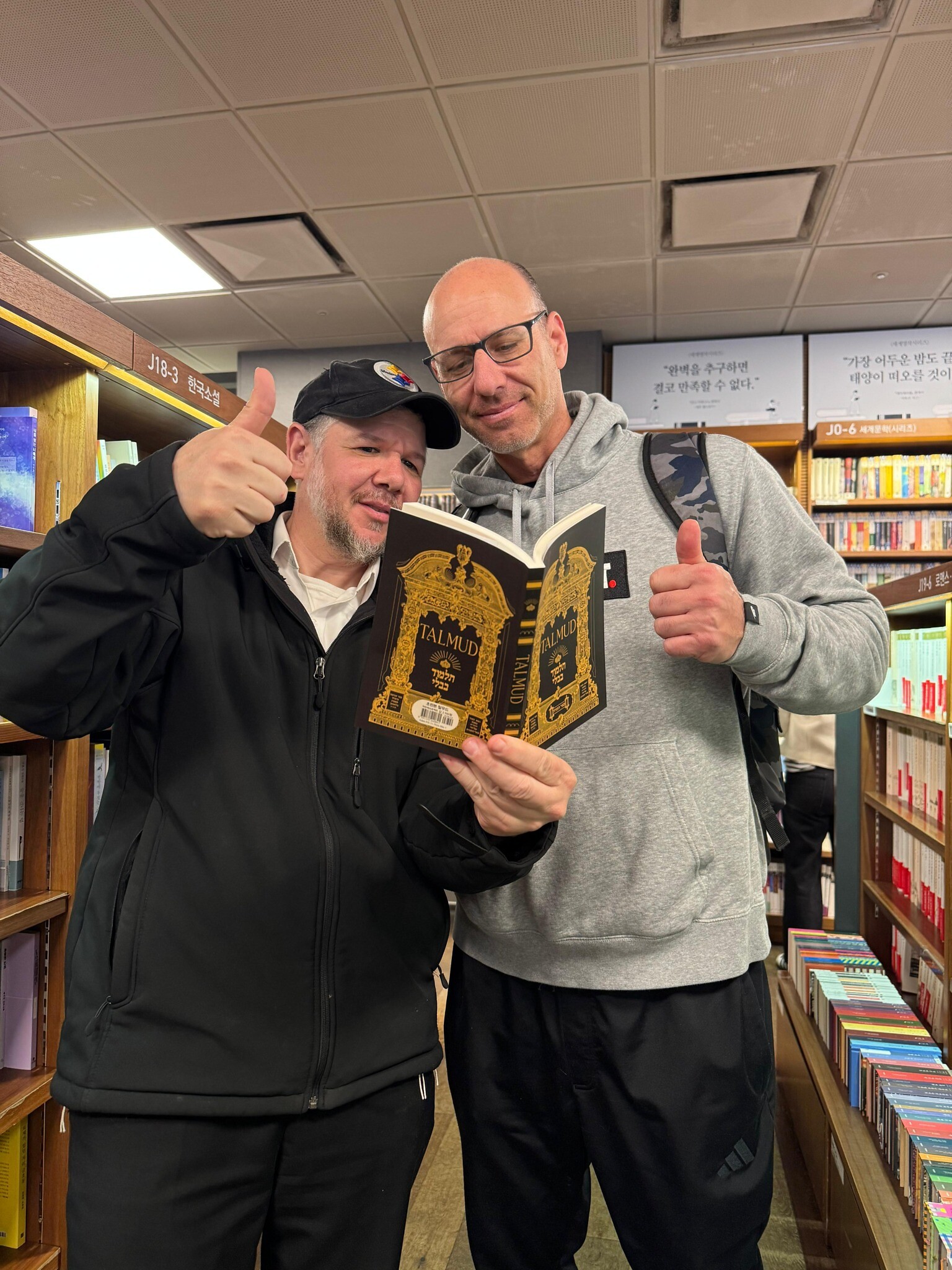
Before departing South Korea on March 23, Admon toured Seoul on March 22 with a guide. Of note, Admon said, was a trip to a downtown bookstore that was “three times as large as Barnes & Noble.”
Inside the store, Admon saw a copy of the Babylonian Talmud in Korean. He purchased a volume for what he estimates was $3. The book, he said, wasn’t the only thing he brought back to Pittsburgh, as the trip home offered new appreciation.
Admon left Seoul Monday morning, March 23. Before departing, he prayed Shacharit (the morning service) at his hotel. After boarding the plane, and while en route to San Francisco, Admon prayed Mincha (the afternoon service) and Maariv (the evening service). Because he traveled eastward across the International Date Line, Admon arrived in San Francisco on Monday morning, March 23.
Though he had already prayed Shacharit on March 23 in Seoul, Admon prayed the morning service again in San Francisco on March 23 because he “had the experience of sunset and nightfall,” which constituted a new day according to Jewish law, he said.
Meeting the wrinkles of time-bound observance was just part of an incredible experience, he told the Chronicle.
“I’m taking the chizuk (strength) that these people gave me. They were of the opinion that no matter where they are in the world they want to keep the traditions, even if it meant working hard to have a mohel come and do a kosher bris,” he said.
Additionally, what this experience reaffirmed was an understanding that “it’s not someone’s fault if they are stationed somewhere far away,” he continued. “It is our obligation to answer their needs and provide religious support.”
The military made clear that “we need to support people and show them that if you want to serve the country and keep your religion, we will support you. That’s an important message,” Admon said. “Supporting our people means supporting our soldiers and their families wherever they are.” PJC
Adam Reinherz can be reached at areinherz@pittsburghjewishchronicle.org.
comments