
Remembering Pittsburgh photographer Hans Jonas
Hans Jonas died May 1, four months into his 100th year, leaving a vast body of work that his daughter is cataloguing.
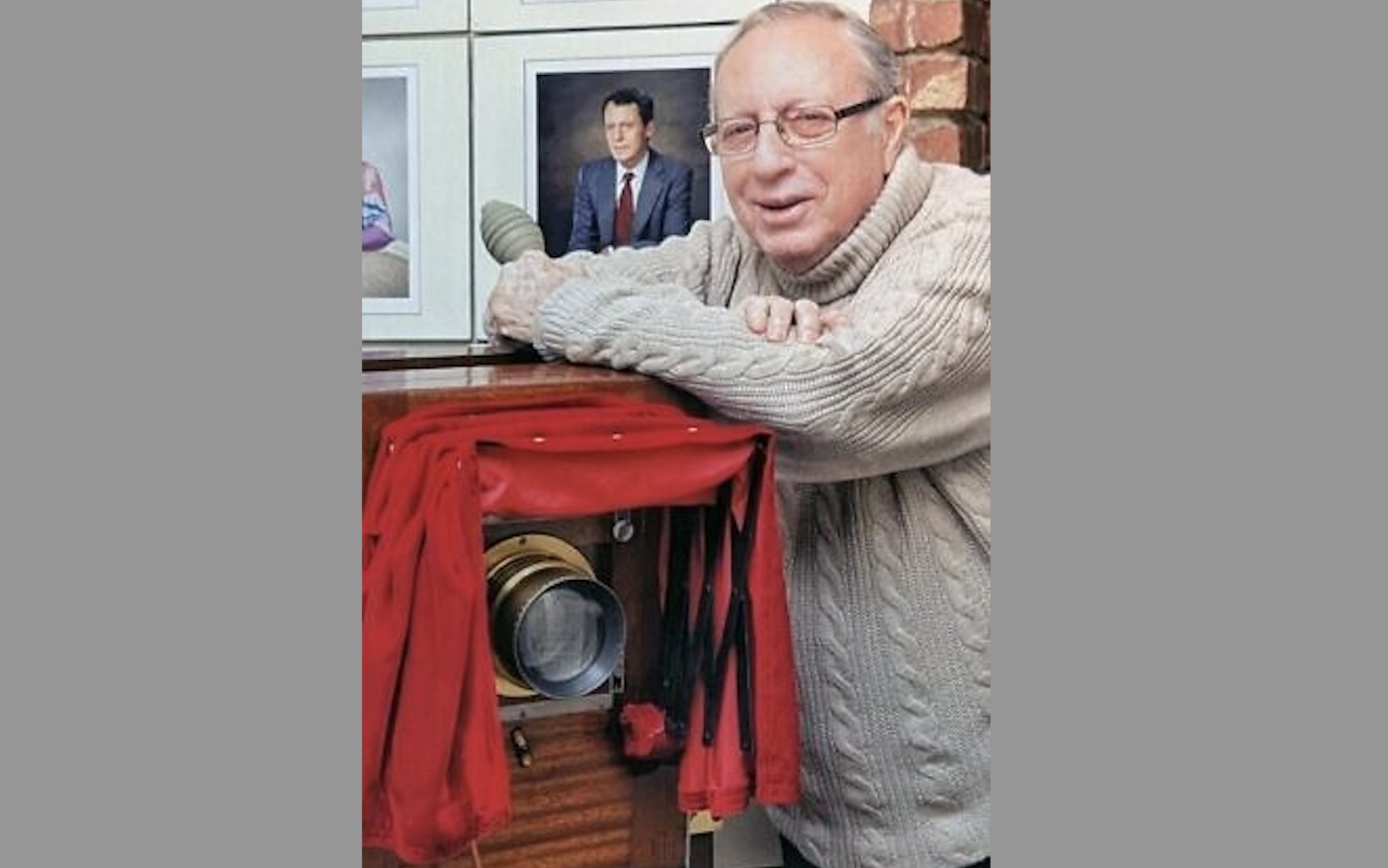
Marla Jonas spends much of her time poring over photographs taken by her father, Hans Jonas, who spent close to a century documenting the people of Pittsburgh with his camera.
There are thousands of candid and portrait shots of celebrities, CEOs and socialites, as well as ordinary folks who came to Jonas Studio in Oakland for a sitting.
“My father had a special way of looking inside a person and finding a beauty they didn’t even know they had,” recalled Marla Jonas, 68. “He’d create an environment where they’d relax and engage enough that at the moment their beauty came out, he’d snap the shutter.”
Hans Jonas died May 1, four months into his 100th year, leaving a vast body of work that his daughter is cataloguing. She hopes to donate it eventually to the University of Pittsburgh.
Her father was organized, which is helping the process, Marla Jonas said, but the sheer volume of images makes the task as challenging as it is nostalgic.
Every image conjures memories, said Marla Jonas, who worked alongside her father for 35 years as a shooter and a finisher, while managing her own tutoring business.
With her father’s passing, she is looking ahead to new pursuits that may include teaching, volunteering and travel, but she first wants to secure her family’s remarkable legacy.
“I want to be able to walk away knowing I can put a bookend of four generations of photographers and nothing will be lost.”
“There’s a lot of history there.”
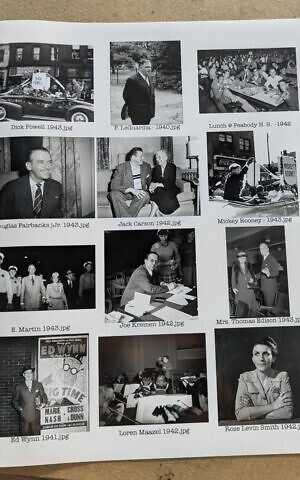
One of Hans Jonas’ earliest photos was a candid shot of his Peabody High School classmate Lorin Maazel conducting the Pittsburgh Symphony Orchestra.
Maazel, a child prodigy who would grow up to become a world-renowned maestro, was then just 13 years old.
Hans Jonas was 15.
The Jonases settled first in Hazelwood and eventually in Highland Park. “My grandmother was bourgeois and hated Hazelwood because of the mills,” Marla Jonas said. “It was so dirty back then.”
With money borrowed from the Hebrew Free Loan Association, Hermann Jonas set up a photography studio. “It was my father’s job to make a repayment every week,” Marla Jonas said. “The streetcar made him sick, so he’d buy ice cream and walk to Hebrew Free Loan instead.”
During his service as an Army photographer in World War II, Hans Jonas snapped a picture of President Dwight D. Eisenhower descending from a plane. “He sent a print to the White House, and he got it back with Eisenhower’s signature,” Marla Jonas said.
Hans Jonas joined his father’s studio in 1946 and was given his first important professional opportunity in 1948 when he was sent to photograph presidential hopeful Tom Dewey for 50 cents a shot.
Hans Jonas became the go-to photographer for the annual Junior League of Pittsburgh Cinderella Ball and society weddings. But much of his work was in his studio where luminaries like Mister (Fred) Rogers, Dr. Thomas Starzl, Pittsburgh Pirates slugger Willie Stargell, and the acclaimed Irish poet Seamus Heaney, in town to give a reading, came for portraits.
When Pittsburgh Penguins great Mario Lemieux — then a rookie — arrived for a sitting, he was accompanied by an interpreter.
Sessions typically lasted no longer than 20 minutes, Marla Jonas said. “After that, a person’s attention begins to wander.”
Hans Jonas and his wife, June, were world travelers. During a visit to England, Hans Jonas captured an image of Queen Elizabeth through the window of her limousine. He also photographed President Gerald Ford through a car window.
“He was always looking for something to shoot, and always ready to shoot,” Marla Jonas said. “He taught me to anticipate what comes next. He’d say, ‘You have to be present all the time.’”
“He was a great observer, and he was never without his camera.”
Because he shot film, Hans Jonas had mastered camera mechanics, chemistry and light, blending artistry with technical proficiency.
He obtained a patent for a system of lighting he called the Jonas flash director, Marla Jonas said. “The patent expired but it was a whale of a product that gave him great control with lighting in candid settings.”
Hans Jonas owned numerous cameras. While several have been sold, Marla Jonas has a couple of antiques she would like to donate to a photography museum.
Although Hans Jonas was reluctant to embrace digital technology, thinking it was a passing fancy, he eventually gave in, his daughter said. “He didn’t think it would last.”
He closed his Oakland studio in 2004 and set up shop in the Squirrel Hill home, a carriage house, he shared with his daughter, living there until his passing.
“He took his last photos when he was 99. He’d look through his archives and send prints to people with a note,” Marla Jonas said. “He never retired. He wasn’t doing it for money. It was his passion. His camera was an extension of him.” PJC
Deborah Weisberg is a freelance writer living in Pittsburgh.
comments