
Shared histories, shared purpose: Jews and Pride
When the Jewish community participates in Pride, we send a clear message. Identity should not have to be hidden.

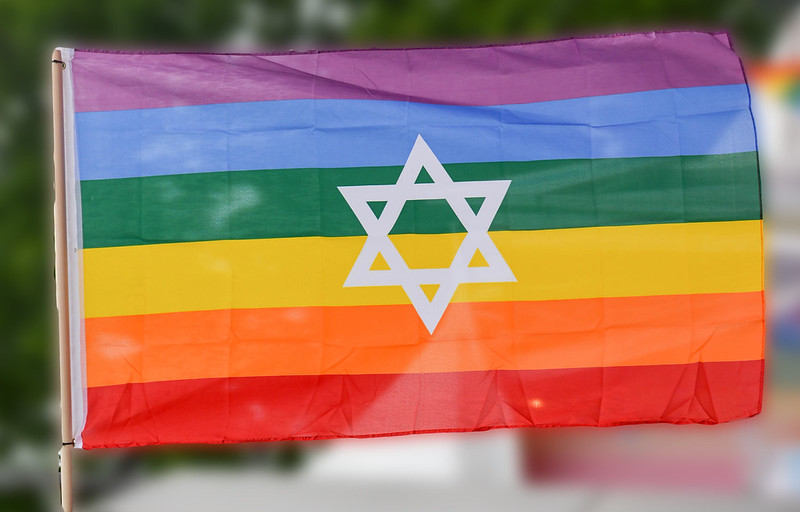
As Pittsburgh prepares for its annual Pride parade, it is worth remembering that LGBTQ+ Jews are not on the margins of Jewish life — they are an integral part of it. They are our family members, friends, congregants, educators and leaders, helping to shape the Jewish community in all its diversity.
With that understanding, the Jewish Federation of Greater Pittsburgh stands in partnership with the LGBTQ+ community, not out of trend or obligation, but out of responsibility. Supporting the LGBTQ+ community is essential to who we are as a Jewish community and to how we show up in the world.
At its core, Pride is about affirming human dignity. It creates public space where individuals can live openly and without fear. It is also about joy. Pride celebrates being seen, embracing identity and coming together in community. For many Jews, this aspiration feels deeply familiar. Jewish history is a story of striving to live openly and authentically in societies that too often demanded concealment.
Get The Jewish Chronicle Weekly Edition by email and never miss our top stories Free Sign Up
Since Oct. 7, 2023, Jews around the world have experienced a renewed sense of vulnerability. In cities across the United States and beyond, Jewish individuals have quietly removed visible symbols of their identity. Stars of David are tucked inside shirts. Mezuzot are taken down from doorposts. Yarmulkes are replaced with hats. Names and affiliations are softened or concealed. This is a modern expression of an old fear: that being visibly Jewish can make someone a target.
This reality closely parallels the lived experience of LGBTQ+ individuals. For generations, members of that community faced the same dilemma. They had to choose whether to be seen as their authentic selves or to hide in order to stay safe.
The Jewish community understands that choice because we have faced it ourselves.
The connection between the Jewish and LGBTQ+ communities is rooted in shared experience. Both communities have been targeted and threatened simply because of who they are. That is not abstract. It is lived history.
During the Holocaust, Jews and LGBTQ+ individuals were persecuted side by side. They were imprisoned, marked and murdered by the Nazi regime because of their identities.
In 2016, the LGBTQ+ community was attacked in a horrific act of hate when a gunman opened fire at the Pulse nightclub in Orlando, killing 49 people. The massacre served as a stark reminder of how quickly hatred can turn deadly when people are targeted because of their identity.
The Jewish community knows this pain as well.
On Oct. 27, 2018, one of the darkest days in our community’s history unfolded in Pittsburgh. An antisemitic white supremacist entered the Tree of Life building and murdered 11 worshipers from three congregations, simply because they were Jewish. While the violence occurred in one city, its impact was felt across the country. For many American Jews, it shattered a long-held sense of safety and replaced it with a sobering realization that even here, even in our houses of worship, we are not immune from hatred.
These acts of violence are connected by the same root: hatred directed at identity. Both took place in spaces where people were gathered as their full selves, in spaces of authenticity, community and belonging.
These incidents remind us why Jewish support for the LGBTQ+ community is not optional. It is necessary.
When Jewish institutions support Pride, we are standing with others. Just as importantly, we are standing up for members of our own community. We are affirming that LGBTQ+ Jews belong fully and without condition.
For many LGBTQ+ Jews, Pride is one of the few spaces where they can publicly express all aspects of their identity. Here in Pittsburgh, we are proud that our Pride parade has been a place where Jewish individuals and organizations are welcomed, visible and able to participate fully as members of both communities.
That local reality makes our support even more important in a broader context.
Around the world, Jewish LGBTQ+ groups have increasingly found themselves questioned, marginalized, or excluded from Pride spaces. In some cases, participation comes with expectations to distance from core aspects of identity or adopt a particular worldview.
No one should be required to pass an ideological test to participate in a space built on inclusion.
A Pride movement that cannot make space for Jewish participants risks losing the very values that shaped it.
That is why Jewish engagement matters.
In this moment, visibility carries weight.
For LGBTQ+ individuals, Pride has long been about reclaiming space and declaring that fear will not define identity. For Jews, particularly in the aftermath of Oct. 7 and rising antisemitism, visibility has once again become complicated. The decision to be visibly Jewish in public spaces is no longer simple.
That is exactly why showing up matters.
When the Jewish community participates in Pride, we send a clear message. Identity should not have to be hidden. Communities should not have to shrink themselves to feel safe. People deserve to be seen fully.
For young people especially that message is critical. LGBTQ+ youth need to know they have allies. Jewish youth need to know their identity is something to embrace, not conceal. And those who live at the intersection of both communities need to know they do not have to choose.
Supporting the LGBTQ+ community strengthens the Jewish community. It reinforces that our community stands for dignity, safety, and belonging. It builds relationships. It creates a stronger, more resilient Pittsburgh. It ensures that when any group is targeted, they do not stand alone.
History has shown that hatred does not remain contained. It spreads.
That is why solidarity is essential.
There are moments when communities are called not just to speak, but to act visibly.
This is one of those moments.
The Jewish Federation of Greater Pittsburgh supports the LGBTQ+ community because doing so is also necessary to protect our own community, to support those within it, and to build the kind of society we want to live in.
We support Pride because people should not have to hide.
We support Pride because we know the cost of silence.
We support Pride because inclusion must be real, not conditional.
And we support Pride because it reflects a vision of society where people can live openly, safely and with dignity.
As Pittsburgh gathers for Pride, the Jewish community will stand alongside our neighbors with purpose and joy.
Because supporting one another is how communities endure and thrive.
And because in a world where too many are still asked to question whether they belong, our answer must remain clear:
You do. PJC
David Knoll is the associate vice president of public affairs at the Jewish Federation of Greater Pittsburgh.
comments