
JAA speaker series to demystify the end-of-life doula profession
Just as a birthing doula assists a woman with every step of the birth process, an end-of-life doula is a companion for a dying person every step of the way.
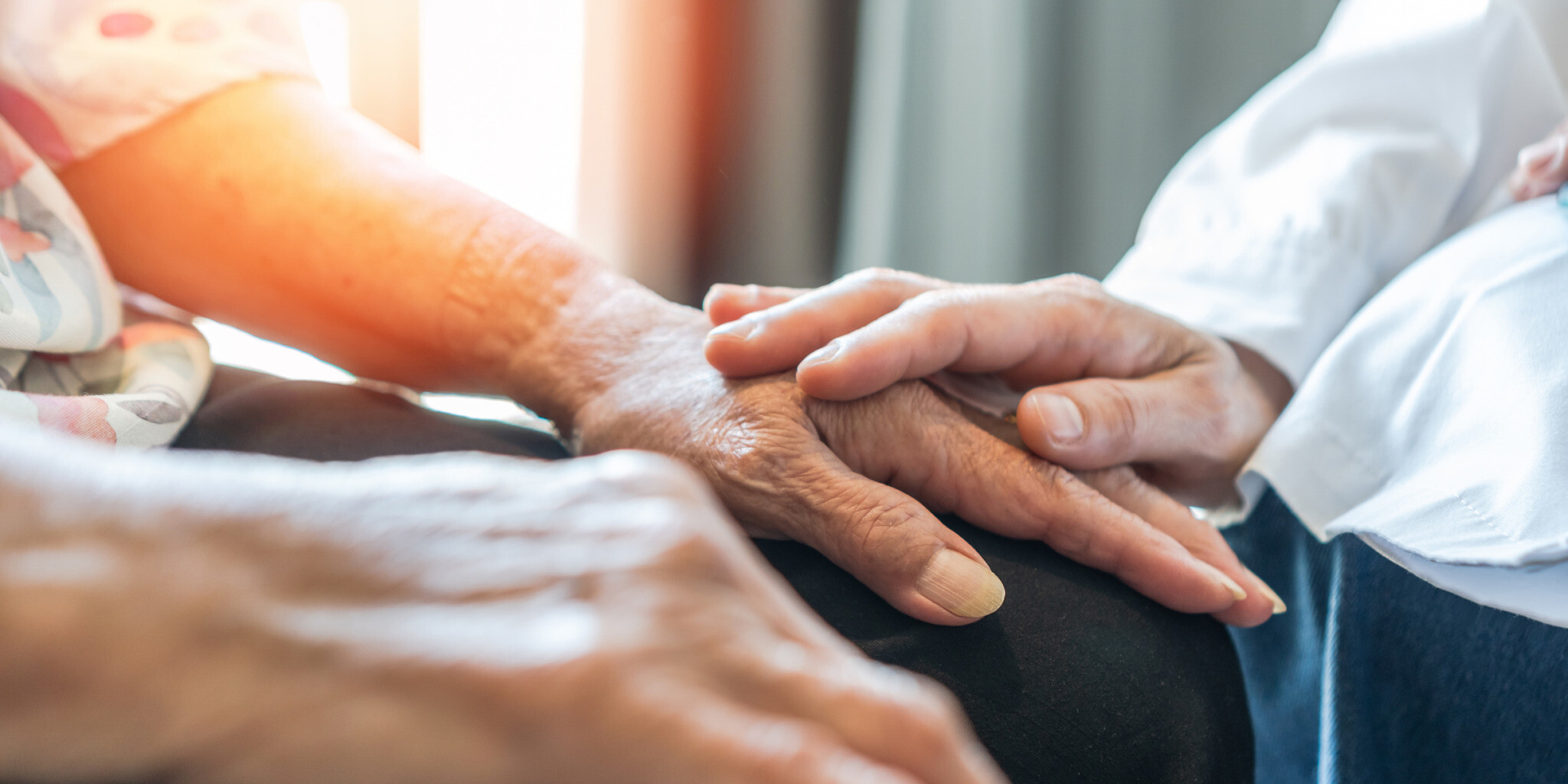
The only two truly universal human experiences are birth and death. So, why is it so hard to talk about the latter? Most of us clam up when we try to talk about mortality. One profession, however, has made easing conversations about death and palliative care its central mission: the end-of-life doula.
A new free speaker series beginning July 9 at the Jewish Association on Aging aims to demystify what end-of-life doulas do and to open conversations about end-of-life planning and care.
Just as a birthing doula assists a woman with every step of the birth process, an end-of-life doula is a companion for a dying person every step of the way.
“They may be assisting with such things as making decisions, educating on what to expect as things get closer to death so people are not surprised or scared, providing nonjudgmental support, helping with life review and legacy projects, assisting with practical tasks allowing time for family respite, or just spending time at the bedside providing support,” Stacey Tabanli, director of the JAA’s Sivitz Hospice and Palliative Care, told the Chronicle.
Tabanli is an end-of-life doula and a registered nurse. While end-of-life doulas are not necessarily medical professionals, there is often overlap. End-of-life doulas may use tools like Reiki, aromatherapy, guided imagery, breathing exercises and gentle touch, but do not administer medical care in lieu of hospital or hospice services.
“The goal is to educate and not give opinions or make recommendations, to collaborate with the whole family and care team, and respect the client’s autonomy,” Tabanli said.
The upcoming speaker series, hosted by INELDA (The International End-of-Life Doula Association), will have resources available for anyone interested in the career path of end-of-life doula work. Sivitz Jewish Hospice and Palliative Care wanted to develop its own doula program, so it connected with INELDA to help educate interested staff and community members.
Though the program is hosted by the JAA, Tabanli noted that end-of-life doulas serve people of all ages. Conversations around death are often framed as only relevant to the elderly, but doulas “can provide support to people of any age who are facing a terminal illness, a life-limiting condition, or who are in the dying process,” Tabanli said.
Omni Kitts Ferrara, INELDA’s director of education, will speak at the first iteration of the series, titled “Invitation to a Sacred Calling.” Anyone who attends will be able to talk directly to practicing doulas and ask questions about the work.
JAA officials felt a particular pull to work with INELDA because of Judaism’s emphasis on respecting death as a part of life. The Jewish funeral tradition of mourners filling the grave with dirt is a profound goodbye. Then, the tradition of sitting shiva and the 30 days of shloshim ensure that the bereaved are supported through grieving and given adequate time to reintegrate into their lives while still honoring their loss. Saying kaddish daily after a loved one’s death can be both grounding and spiritually comforting.
But caring for the dying person while they are still alive is also a mitzvah in Judaism. “[Judaism has] a moral obligation rooted in the principle kol Yisrael areivim zeh la’zeh — All Israel is responsible for one another,” Tabanli said. “Bikur cholim, or the commandment of visiting the sick, is a significant mitzvah in Judaism that emphasizes compassion, community support and spiritual connection.”
Tabanli shared that Rabbi Dovid Small, the JAA’s director of pastoral care, tells staff that “in Judaism, every moment of life is cherished and precious. To take care of someone at their last moments of life on this world is both honorable and especially important. We say the Shema to affirm our faith and to help the person transition in a calm and serene way.”
Part of an end-of-life doula’s role is to comfort the dying person in a culturally sensitive way. INELDA provides education for end-of-life doulas about religious rituals from every faith that will best serve their clients.
“Oftentimes, when someone thinks of the role of an end-of -life doula, they think this can be depressing. On the contrary, the process can be really uplifting. It can be so comforting to people, and [we] can stop people from being so scared,” Tabanli said.
For the event, Tabanli hopes attendees come away with a better understanding of JAA’s services and a better idea of what options they have for their own end-of-life care. JAA also welcomes volunteers who want to learn more about hospice care. One doesn’t need to be a death doula to become more involved in the lives of the terminally ill.
“Visiting the sick is a fundamental Jewish value, reflecting the importance of caring for others in times of need,” Tabanli said. “It brings both immediate comfort to the sick person and spiritual rewards to the visitor.”
The free workshop “Invitation to a Sacred Calling” will take place Thursday, July 9 at 6 p.m. at the Jewish Association on Aging, 200 JHF Drive. PJC
Emma Riva is a freelance writer living in Pittsburgh.
comments