
CMU Fence painted with anti-Zionist messages, call for violence
University issued statement denouncing message
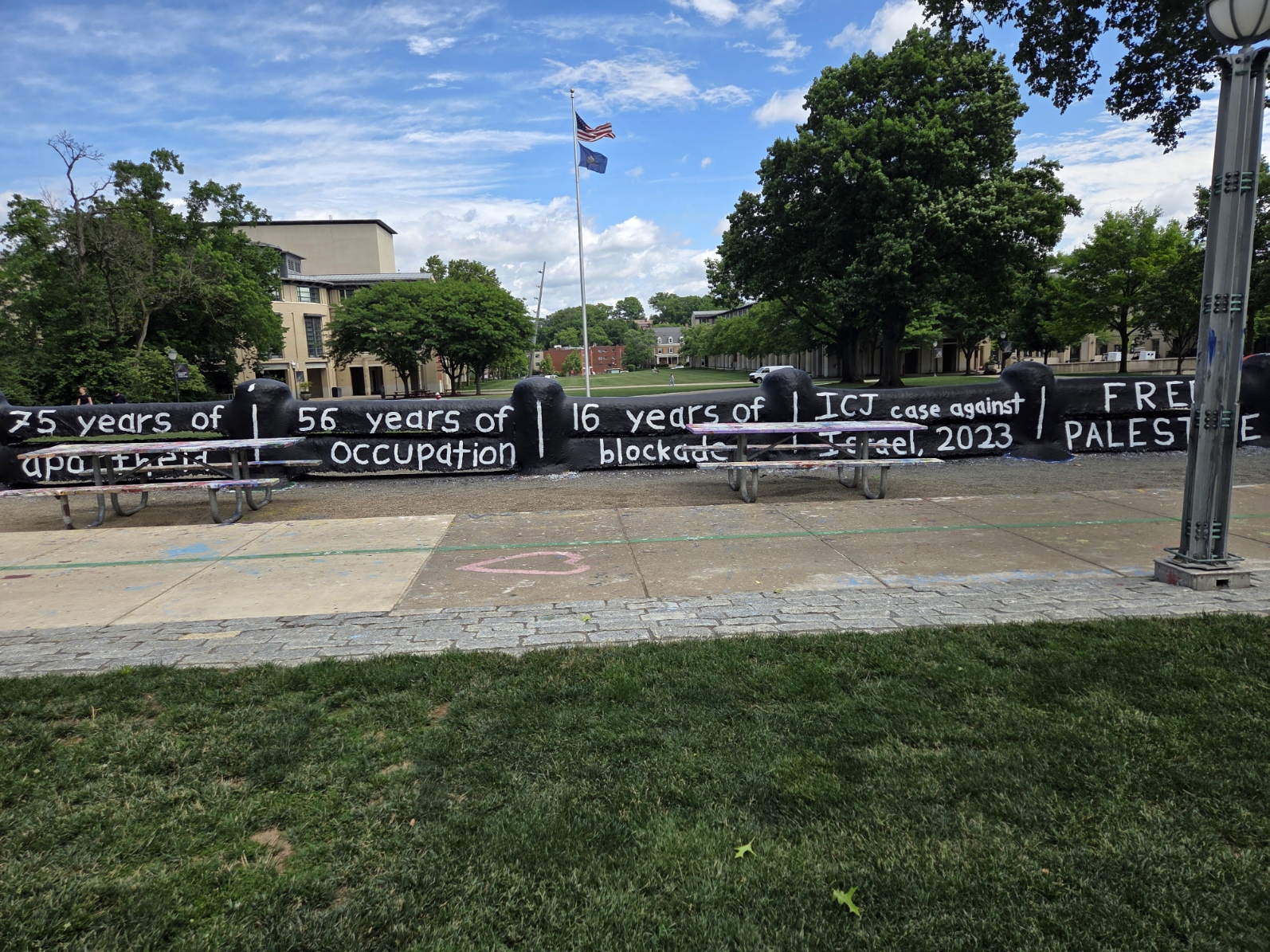
Carnegie Mellon University was again embroiled in controversy over anti-Israel messages painted on The Fence — a space on campus where students share news about events and express opinions. This time at least one of the spray painted messages had more ominous tones.
Those walking on campus June 11 were greeted to a Palestinian flag painted across The Fence, on the side facing Forbes Avenue. The opposing side had five separate anti-Israel messages: “75 years of apartheid,” “56 years of occupation,” “16 years of blockade,” “ICJ case against Israel, 2023” and “Free Palestine.”
More disturbing was a message scrawled atop one of The Fence’s poles: “By any means necessary,” painted in white lettering.
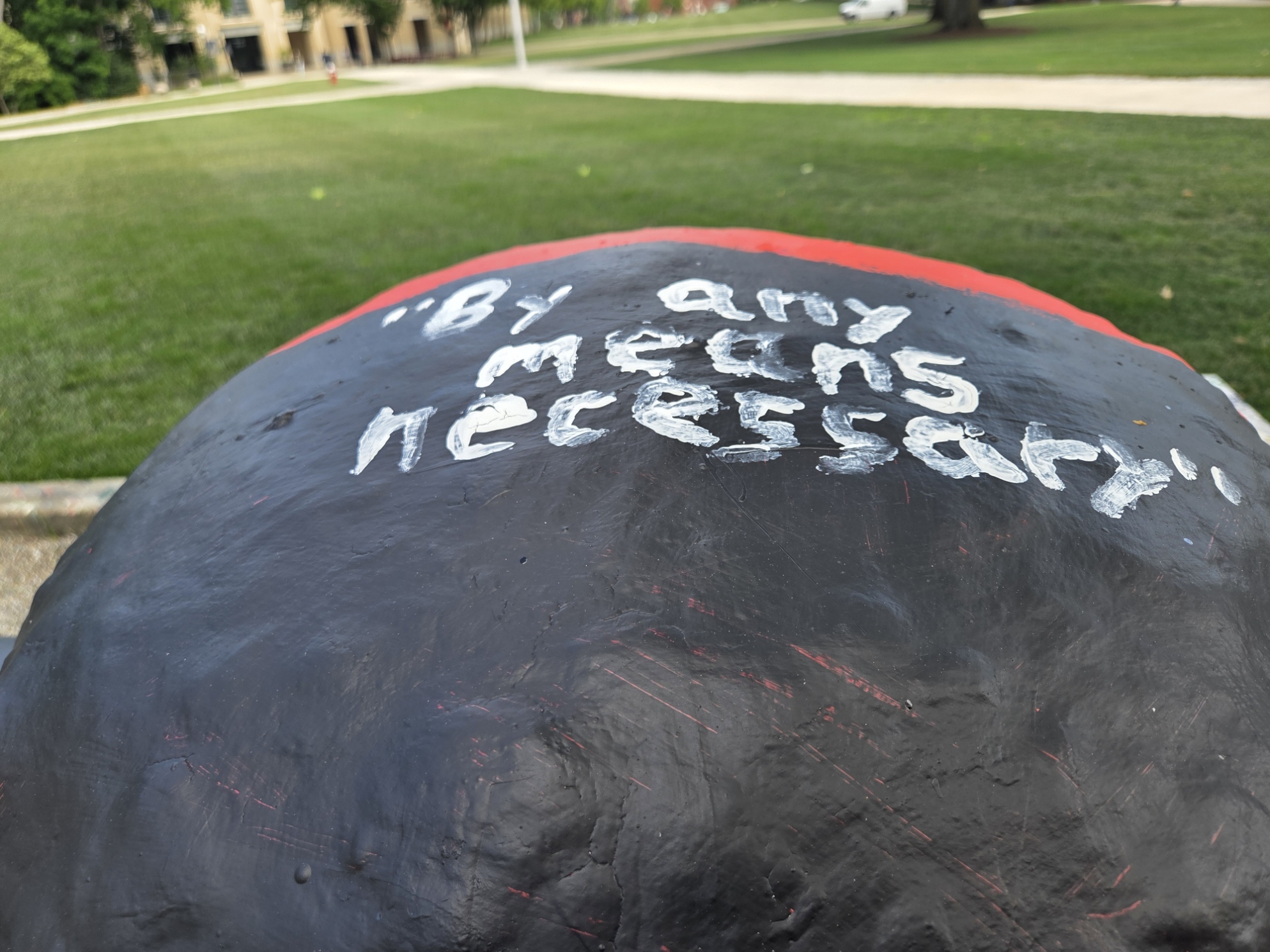
The Instagram page “cmufence” — a social media account not associated with the university, according to university spokesperson Chuck Carney — catalogs the various messages painted on The Fence. The Instagram page cited the group “Antifascist Action @ CMU” as responsible for the anti-Zionist messaging, and highlighted the phrase “By any means necessary” in its post.
Carney said that “Antifascist Action @ CMU” is not a recognized student group.
The Instagram account was created in 2019. Painters of The Fence can fill out a form, and upload photos and information to post on the page.
The phrase “By any means necessary” was first popularized by Jean-Paul Sarte in the 1948 play “Dirty Hands.” The phrase was used by Frantz Fanon in a 1960 speech titled “Why we use violence,” defending armed resistance against the colonial French as part of the Algerian War, and in his book “Alienation and Freedom.” It was later used by Malcolm X.
The phrase has come to be regarded by many as justification for a political movement to use any means — including violence — to achieve its goals.
CMU President Farnam Jahanian issued a response to the anti-Zionist messages on The Fence three days later. At that time, the Fence had been repainted with a message celebrating the New York Knicks win in the NBA Finals.
The CMU Police Department, Jahanian said, launched an investigation that ruled out imminent danger to the community. The investigation, he said, remains “ongoing.”
Jahanian said some members of CMU’s campus community, as well as “the broader Pittsburgh community,” believed the message “was antisemitic and threatened their sense of safety and belonging. Others described the phrase as inciting or supporting violence.”
The university, he wrote, engaged with Student Government, which has a “longstanding role in stewardship of the Fence.”
It “is categorically unacceptable for an anonymous message painted on CMU property to incite or imply support for violence, and it is equally unacceptable for members of our campus community to feel physically threatened or unsafe,” Jahanian added.
By June 17, the side of The Fence closest to Forbes Avenue was again painted with a Palestinian flag. The backside had a personal message to Jahanian.
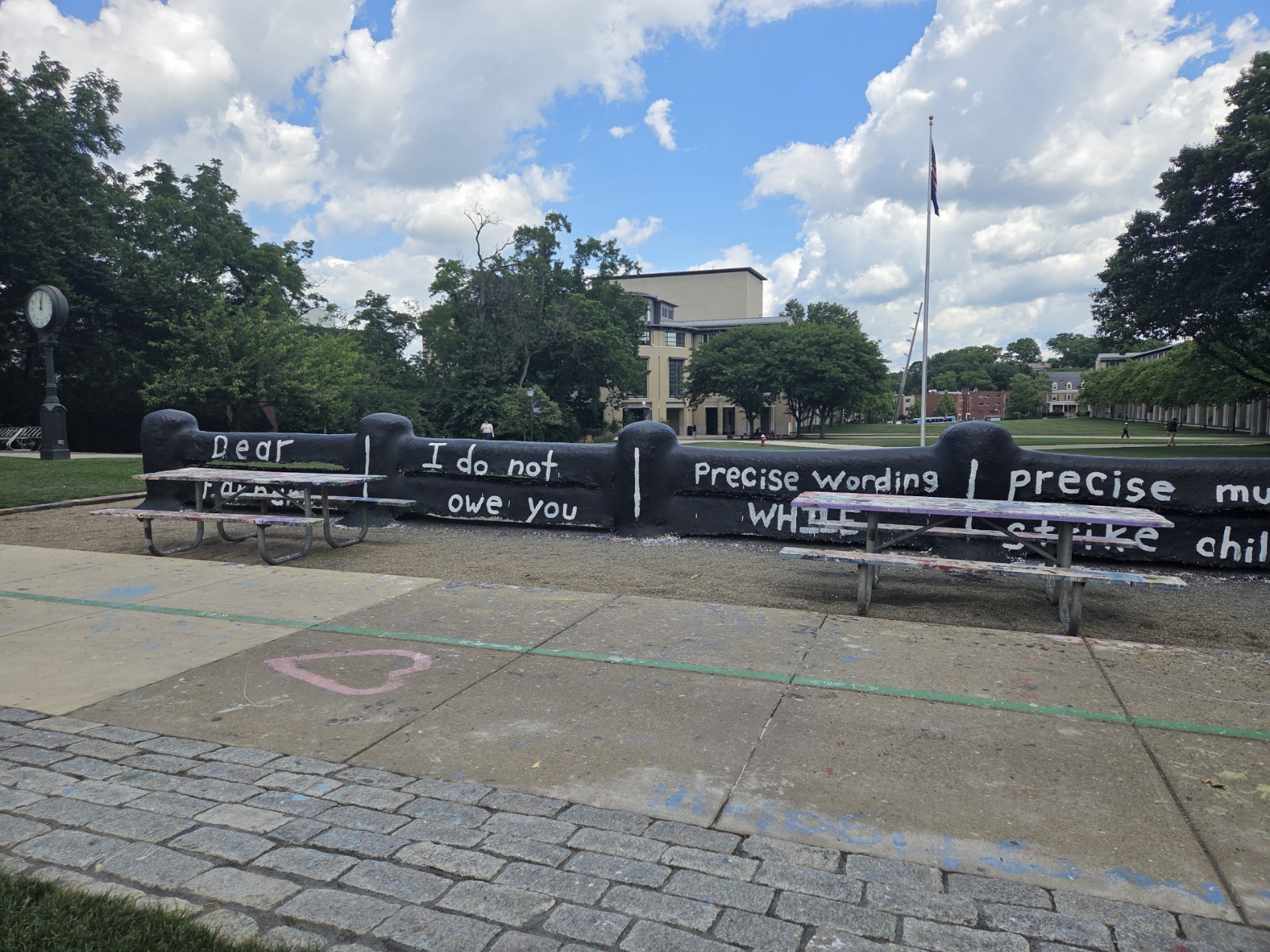
“Dear Farnam, I do not owe you precise wording while precise munitions strike children. Free Palestine,” was painted on The Fence, this time without the inclusion of the phrase “by any means necessary.”
That message was posted on Instagram and credited to “Antifascist Action @ CMU.” This time, the post included the message: “Dear Farnam: only one of the two of us is being sued for antisemitism,” an apparent reference to a case filed by former student Yael Canaan, who alleges she was subjected to “pervasive anti-Jewish discrimination” during her time at the university.
David Knoll, vice president of public affairs at the Jewish Federation of Greater Pittsburgh, said CMU has a long-standing partnership with the Jewish community. He highlighted the steps taken by the university and Jahanian following the painting of the original anti-Zionist messages.
“They immediately said, ‘This is not acceptable.’ The police got involved. The president issued a message condemning it. I don’t see how they could do better,” Knoll said, adding that he wasn’t concerned for the safety of Jewish students on campus.
Julie Paris, StandWithUs’ Mid-Atlantic regional director, wrote that she appreciated the university acknowledging the harm caused by the phrase “by any means necessary” post-Oct. 7.
“We strongly support free speech and peaceful protest, and we recognize the important role the Fence plays in campus expression,” Paris said. She added that she hoped campus spaces “intended for dialogue and debate do not become vehicles for rhetoric that alienates, intimidates, or targets members of any community.”
The Fence has been a divisive issue at CMU for some time.
Just days after Hamas’ Oct. 7, 2023, terror attack in Israel, during which more than 1,200 people were murdered, the messages “76 years of occupation,” and “Free Palestine” were painted on The Fence.
In May 2025, the anti-Zionist and anti-Hindu messages “Down with Nazism, Zionism, Hindutva,” “End the capitalist empire,” and “Defend Sudan, Palestine, Kashmir and W. Sudan” were painted on the CMU landmark during commencement weekend.
In July 2025, the university took the rare step of painting over a message that read “no rapists on our campus,” when President Donald Trump visited during the AI and Energy summit at CMU. The university also barred any new messages being painted for a period of time.
In September 2025, Jahanian announced the formation of the Fence Working Group “dedicated to advancing conversations about the role of the Fence in campus life today and in the future,” according to the working group’s report, which was published last month.
The Chronicle reached out to the “cmufence” Instagram account, but did not receive a response. PJC
David Rullo can be reached at drullo@pittsburghjewishchronicle.org.
comments