
Local Holocaust educator ‘builds connections’ at JFR Summer Institute
The five-day program traces the history of antisemitism, encouraging educators to exchange resources on the subject.
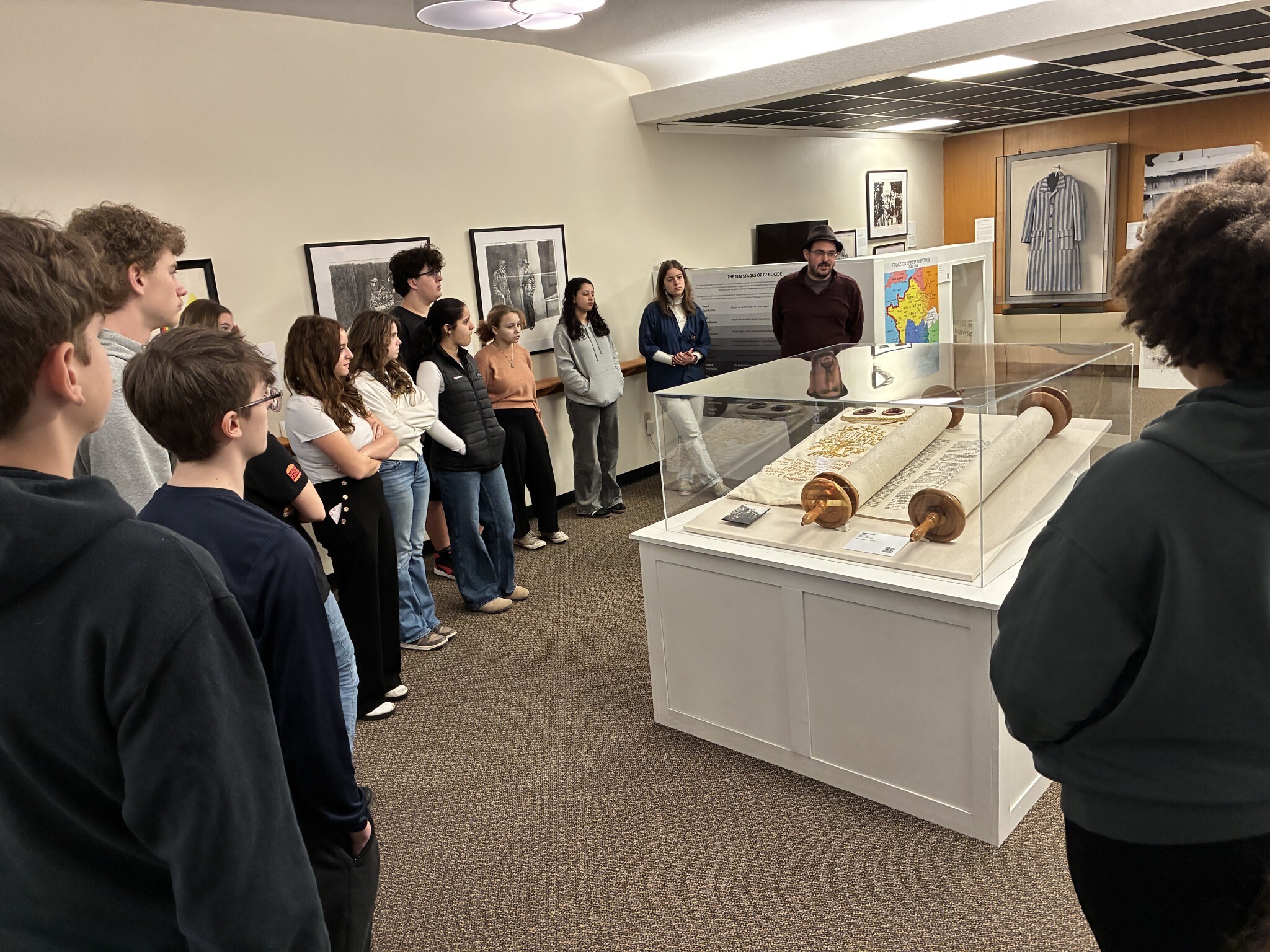
Holocaust educator Daniel Singleton was still learning where to park his car when he found out he would be attending the Jewish Foundation for the Righteous’s Summer Institute for Teachers.
“I was maybe a day or two into my job, still figuring out, ‘Where do I park? Where do I go?” Singleton recalled. “She [his boss] told me, ‘I’m going to send you to this seminar in the summer, and it’s going to change your worldview — and she was right.”
As the education and partnerships associate at the Holocaust Center of Pittsburgh, Singleton is responsible for connecting with local educators and bringing survivor stories from the Pittsburgh community into classrooms across the region. At the JFR’s Summer Institute, he strengthened his approach to supporting Holocaust education through robust dialogue with leading scholars and fellow educators.
Hosted at the Hilton Newark Airport in Elizabeth, New Jersey, the five-day program traverses the history of antisemitism “through the rise of the Nazi Party, to the killers and their methods, and rescue, to the aftermath of the Holocaust.”
Twenty-four educators from nine states were introduced to the teachings of leading Holocaust scholars, including Doris Bergen, Lawrence Douglas, Daniel Greene, Peter Hayes and Robert Jan van Pelt. Singleton was one of two educators from Pennsylvania to attend the conference.

Participants were also encouraged to collaborate and exchange their individual approaches to navigating the subject. The experience, Singleton said, will play a pivotal role in shaping some of the teacher training workshops held at the Holocaust Center.
“You learn a lot about what the shared and unique challenges of Holocaust education are, and you learn a lot about the different ways people are trying to address those challenges and make sure that Holocaust education is something that everybody gets at some point in their lives,” he said.
The Holocaust Center of Pittsburgh, now a program of The Tree of Life, was founded in 1980 by Holocaust survivors and their descendants. At its inception, about 360 Holocaust survivors were living in Pittsburgh. Today, about 13 remain. In this light, Singleton emphasized the importance of bringing survivors’ testimonies — whether through their writing, artworks or artifacts — into the classroom.
“If you can show students how these faraway events did in fact touch our community here, that can be a really powerful moment,” he said. “[Students] may not remember what precise date a camp was liberated, but they will remember that feeling of connection, even if it’s being done with a story of somebody who is no longer here.”
Singleton emphasized that the most exciting part of his work at the Holocaust Center is “breaking down some of the barriers” that have historically divided communities. His experience working with other educators at the institute, he said, reinforced his conviction to forge connections between people of all backgrounds.
“Our mission is to connect the horrors of the Holocaust to some of the things that we’re seeing around the world right now with respect to antisemitism on the rise,” he said. “The reality is people want to connect, they want to learn from people who are not like them. They want to have relationships with neighbors who may have different traditions or different beliefs … The more that we can do to invite connections to happen between people … the better we’ll all be.” PJC
Octavia Liku can be reached at oliku@pittsburghjewishchronicle.org.
comments