
Why Pinhas is the perfect parasha for the semiquincentennial of the United States
What parasha could be more appropriate for the 250th anniversary of our nation’s founding ... than a parasha centering one of the key tools of our democracy?

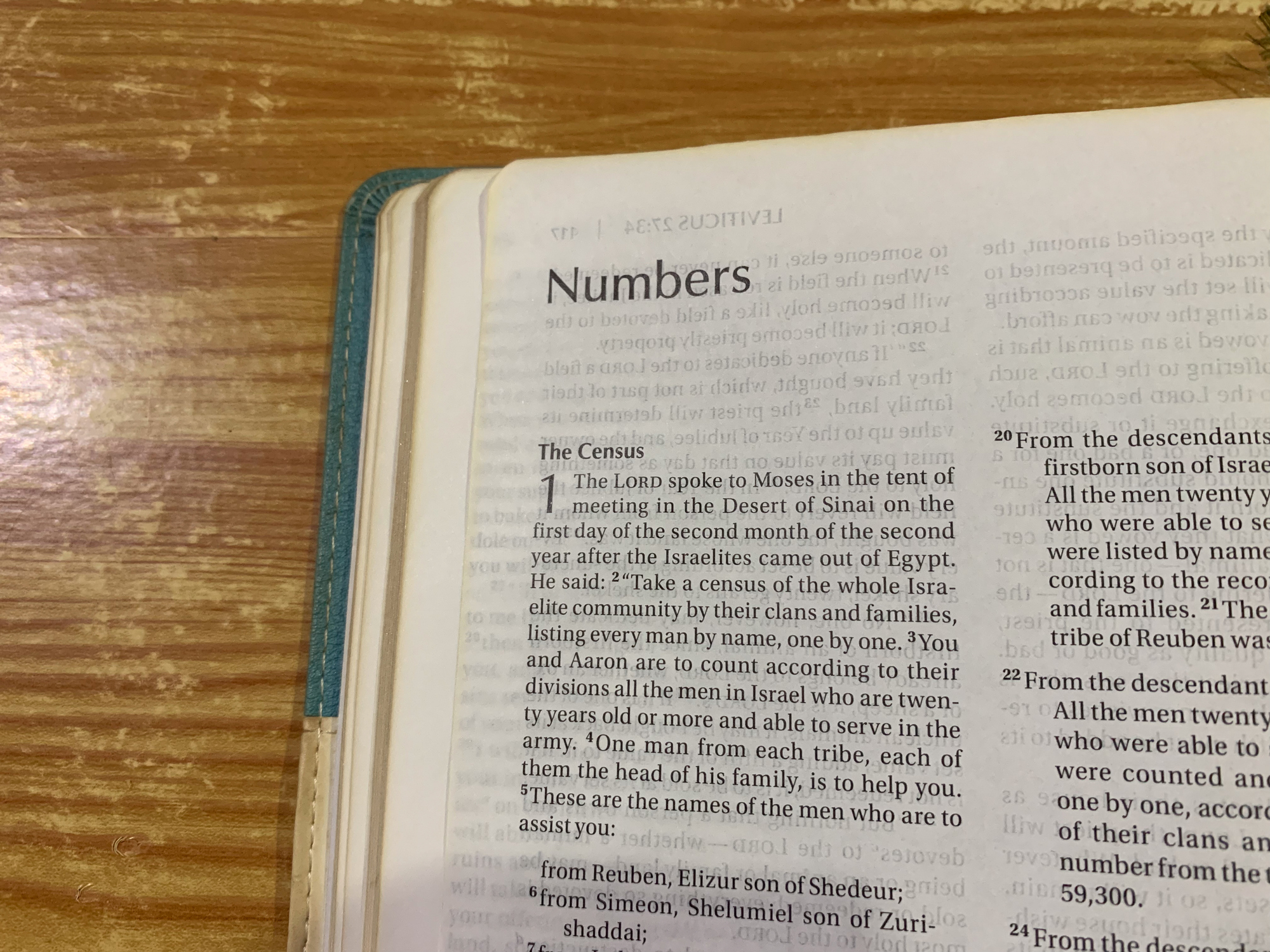
July 4, 2026, the 250th anniversary of the United States, falls on the very day we read Parashat Pinhas. On the face of it, this parasha might seem an unremarkable match for this momentous occasion — after all, we read from its calendar of sacrifices on every holiday and new month throughout the year. But it is an even more repetitive and seemingly dull section of this parasha that provides a meaningful link to the semiquincentennial — the census.
At the beginning of Numbers 26, God commands Moses and Eleazar to take a census of the Israelites as they stand on the threshold of entering the Promised Land. The Israelites have been here before, however; the census in this week’s parasha is the second census of the Book of Numbers. The first one was taken 40 years earlier, when the Israelites were seemingly on the verge of entering the Promised Land. However, the sin of the spies interfered, and God condemned the Israelites to wander in the wilderness for 40 years while the adult generation that refused to trust Him died off. As a result, the first census grew stale. A new census — the one in this week’s parasha — had to be taken after the decades of wandering, when the Israelites were once again on the brink of entering the Land, this time for real.
Every census is a reflection of the concerns of the government administering it. First taken in 1790, the United States census was groundbreaking because its concern was not taxation, confiscating property, or conscription (i.e. the concerns of its predecessors). Its foundational concern was to gather enough data to determine congressional representation. As mandated by our Constitution, the federal census is repeated every 10 years, and each time, it expands to absorb the country’s evolving social priorities: When did a person arrive in the United States? Can she read or write? Does she own a radio?
Get The Jewish Chronicle Weekly Edition by email and never miss our top stories Free Sign Up
Those of us who study the federal census don’t just look at each portrait of the nation in the individual censuses, but also track the changes in the country over time by comparing each census to the next. To understand the deeper meaning of the census in this week’s parasha, we must examine it against the earlier census.
What are the concerns of the first census? We read that Moses and Aaron counted only males aged 20 or older who are eligible for military service. For example, here’s how the tribe of Reuven is enumerated (Numbers 1:20-21):
“The descendants of Reuben, Israel’s first-born, the registration of the clans of their ancestral house, as listed by name, head by head, all males aged twenty years and over, all who were able to bear arms — those enrolled from the tribe of Reuben: 46,500.”
On the face of it, then, the concern of this census is not subtle: The Israelites are preparing for the battles that are shortly to come. To a modern scholar of governmental records, this enumeration reads more like a military draft list than a census.
Perhaps that’s just part of what makes the first census feel uncomfortable: Because its primary concern is militaristic, the census excludes the groups who will not take part in the conquest — namely, women and children, the elderly and the Levites. And ultimately, the enumeration doesn’t exactly include the men, either. The Torah relates only the numbers of eligible men.
Three thousand years later, the first U.S. censuses were not so different. Until 1850, only the heads of household were named; everyone else was represented by counts. It wasn’t until 1870 that formerly enslaved people were listed by name, not count, and not until 1880 that so-called “Indian Schedules” were added to better count the native population. The nature of our census leads us to expect that a good census should be about the whole society in order to benefit the whole society, but we should cut this biblical census some slack — it took the U.S. nearly a century to determine that counting and naming every resident was how best to achieve that purpose.
To see beyond the martial meaning of the first biblical census, we must read on to what happens with its data. After it is completed, the parasha relates that the Israelites are arranged into camps with specific positions around the tabernacle and assigned a marching order. We can deduce, then, that this census is about assessing the people’s strength to prepare them for the journeying and conquering to come. The Israelites are now a structured, orderly society, thanks to the data from their census. Enumerating them makes them better prepared for their sacred mission that lies ahead.
Forty years later, the second census in this week’s parasha reflects an evolution of concerns. Compare how Reuven is now enumerated (26:5-7):
“Reuben, Israel’s first-born. Descendants of Reuben: [Of] Enoch, the clan of the Enochites; of Pallu, the clan of the Palluites; of Hezron, the clan of the Hezronites; of Carmi, the clan of the Carmites. Those are the clans of the Reubenites. The men enrolled came to 43,730.”
The instructions for this second census still specify counting military-eligible men; however, the tribal counts don’t include that qualifier at all, and alongside the count each entry lists the clans that make up the tribe. In other words, the second census is still tied to the anticipated battles, but the emphasis of the count moves away from military organization to family organization. This time, the Israelites aren’t only preparing to march and fight.
The end of the second census, which explains what will happen with the data from this census, makes the reason for this change clear (26:53-54):
“Among these shall the land be apportioned as shares, according to the listed names … Each is to be assigned its share according to its enrollment.”
The land does not get allocated until next week’s double parasha (and not formally distributed until the Book of Joshua), but the data is in place. Just as the U.S. census grew beyond its original goal of congressional representation, so, too, does the biblical census move beyond its original goal of military preparedness. True, only a subset of all the Israelites gets counted in each biblical census, but apportioning the land is about benefiting the whole society.
The focus of this week’s census on families and inheritance shows that after 40 years in the wilderness, the Israelites really are thinking about what it will mean not just to conquer the land, but also to dwell in the land. All those unexpected years in the wilderness lent the new generation of Israelites a broader perspective about what they were about to undertake.
Remember, every census reflects the concerns of its administrators. Comparing these two censuses reveals the underlying problem: The first generation simply wasn’t prepared for the entirety of their mission. It took until the spies’ report provoked widespread panic for the problem to reveal itself clearly, but it was there embedded in that first census all along.
The second census results in a count only slightly smaller than the first census — despite the Korah rebellion, the Baal Peor plague, smaller divine punishments, and, of course, the demise of the original generation. As they finally move toward their destiny, the Israelites as a people remain almost numerically intact. G-d may have punished the Israelites in various ways during their years in the wilderness, but ultimately divine preservation prevailed over divine punishment. Encoded in the boring details of the census counts is a story not only of national renewal, but also of a people growing into their unique mission.
What parasha could be more appropriate for the 250th anniversary of our nation’s founding, then, than a parasha centering one of the key tools of our democracy? Our country’s censuses limn the story of our democracy — its amazing growth alongside its struggles to absorb the diversity of that growth and to spread its gifts equally. Just as the Israelites grew into their mission between one census and the next despite numerous setbacks, so too may we overcome the intense challenges of our own age to fulfill America’s foundational, yet unfinished vision of liberty and justice for all. PJC
Tammy Hepps is the creator of HomesteadHebrews.com.
comments