
Gleanings from Shabbat
The sages tell us that, “The Sabbath was last to be created, but first in God’s mind."
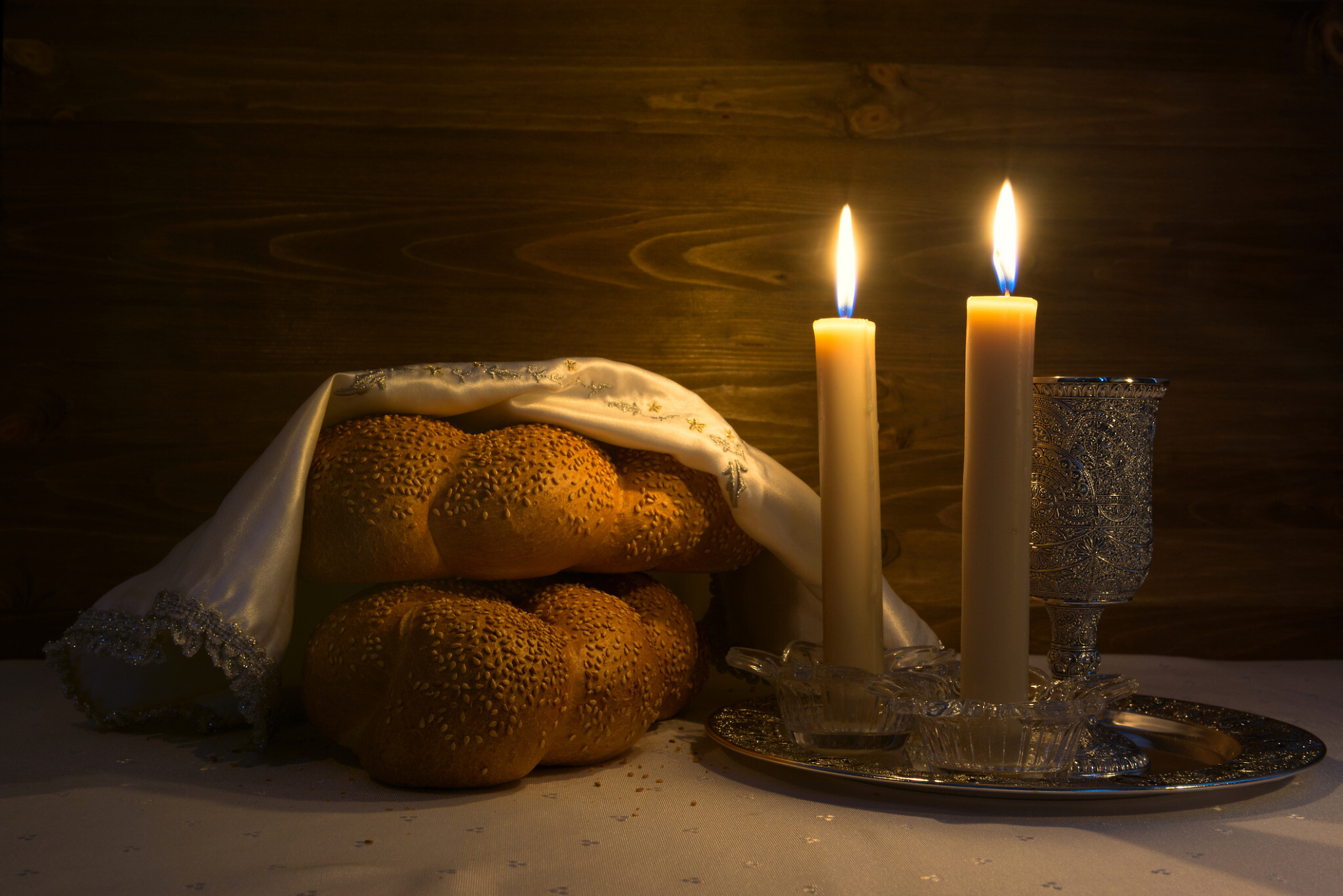
How lucky we are every Friday night to reenact and continue the tradition first mentioned on the seventh day of creation. Of course, the only resting happening then was God’s, and it took until Exodus 23:16, after we made it through the Reed Sea — but before the revelation at Sinai — to be told that Shabbat was a gift for us: “Tomorrow is a day of rest, a holy Sabbath of God.”
The longest tractate of the Talmud is devoted to Shabbat, yet even there the day and its observances are not (and cannot) be exhausted. While we are often called a People of the Book, we could just as well be called a People of the Day. This might be why the sages say, “The Sabbath is equal in worth to the whole of the Torah.”
The sages also tell us that, “The Sabbath was last to be created, but first in God’s mind. It was the culmination of all creation. Indeed, everything exists for the sake of the Sabbath. The Sabbath is the source for all blessings.” And elsewhere: “When Jews keep the Sabbath, their souls enter the Garden of Eden.”
Get The Jewish Chronicle Weekly Edition by email and never miss our top stories Free Sign Up
Many stories in the Tanakh appear to be conscious responses (with that important Jewish twist) to tales, ideas, laws and even forms of architecture found in the ancient Near East. As Nahum Sarna writes, though, the remarkable thing about Shabbat is that it is “unparalleled in the ancient world.” The other major units of marking time — day, month and year — “are uniformly based on the phases of the moon and the movement of the sun … the Israelite week has no such linkage and is entirely independent of the movement of celestial bodies.”
During the Maccabean war with the Greeks, the Maccabees and their army were willing to fight on Shabbat, where previously Jews had refrained. The Romans were never terribly curious to understand the Jews living in their empire, and the philosopher Seneca could make no sense of Shabbat: It was unprofitable, he thought, since by “introducing one day of rest in every seven, they lose in idleness almost a seventh of their lives.” We might want to talk to him about what true rest means, or sanctification, or ask what his definition of work is.
In the early Middle Ages, Jewish traders in Muslim lands arranged for their Muslim business partners to run things on Shabbat. In the 14th century, Muslim legal scholars warned their coreligionists not to refrain from certain activities on Friday and Saturday like their Jewish neighbors did (he mentions fishing, hunting and digging trenches) lest they become “seduced” by Judaism. Christians of the time had similar fears, and throughout the Middle Ages those Jews forced to convert to Christianity could show no more obvious sign of their continued allegiance to Judaism than by their reluctance to work on Saturday, or by eating certain foods on Friday night.
From the French Revolution onward, we were promised acceptance into European and American society if we were only willing to compromise our practices. Romania, for example, gave lip service to the idea of emancipating their Jews and allowing us to vote, only to make sure elections were held on Saturdays. In other countries, the possibility of agricultural work, urban trades and apprenticeships not previously available to Jews suddenly made many of us wonder how important Shabbat was; for others, holding fast to Shabbat became more important than ever.
There are colonial American records showing that some Jewish merchants rigorously closed their businesses and kept their ships in port for Shabbat, while others became more and more lax. The agony of late 19th century arrivals to America who could only earn money right away if they would work on Shabbat, is palpable. During the 20th century it became almost impossible to avoid working at factories on Shabbat; thankfully today, at large retail and chain stories, it is perhaps easier than ever to not work on Shabbat.
Born in 1897, the great scholar of Kabbalah, Gershom Scholem, recalled growing up in Berlin in a largely assimilated environment. The Shabbat prayers were “chanted but only half understood,” and the candles were used “to light a cigarette and a cigar afterwards.” Despite the disrespect this was meant to convey, Scholem’s family never gave up even this form of observance, and we might ask why they were unable to drop it completely.
While Abraham Joshua Heschel gave us a brief and beautiful book about Shabbat, his daughter, Susannah, gave us a better gift by describing what Shabbat was like with him: Since writing is traditionally prohibited on Shabbat, she could always tell which books he had been reading on that day since they were marked with paperclips and napkins.
Like Judaism as a whole, Shabbat is a great cornucopia of all times and places, a great smorgasbord of words from 3,000 years ago, songs from 17th-century mystics as well as Debbie Friedman, culinary traditions from centuries or just a generation ago, and the chain of bright memories of how it was done and how it was held onto.
Shabbat always happened a few days ago, and it’s always about to happen a few days from now. In my house, nothing says Shabbat in the spring and summer like one of our neighbors always starting to cut their grass just as we are about to light candles. It’s a good reminder of everything that we don’t need to worry about or get done in the next 25 hours.
I read the story of a woman born into a Reform Jewish household who was taking steps to become Orthodox. Visiting a friend’s apartment on Shabbat, she was dismayed to be told that she couldn’t use the elevator. Climbing the stairs to the 11th floor, she said, “I thought this was supposed to be a day of rest.” Yet she kept climbing the stairs.
And if you’re reading this newspaper, chances are that you’ve kept climbing the stairs, too, in whatever way you and your family have chosen. What a command and an opportunity for our own creativity Shabbat is. I don’t know where I would be without it. PJC
Tim Miller is a poet and writer living in Pittsburgh. He is online at wordandsilence.com.
comments