
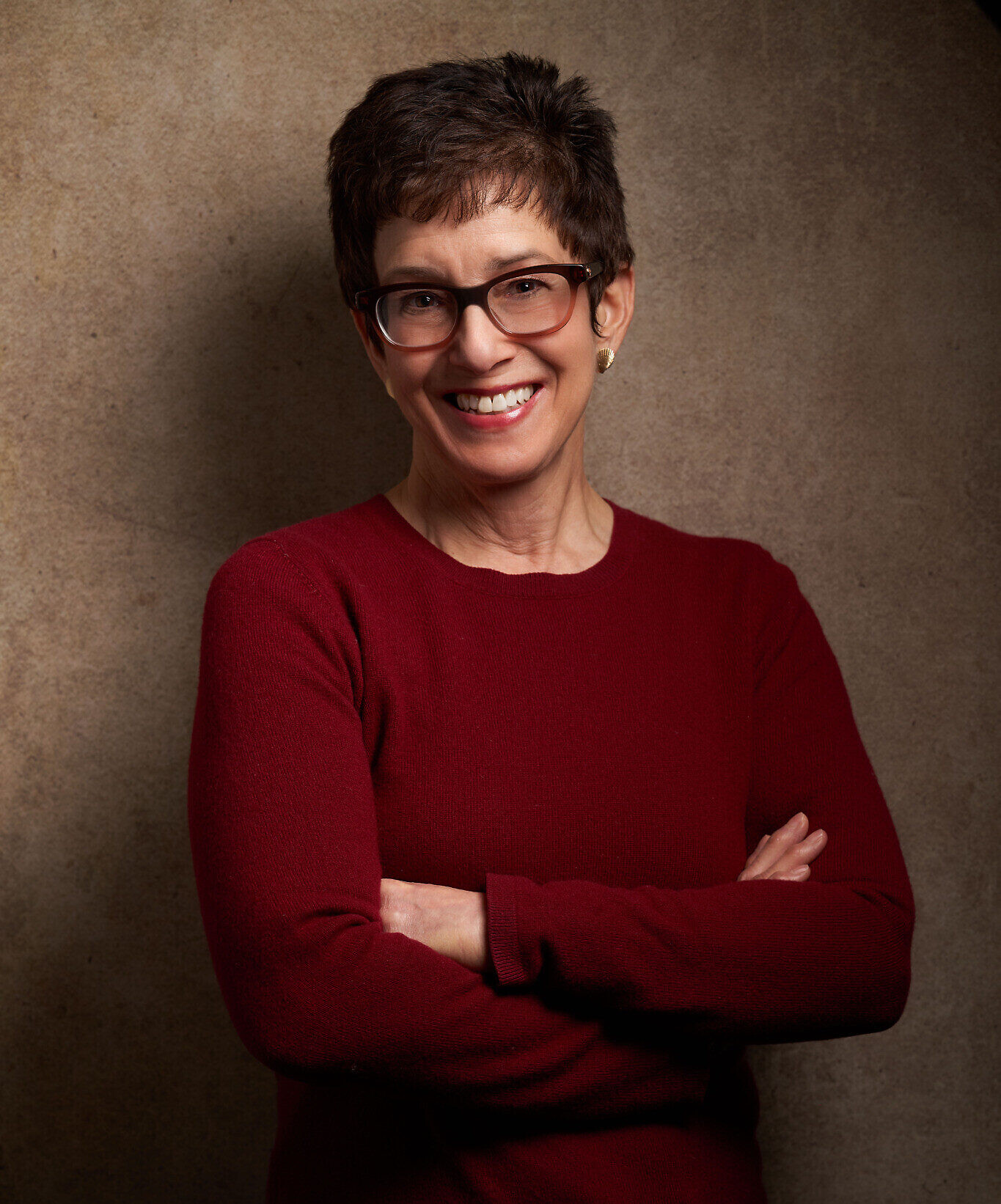
Under Nancy Gale’s eight years of leadership, The Branch moved, rebranded and weathered Jewish Pittsburgh’s darkest moments. Having shepherded the organization, and infused private sector expertise into the nonprofit world, Gale is ready for new adventures. With her tenure as executive director of The Branch ending on June 30, Gale is looking forward to baking, gardening and contributing to the community in new ways. Before jumping into those activities, Gale spoke with the Chronicle about her career and what’s next.
This interview has been edited for length and clarity.
Congratulations on your upcoming retirement. Before we talk about the future, let’s talk about the past. Tell me about joining The Branch eight years ago.
I became executive director on Oct. 10, 2018. Very shortly after I arrived it was a tumultuous time for the Jewish community — that is something that really sticks in my mind about the first few weeks that I was there. Shortly after that, we moved into this building where we are now. The [Sally and Howard Levin] Clubhouse had previously been down the street on Murray Avenue, and our administrative offices were at Rodef Shalom. So moving everything under one roof was a big change. It wasn’t too long after that the pandemic hit. I feel like my early tenure was marked by a lot of upheaval in the larger world that impacted us.
Early on in your tenure you told me about the importance of Krause Commons, a six-story supportive housing development located on the former Poli’s site in Squirrel Hill. With the Clubhouse on the first floor, and housing above, how did this project transform people’s understanding of what The Branch could offer?
Being right out there on Murray Avenue gave us an opportunity to help make our programs and services better known. People would go by the old Clubhouse and say, “Oh, what goes on there? Is that some kind of program for kids?” Krause Commons allowed us to be more visible. It gave us more of a platform to talk about what we do for the community, and to talk about disability inclusion in general. That was very helpful from an outward-facing point of view; but also internally, for the first time, all of our programs were under one roof. There are a lot of synergies among the different programs, and that also was something that was very important for us.
Tell me more about Krause Commons and the residential aspects of The Branch.
Krause Commons, the building that we are in, was created through a partnership with Action Housing — they build affordable housing, and are great partners. I think what a lot of people don’t understand is that the residential side of Krause Commons is owned and operated by Action Housing. It’s not our housing. We have to follow their process. We don’t have special privileges as far as placing people in those apartments. We certainly help people with the applications and work closely with Action Housing, but I think a lot of people in the community were, and are, still confused whether or not we own and operate the housing side of the building.
Several community members active with The Branch live in private residences in Squirrel Hill. Can you tell me about those spaces?
Those are what we refer to as community living arrangements, or CLAs — the older name for it would be a group home — and we have established three, now four, group homes for individuals who require a higher level of support. We did that with a partner because those individuals require 24/7 support, and as a small organization that’s something that’s very difficult to manage from a staffing perspective. We work with an organization called Verland that has probably 40 or 50 of these community living arrangements. Verland is the one who holds the license, does the staffing, is responsible for maintenance and the services that are provided to the people who live there. Partnering with them allowed us to create culturally Jewish homes in Squirrel Hill, which is something that hadn’t existed before. Our staff works with Verland staff to ensure that the kitchens are kosher and that residents have the opportunity to celebrate holidays and be involved in things that are going on in the Jewish community. The homes are all within walking distance to the Jewish Community Center or to local synagogues.
Much has changed in the last eight years. What are some of your biggest accomplishments at The Branch?
It’s hard to pick out just a few things, but one thing I will mention is moving into this building. It really allowed us to do a lot of things that we hadn’t been able to do before, both internally and externally. For example, we have had various kinds of programs that we partnered with Friendship Circle on, and having a space to do programming has allowed us to expand that. We have a program called Clubhouse After Hours that meets once a month and provides an opportunity for people for whom some of the Friendship Circle programs are a little bit too big and overstimulating. This is a smaller group that meets in our Clubhouse space after the work order day is complete. I would say our partnership in general with the Friendship Circle has been really important to us, and we look for other opportunities to partner with them.
Under your leadership, Jewish Residential Services became The Branch. Could you tell me about the rebranding?
This is something that had been discussed for a long time; it preceded my coming to the organization. People were confused about whether or not Jewish Residential Services offered housing. When we were doing our strategic plan, we said we’re going to take a look at this. We had focus groups and did a lot of outreach to better understand what the confusion was and what people thought our services really were. We came to the conclusion that we really needed to change the name to get the word “residential” out of it, so that people could better understand, or have an opportunity to talk about, what we actually do. That was the motivation. The other thing was that it’s very important to us to serve the Jewish community, but many of the people that we serve are not Jewish. I think in their minds there was a question of, “Am I really welcome here?” By picking a name that had more of a universal appeal, we felt that it was important to communicate to them that they were part of the services that we were trying to provide and part of our community.
Tell me about your experience in the private sector and how it impacted your work at The Branch.
Before I came here, I had a career in banking and finance. I began thinking about the things I did and whether they really made a difference in any particular individual’s life. Around the same time I was also president of Temple Sinai and had a view into how nonprofit organizations operate. I started to think maybe this is what I really want to do, and something that would be satisfying, and where my contributions could really positively impact other people and our Jewish community. I started looking around. I was familiar with JRS because I had a friend whose husband was actually involved early on when it was formed. I participated in Mitzvah Days, so when this position came open, I felt, “Wow, this is bashert. It’s something I believe in.” I had grandparents with disabilities. Doing something for people who are underserved and marginalized certainly resonated with me, and the rest is history.
What’s the hallmark of your tenure?
I think helping the organization to have infrastructure that it didn’t have before. There’s also moving into this building and hiring certain people. We never had a development director before. I think that’s very important, especially in this environment where government funding is so uncertain. We hired a compliance manager because we are subject to many regulations, and it’s important to stay ahead of that and do what we need to do to maintain our licensing. We added some additional formalities in our human resources systems. I think I brought some of the structure of the corporate world with me and applied it obviously in a way that was appropriate for an organization like this, and I think it really strengthened the organization.
What are your plans for July 1 and beyond?
That’s funny because people keep saying to me, “What are you going to do?” And I keep thinking, “Do I have to do things?” I thought the point of retiring is that you didn’t have to. But of course, I’m a person who likes to be busy, so I have a long list of projects: doing some traveling, a lot of gardening, and baking and reading. There are a lot of things that I haven’t had time for that I’d really like to pursue. Of course, I still want to be involved in the community in one way or another.
Nancy, it’s been such a pleasure chatting with you. Thanks for your time and service to the community. What else do you want people to know?
It’s a tough environment for nonprofits in general, and in particular nonprofits focused on supporting people with disabilities. The work is so important to us as a community, so that everyone is included. People with disabilities have a lot to offer the community — just like anyone else. I hope that that’s a message that continues to be spread far and wide. PJC
Adam Reinherz can be reached at areinherz@pittsburghjewishchronicle.org.
comments