
America at 250: The revolutionary idea that protects Jewish freedom
For most of history, freedom flowed downward. America turned that idea upside down.
ln the early 1800s, Jews throughout Europe watched with enormous hope as Napoleon Bonaparte swept across the continent.
He promised liberty, equality and emancipation. After generations of discrimination and oppression, many Jews believed a new era finally had arrived. Under the Russian czar, Jewish life was often harsh and restrictive. Compared with that reality, the choice seemed obvious. If you were a Jew living in Eastern Europe, why wouldn’t you pray for Napoleon’s victory?
Yet one man did the opposite.
Get The Jewish Chronicle Weekly Edition by email and never miss our top stories Free Sign Up
Rabbi Schneur Zalman of Liadi, (known as the Alter Rebbe) the founder of Chabad, believed Napoleon’s triumph would ultimately harm the Jewish people. According to Chabad tradition, during Napoleon’s campaign against Russia, the Alter Rebbe viewed the conflict as one that would shape not only the political future of Europe, but the spiritual future of the Jewish people. On one Rosh Hashanah, he rose before dawn to sound the shofar, praying that Napoleon would not prevail.
At first glance, his position seems almost impossible to understand.
The Alter Rebbe certainly appreciated the value of freedom. But he feared that political freedom, precious as it was, could come at a spiritual cost. Once Jews were welcomed into European society, many would gradually exchange their Jewish identity for social acceptance. Tragically, that concern proved well founded. In much of Europe, emancipation was followed by widespread assimilation.
If that were the entire story, we might conclude that freedom itself is dangerous.
But then there is America.
The Lubavitcher Rebbe often referred to the United States as a malchus shel chesed — a “kingdom of kindness.” America became home to one of the largest and most vibrant Jewish communities in the world. Chabad established thousands of centers across the country, encouraging Jews to live openly and proudly as Jews.
What was different?
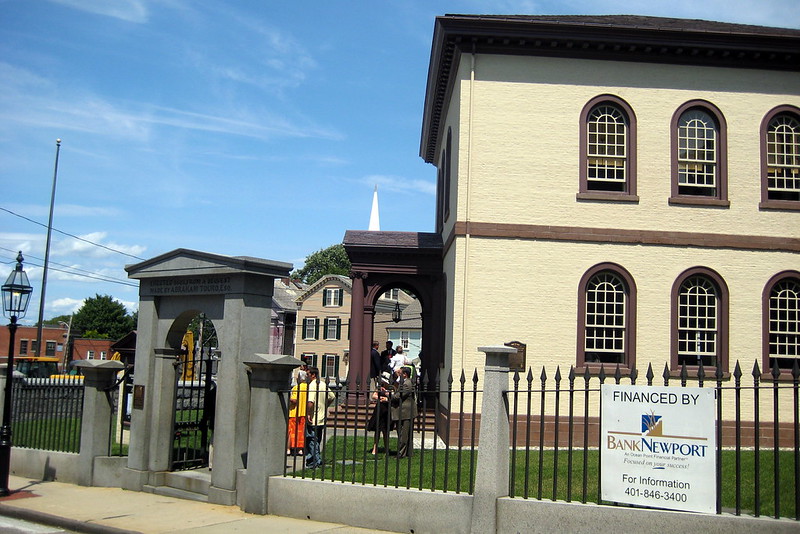
Part of the answer, I believe, can be found in a remarkable letter written by George Washington in 1790 to the Hebrew Congregation in Newport, Rhode Island.
Responding to the congregation’s greetings, Washington wrote that in the United States, “it is now no more that toleration is spoken of, as if it were by the indulgence of one class of people that another enjoyed the exercise of their inherent natural rights.” Instead, he explained, every citizen possesses those rights as a matter of principle, not by the generosity of someone else. Those words represented a remarkable break from the way Jews had lived for centuries.
For most of history, freedom flowed downward. Kings granted privileges. Governments bestowed rights. Minorities survived because those in power allowed them to. Freedom had to pass through the hands of the governing class before it reached the people.
America turned that idea upside down.
Washington was telling the Jewish community that their rights were not favors extended by government or by the majority. They were inherent. Government did not create them and therefore could not claim ownership over them. Its responsibility was to protect them.
To anyone familiar with the Torah, those words sound strikingly familiar.
The Torah begins by teaching that every human being is created b’tzelem Elokim — in the image of God. Human dignity is not bestowed by rulers. It is woven into creation itself. If every person is created by God, then our most basic rights come from Him as well.
That same idea appears in the Declaration of Independence, which proclaims that all people “are endowed by their Creator with certain unalienable Rights.” The founders were not claiming that government creates rights. They were declaring that government exists to protect rights that already exist because they come from the Creator.
Perhaps that helps explain why America proved so different from Napoleonic Europe.
Napoleon offered the Jewish people emancipation through the state. America’s founding vision rested on the belief that our rights precede the state because they come from God. Those are not merely two different political systems. They produce two different ways of understanding the relationship between the individual, society, and the Creator.
As our nation marks its 250th birthday, that distinction is worth remembering.
For the Jewish people, America has been an extraordinary blessing. Here we have been able to build synagogues, schools, charitable institutions and vibrant communities while remaining proudly Jewish. That is something our ancestors could scarcely have imagined.
Perhaps one of America’s greatest contributions is not only that it championed freedom, but that it grounded freedom in something higher than government itself.
That idea was revolutionary 250 years ago.
It remains revolutionary today. PJC
Rabbi Mendel Rosenblum is rabbi of Chabad of the South Hills.
comments