
Interfaith leaders reflect on year of ‘reckoning with antisemitism,’ launch new book
“There is room for everybody in this work.”
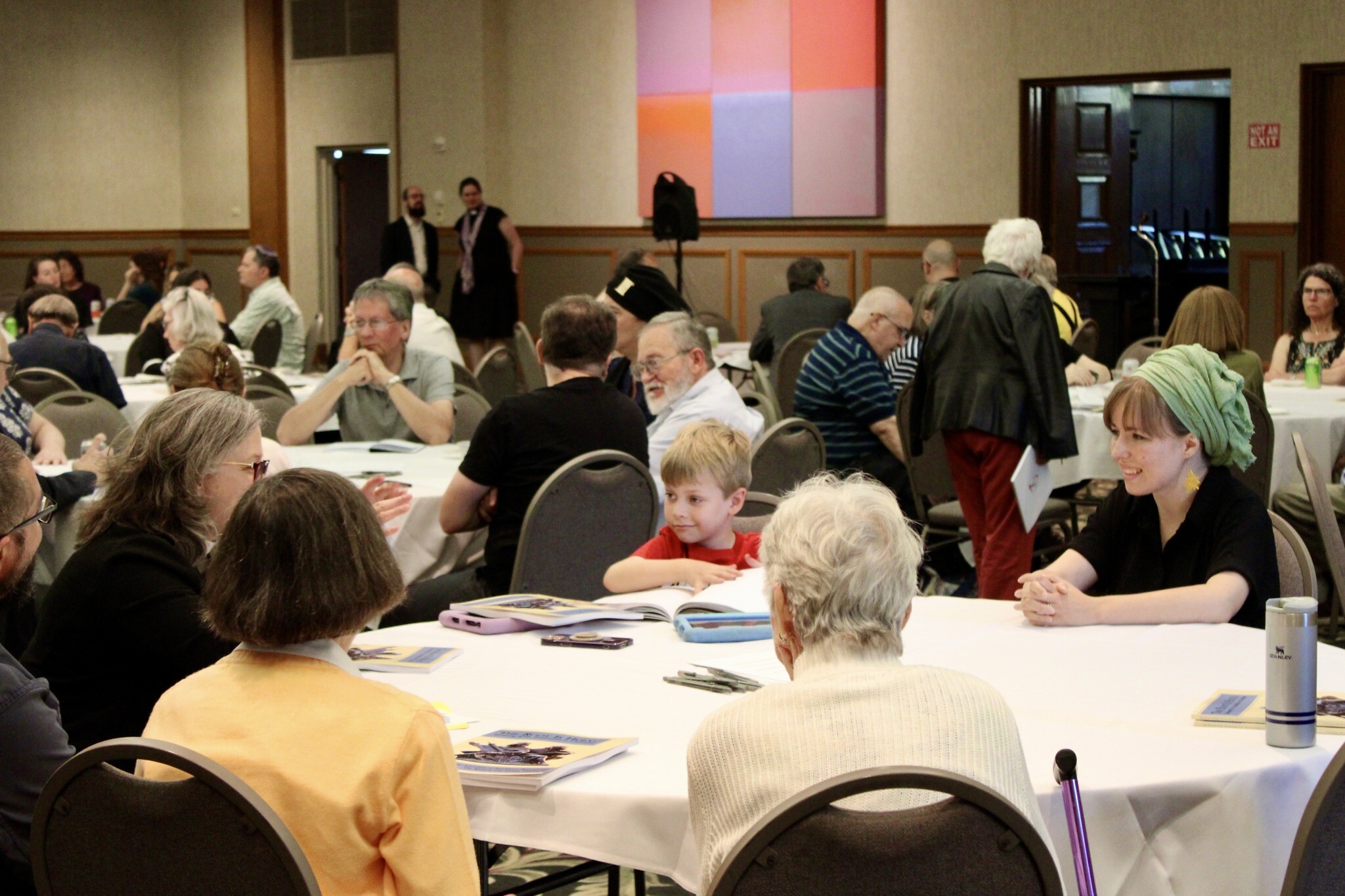
Local Christian and Jewish community members filled the halls of Beit Kulanu on June 24 to reflect on the progress of a yearlong initiative — and a new book — aimed at confronting antisemitism within the Christian tradition.
Over the past year, the Rev. Liddy Barlow, executive minister of the Christian Associates of Southwest Pennsylvania, and Noah Schoen, manager of community engagement at the Holocaust Center of Pittsburgh, convened clergy and community leaders for text study, workshops and group discussions focused on examining how antisemitic messaging has been ingrained in some biblical teachings.
The effort culminated in the release of “The Root is Holy: Reckoning with Antisemitism as Christians,” a collection of sermons from 26 local Christian leaders intended as a resource for those seeking to address anti-Jewish sentiment within their own tradition.
About 90 people attended the launch event, which was facilitated by Barlow and Schoen.
Leaders across religious and denominational lines were in attendance, including Emily Loeb, director of the Holocaust Center of Pittsburgh; Pastor Jonathan Lynn of Emmanuel Lutheran Church; Kathy Emmons, co-host of the Evangelical faith-based radio show “The Ride Home with John and Kathy”; Rabbi Aaron Meyer of Temple Emmanuel of South Hills; and Rabbi Daniel Fellman of Beit Kulanu.
“What we do in this project is stumble towards each other as Jews and Christians,” Schoen said. “We don’t always get it right. In fact, we’re definitely not going to get it right all the time. But we try.”
More than 100 Christian leaders participated in the text study sessions, which included a sermon workshop at the Southwestern Pennsylvania Synod, where participants could bring their questions directly to their Jewish colleagues. Rabbis joined these study groups, offering advice and forming connections with Christian clergy.
Christian leaders were also encouraged to bring related educational programming into their own congregations. Eleven programs were developed through the initiative, reaching over 550 people across Greater Pittsburgh. An additional 16 programs were independently organized, reaching almost 300 more people.
“The Root is Holy: Reckoning with Antisemitism as Christians” traverses Hebrew scriptures, Jesus’ life, teachings and death, the Apostle Paul’s teachings, antisemitism in modern times, personal reflections and finally, a list of steps Christians can take to continue to combat antisemitism within their community.
In the foreword of the book, Schoen wrote that Christians should reckon with antisemitism not only on behalf of the Jewish community, but also as a means of deepening connection to their faith.
“There is room for everybody in this work,” he wrote.
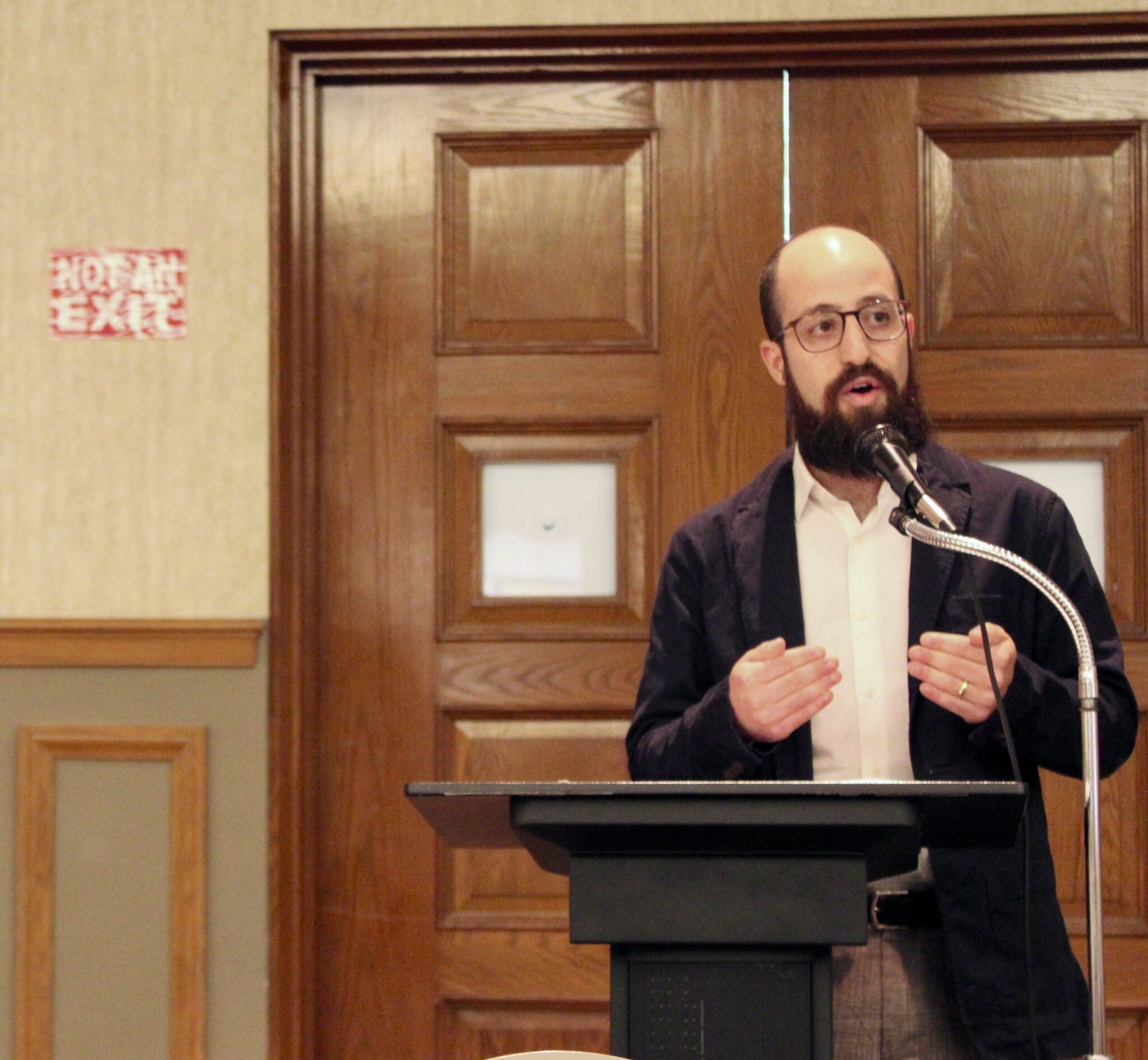
Kathy Emmons, an Evangelical Christian, emphasized that contending with antisemitism within her faith required “vulnerability,” “curiosity” and “unflinching honesty.”
“I was afraid that I, as a Christian, might be urged to lessen my commitment to the scriptures,” she said. “I know that might sound overly dramatic, and I don’t mean it that way, but to me I wondered if in a group of people — some of whom were Jewish — they might ask me to be less of a Christian.”
After attending a text study, Emmons was “persuaded, even convinced,” that there were moments where she had misread, misinterpreted or “minimally understood” biblical passages.
“The greatest thing that Noah said to me early on was, ‘Kathy, don’t worry about saying the wrong thing — you probably will, but it’s OK,’” she said. “We all know that this work will require something of us.”
Others emphasized the importance of solidarity, especially amid a rise in anti-Jewish sentiment across the country. Fellman expressed that the interfaith collaboration, and by extension, publication of the book, marked an “extraordinary moment” following the Pittsburgh synagogue shooting.
“Here we are as Jews in 2026, in a world where antisemitism is reemerging from the far right and the far left, and we feel more alone and more safe than ever before. It’s a dichotomy. It doesn’t make sense that we would feel more alone and more safe at the same time, but it’s where we are,” he said. “I read through sermon after sermon in this book, and I thought to myself, ‘My God, this is a miracle that Christian ministers are willing to speak out and call antisemitism for what it is. This is a mark of transformation.’”
Discussion of antisemitic messaging connected to recent conflicts, including the Hamas-Israel war, was limited during the event. Barlow told the Chronicle that she considered the past year of work as an “entry point” for further discussion.
“Antisemitism is a complex issue that you can approach from a lot of different [angles]. I think we saw this approach through Christian scripture and also liturgy, prayers and theology to be an entry point to help Christians begin to do this work, ask these questions, and build these relationships,” Barlow said. “My hope is that as Christians start to have this openness that they’ve developed through this perspective, that they’ll be better equipped to have conversations about other manifestations of antisemitism.”
The event was designed as “an opportunity to listen, but also as an opportunity to share,” according to program organizers. Attendees of all faiths were encouraged to break out into small groups and express their fears, hopes and apprehensions to each other.
At the end of the night, participants were invited to share their final reflections with the room. Some described a sense of unity, while others noted that tensions surfaced during group discussions. Regardless, one common thread emerged: hope.
“The more we start reckoning in those small groups, the more we start doing this work together as whole churches, or as a neighborhood ministerium of congregations. The more people and institutions enter this conversation, the more reckoning starts to change the climate of whole communities,” Barlow said. “Both Christians and Jews move from feeling defensive or anxious to feeling open and collaborative. We make room for one another more graciously, and connect with one another more spontaneously. We begin to develop the ties of trust and understanding that make us more able to live and work together. That’s our dream for reckoning with antisemitism as Christians.” PJC
Octavia Liku can be reached at oliku@pittsburghjewishchronicle.org.
comments