
Pain at the pump: How to maximize your fuel economy
While you can’t control global oil markets, you can control how efficiently your vehicle uses every drop.

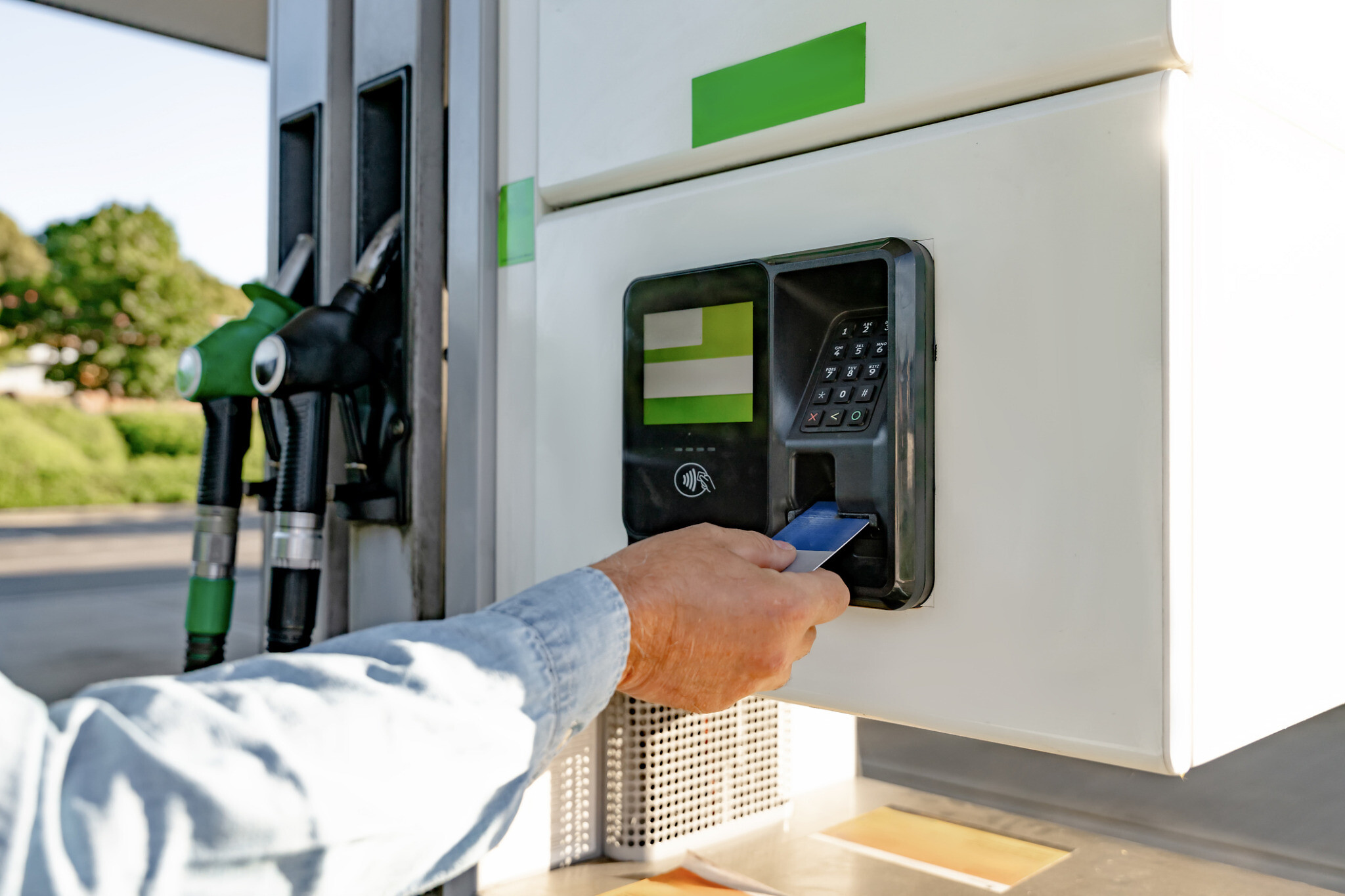
If you feel a knot in your stomach every time your gas gauge creeps toward empty, you aren’t alone. According to recent data from AAA, drivers in the Pittsburgh area are facing steep prices at the pump, with regular unleaded averaging $4.65 per gallon and premium sitting at $5.46.
Those numbers add up fast. Filling up can easily cost $75 for a midsize sedan, $98 for a midsize SUV, and a staggering $120 or more for a luxury SUV. If you’re driving a full-size pickup truck, prepare to part with more than $140 per tank.
While you can’t control global oil markets, you can control how efficiently your vehicle uses every drop. Here is a breakdown of what you can do behind the wheel today, and how a quick visit to a service department can save you hundreds over the course of the year.
4 things you can do immediately to improve fuel economy
Get The Jewish Chronicle Weekly Edition by email and never miss our top stories Free Sign Up
You don’t need a mechanic to start saving gas. A few simple adjustments to your daily driving habits can yield immediate results.
1. Slow down
Vehicles are engineered to be most fuel-efficient at speeds under 50 mph. Once you push past that threshold, wind resistance builds drastically. The most significant drop in efficiency occurs at 60 mph and above. Easing off the gas pedal on the highway is the easiest way to preserve your tank.
2. Keep it steady
Think of smooth driving as money in the bank. Try to accelerate gradually and avoid hard stops. According to automotive efficiency data, rapid acceleration and aggressive braking can reduce your gas mileage by up to 40% in stop-and-go traffic. On the highway, use the cruise control to keep an even speed.
3. Smart A/C usage: Windows vs. air conditioning
How you cool your car depends entirely on how fast you are going.
• In stop-and-go traffic: Turn off the air conditioning. Running the A/C at low speeds puts a heavy load on the engine and drains fuel. Roll the windows down instead.
• At highway speeds: Turn the A/C back on and roll the windows up. At speeds over 50 mph, open windows create massive aerodynamic drag that hurts your mileage far more than the A/C does.
Pro tip from the Department of Energy: To stay cool without overworking your engine, start by using the “Max A/C” or recirculate setting to cool the cabin down quickly. Once the car is comfortable, switch to normal A/C to reduce the ongoing load on the engine.
4. Eliminate unnecessary cargo
Your car isn’t a storage unit. The DOE warns that every extra 100 pounds carried in your vehicle can reduce your fuel economy by about 1%. Clean out the trunk and remove heavy, unused items to lighten the load.
What your service department can do for your wallet
If you want to maximize your savings, some routine maintenance can give your vehicle a massive efficiency boost. Here is what to ask for during your next service appointment:
Oil and filter change: Don’t skip your routine maintenance. Fresh oil reduces internal engine friction, allowing the engine to run more smoothly and consume less fuel. Always follow your manufacturer’s recommended oil change intervals.
A nitrogen tire fill: At a bare minimum, ensure your tires are inflated to the manufacturer’s recommended PSI to reduce rolling resistance. However, if you want an extra edge, ask your service department to fill your tires with nitrogen. The National Highway Traffic Safety Administration notes that inflating tires with nitrogen can result in a 6% improvement in fuel efficiency because it maintains pressure longer than standard air.
Wheel alignment: If your wheels are misaligned, your tires are essentially dragging against the road — and pulling money out of your pocket. A proper wheel alignment keeps everything rolling smoothly and can improve fuel economy by up to 10%.
Fuel system cleaning: Over time, carbon deposits build up on your fuel injectors and intake valves. Asking your technician for a professional treatment, like Wynn’s Premium Fuel System Cleaner, will restore proper fuel atomization. This quick service improves fuel economy, lowers emissions and restores lost performance.
Thinking of trading your gas guzzler?
If you are tired of the financial hit every week, it might be time to look at the numbers.
Insurance companies generally use 12,000 to 15,000 miles per year as the benchmark for the average driver. Let’s look at a realistic scenario based on a driver hitting the sweet spot of 13,500 miles per year:
Standard midsize SUV: Average combined MPG is 23 mpg, monthly fuel cost (at $4.65/gal) is $228
Hybrid midsize SUV: Average combined MPG is 35 mpg, monthly fuel cost is $149
Electric vehicle (EV): N/A MPG, $0 gasoline costs
Finding the right fit for you
Trading your gas-powered vehicle for an Electric Vehicle (EV) would immediately eliminate your gasoline expenses entirely. However, making the leap to all-electric requires significant lifestyle adjustments regarding charging infrastructure and driving habits.
If going fully electric feels like too big of a commitment right now, a self-charging hybrid offers the perfect middle ground. Excellent options like the Subaru Forester Hybrid or the Mazda CX-50 Hybrid require zero plug-in maintenance — they charge themselves as you drive.
As shown in the table above, simply upgrading from a traditional midsize SUV to a similar-sized hybrid will save you nearly $80 per month at current prices. That is almost $1,000 kept in your wallet every single year. PJC
Maureen Bailey is general manager at Kenny Ross Subaru.
comments