
Glenn Greene’s stained glass artwork may be Pittsburgh’s ‘best kept secret’
“Windows are our connection to the natural world."
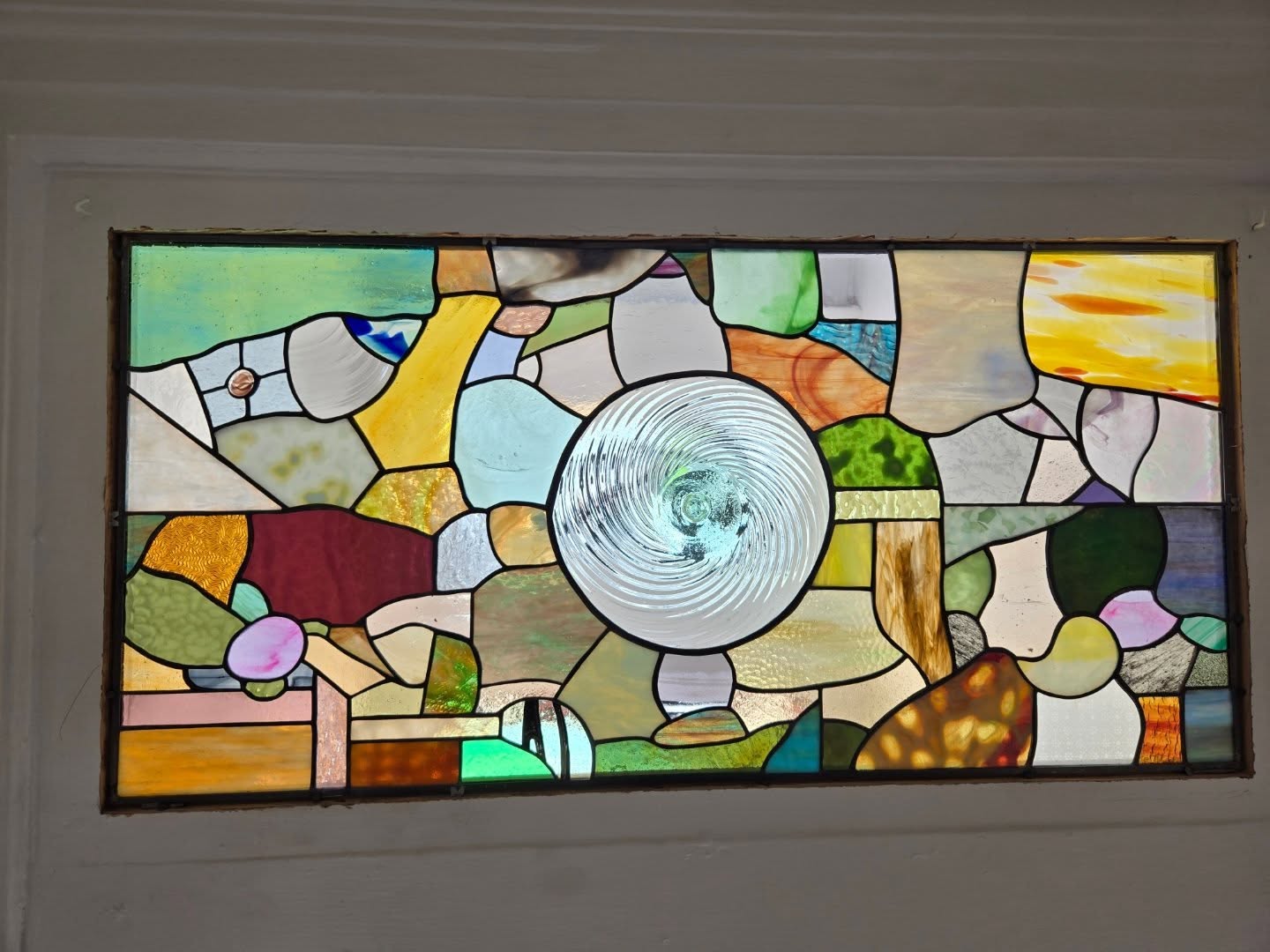
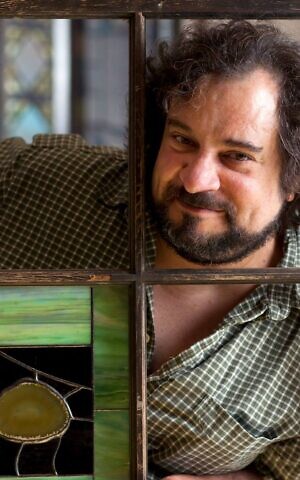
When Glenn Greene was a teenager in Cleveland, Ohio, he needed a new job. His gig as a busboy meant he had to “hitch, walk, or bus” to a far-off restaurant, and he was starting to hate it. His mother suggested he work for a family friend who owned a nearby stained glass studio. This was 47 years ago, and Greene has been a stained glass purveyor of “creations and restorations” ever since.
Greene started out doing menial work at the studio and worked his way up. “I can remember they were like ‘OK, you want to be a stained glass artist, here’s a broom,’” he said. But from there, he started making his own glasswork, and his supervisors encouraged him to create original pieces. His first original piece was an arch-shaped tableau of mountains and rays of sun, adorned with glass of every color. It sold the day he finished it.
He moved to Pittsburgh when organizers of a volunteer project to restore a church on Bellefield Avenue in Oakland reached out to him. “I’ve been in more than my fair share of churches for a Jewish boy,” he remembered.
However, he did create stained glass windows for his mother’s synagogue in Cleveland, as well as for Temple Ohav Shalom in Allison Park. “My mom gets naches points forever,” Greene quipped. The window he created for that synagogue is particularly striking: Interlocking Stars of David hover over the synagogue’s eternal flame.
Stained glass first appeared in the year 1099 in German churches. It’s easy to see how it captures peoples’ imaginations in houses of worship. The light filtering through the colored, textured glass conveys the majesty of spirituality and the big, all-consuming feelings beyond articulation that arise in these spaces. Particularly during the medieval era, when literacy was not as widespread and few worshippers could read the Bible, stained glass was a way to experience the sublime.
Later, synagogues adopted stained glass, but large glass windows would have been problematic for medieval synagogues. As Greene put it, “as usual, we [Jews] are just trying not to get slaughtered.” But many Reform synagogues in the 19th and 20th centuries made use of stained glass, and it’s now commonplace.
After working on the Bellefield church, Greene launched his glass business in Oakland, then moved to Regent Square to start a family. He’s developed a loyal customer base. When I visited him, he was working on a piece for a friend’s door. Their dog had bumped into it and shattered a corner. “Doors take the most abuse,” he said. “They’re the only pieces I do that ever come back.”
Greene does both restorations and original pieces for Pittsburgh clients.
“No town has windows like here,” Greene said of the city. “I think there’s more here than anywhere. I came here at 19 with a head full of steam and the city wouldn’t let me leave. There’s work everywhere I go. I do a little glass repair at a home here, and a little old Italian lady is like ‘come on and eat!’” He describes Pittsburgh as more “cozy and friendly” than Cleveland, and the abundance of stained glass windows is great for another one of his passions: repurposing glass.
In the summer of 1995, a competitor said offhand that all his glass was old. “I thought, instead, ‘He’s right, I do have a lot of old glass; I should start using it to make art.’ And the reaction was so positive,” Greene said.
Some of his pieces like “Wabi Waste-Not, The Good and Hopeful Spirit,” and his “red, white, blue, and green” series engage with his enthusiasm about reuse and the environment. “Windows are our connection to the natural world,” Greene said. His pieces often include clear space in the center, encouraging viewers to look out at their yards or the street and see it differently.
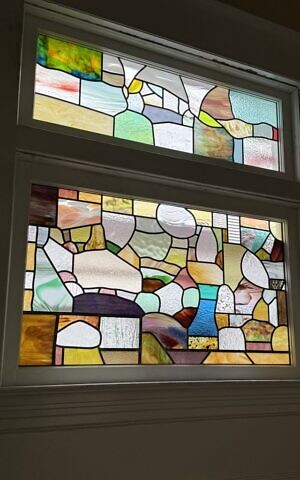
He sometimes literally gets the glass out of the garbage, but also will take scraps from local glass companies. He often describes the glass as having “character” or personality. Each piece really does appear to have a life of its own. Even on gray Pittsburgh days, the glass shimmers.
While most stained glass artists create from a pattern, Greene does it spontaneously. He draws mock-ups, but once he starts cutting the glass, he works intuitively. Each piece is infused with his intentions and feelings at the time.
Greene’s craft requires both artistry and technical skill. It’s meant to be shared with people in their homes, and to soak up light from the outside world.
“My art is a regular, functioning thing,” he said. “I think of it in terms of museum quality, but I’m not pretentious about it.”
What he enjoys most is when friends see his work out in the world and tell him about it. “I can excite myself up and down, but when other people get excited about it that completes the circle.”
Greene produces work at affordable prices, includingg the “crate series” that ranges from $40-$100, or the “open-ended series,” glass panels with shapes extending beyond ordinary rectangles. He also does custom work, carefully considering each client’s home and the intended placement of the piece.
There’s a mesmerizing quality to stained glass — maybe it’s the magpie-like animal desire to pick up a shiny thing that might be important. “People can get totally seduced by the material,” he said.
There’s a meditative element to the glass that invites you to linger and keep taking it in. It’s hard to leave Greene’s studio empty-handed, and once people learn about Greene, they keep coming back. After 47 years, he feels he’s matured as an artist enough that he balances making work that resonates with viewers with not caring what anyone thinks.
“I’ve gotten my art to what I think is a pretty good place now,” Greene said. “I’m the best kept secret in Pittsburgh for buying art for your home.” PJC
Emma Riva is a freelance writer living in Pittsburgh.
comments