
Adolescence is a moment, but JCC teen engagement favors the long game
Like an open gym, after school challah bakes, pre-Shabbat activities and monthly movie nights serve as entry point — not only for relationships between teens, but for greater communal connection
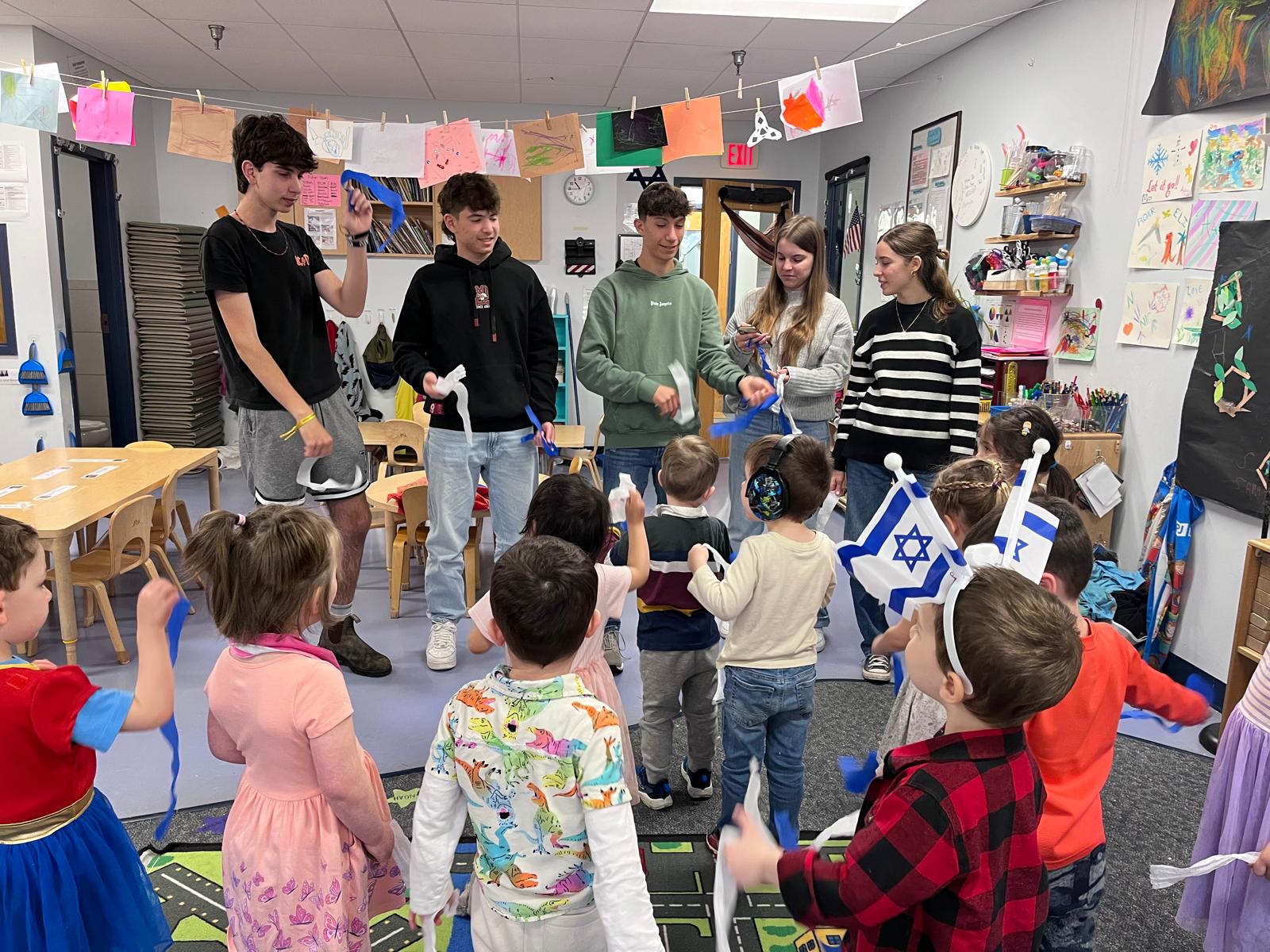
Teen engagement requires a multipronged approach: Deliver diverse programming, offer space and wait. At the Jewish Community Center of Greater Pittsburgh, staffers design and implement numerous activities, including those promoting study, socialization and communal improvement, all while keeping a bevy of kosher snacks on hand.
Jewish communal professionals meet regularly as a team to discuss best practices, work toward creating a welcoming site and address new needs.
Maria Carson, director of Jewish education and arts at the JCC, listed nearly a dozen programs available for adolescents at the JCC this year.
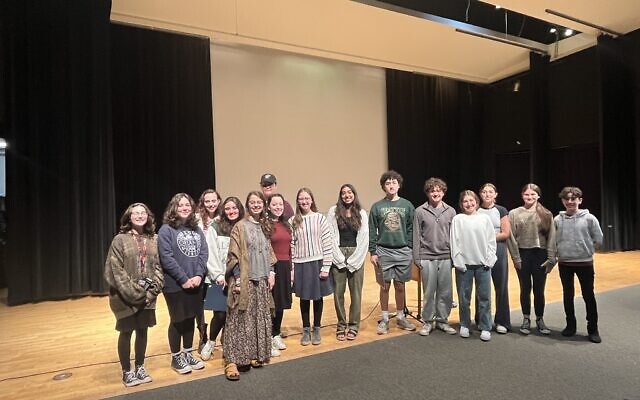
Apart from open gym hours for playing basketball, there are clubs dedicated to self-defense and Dungeons & Dragons. Fellowships include She’elot, where teens explore Jewish texts weekly in a search for meaning; Visions of Shalom, where participants study how Jewish thinkers approach peace in the Middle East; and Diller, where an annual cohort learns leadership skills in preparation of a three-week summer trip to Israel. There are even internships, Carson continued, where teens are paid to create programming for peers.
Since the start of the school year, Carson has noticed increased attendance at formal programs as well as more people using The Second Floor, a JCC site funded by the Jewish Federation of Greater Pittsburgh. Complete with couches, tables, video games and a supply of kosher treats, The Second Floor serves young people regardless of faith, background or identity.
The Squirrel Hill-based space, Carson said, is intended to be somewhere for teens “to just hang out and exist.” It enables them to “literally gather, without needing to spend money, without needing to necessarily do something, but just to literally take a break from their busy lives and exist with one another.”
They’re always glad you came
On a typical weekday afternoon, teens from various local schools congregate inside The Second Floor. Some are waiting for a program to begin. Others are there, Carson said, “because often, they don’t feel like they have a place to go.”
For many teens there’s an interim period between school and afterschool programming.
“They kind of don’t know what to do for those two hours,” Carson said. “To have somewhere to just exist, where they are allowed to be in community with other people, and allowed to interact with people who they’re not related to, is really powerful.”
Researchers point to the value of afterschool programming, saying it yields “higher levels of self-control and assertion skills” among children, while also serving as a boon for at-risk youth. Similarly, access to a third place — a space other than home, school or work — can “significantly reduce the risk of problematic behaviors in adolescents.”
Rachael Speck, chief program and innovation officer at the JCC, said she often considers teen engagement — and communal engagement — through the prism of wellness.
Whether it’s joining an activity or simply entering the gym or another JCC venue, this is a reprieve “from whatever is going on out there,” Speck said. “This is a safe space and an opportunity to escape a little bit.”
From bad to still bad
Throughout the pandemic and in the years following, researchers, public health officials and mental health experts cited a youth mental health crisis. While members of Gen Z (those now roughly between the ages of 13-28) reported higher rates of anxiety than previous generations, there’s growing concern about Gen Alpha (infants to early teens).
“Compared to their predecessors, Gen Alpha is more pragmatic, anxious, and risk-averse,” according to a report from Human-ology, a consulting service.
“Feelings of loneliness crop up at least sometimes over a four-week period for four in ten 13-year-olds. Half feel worried or anxious at least sometimes during the same period,” noted a study of 1,000 13-year-olds by the Springtide Research Institute.
Data reinforces the importance of creating spaces where adolescents can “connect in person,” Carson said. Having a dedicated space to develop relationships with those from different schools and backgrounds is essential.
“This is a center that is open and accessible to everybody. And one of the most beautiful things that happens here — and I think why we are so attractive to our local teens — is that they can come here with both their Jewish friends and their non-Jewish friends and, with very few exceptions, engage in the exact same ways,” Speck said.

An inclusive environment creates opportunities for teens to explore modern challenges.
“Teens have a lot of pride in their Jewish identity, but also some ambiguity about things like rising antisemitism and difficulties with relating to the state of Israel, or being concerned about anti-Israel sentiment,” Carson said.
There’s a broad consensus among those who work with teens that the past few years have been particularly “challenging,” Speck said. “We really want this to continue to be a safe space.”
It’s the climb
After school challah bakes, pre-Shabbat activities, crafting while learning about spirituality and monthly movie nights cater to different interests among adolescents. JCC staffers see each program, like an open gym, as an entry point — not only for relationships between teens, but for greater communal connection.
The Second Floor doesn’t simply create a pathway to participating in a fellowship or the Maccabi Games, an annual Jewish youth event — it often leads to a first job, Speck said. Whether that’s seasonal summer employment through camp, lifeguarding, childcare, a customer service position at the front desk or in the membership office, “there are quite a few opportunities depending on a teen’s interests.”
In many instances, that employment expands and a teen becomes a unit head at camp or a supervisor or coordinator. The path is designed for continuance; and while every teen won’t stay at the JCC, she said, there’ll be those who do and those who opt for other “human service or nonprofit Jewish communal work because of the valuable experience that they had here early on in life.”
Speck referenced her own childhood.
“I started my journey with the JCC, and my connection to the JCC, as a camper at Emma Kaufmann Camp. I didn’t even grow up in Pittsburgh, and here we are,” she said. “We often don’t realize it until later in life, what a meaningful and special place somewhere is to us.”
Growing research will offer new insights on Gen Alpha, but data sets and published papers aren’t needed to know that adolescence is a time when lifelong friendships develop and values are established.
Being a partner in that period and fostering engagement yields profound change, Speck said. “And I’d sit here and say that to you whether I worked here or not.” PJC
Adam Reinherz can be reached at areinherz@pittsburghjewishchronicle.org.
comments