
Friendship Circle’s ‘Let’s Talk About It’ series encourages conversation and understanding
'Adults don't know what it's like to be a teen right now. Teens don't know what it's like to be a parent'
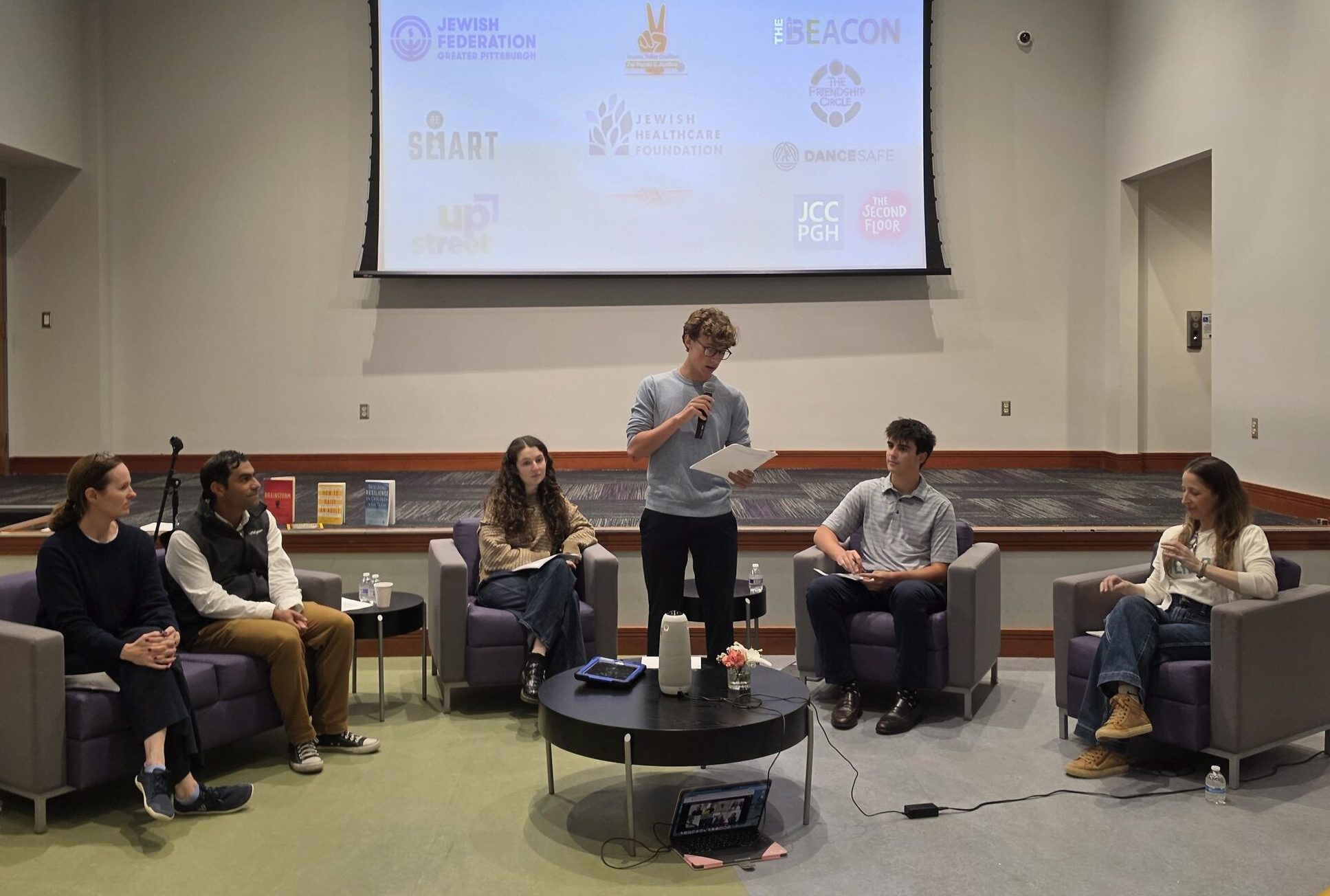
A program predicated on communication should prompt plenty of thought. “Let’s Talk About It,” a three-part series hosted by The Friendship Circle of Pittsburgh kicked off Sept. 23 with a conversation between teens, parents and local medical experts. Geared toward explaining the “teen brain,” risky behavior and “how parents can respond,” the evening affair was guided by Aiden Drucker, 18.
The Fox Chapel High School senior told the Chronicle he and fellow Friendship Circle teen leaders organized the chats as opportunities for dialogue and learning among parties of all ages.
Thanks to prepared questions, and inquiries submitted by teens and parents in attendance, Aiden and Talia Akiva, Teen Programming and Operations Manager at The Beacon — a teen wellness center operated by the Friendship Circle — spent more than an hour conversing with local experts about neuroscience and healthy choices.
Dr. Laura Voigt, a UPMC pediatrician, explained that in the past 30 years much has been learned about adolescence and the brain’s development.
Textbooks from the early 1900s often negatively described puberty and relegated young adults’ choices to “hormones.” Instead, during adolescence, a young person’s brain is actually “remodeling,” Voigt said. During this stage of life, teens are “biologically programmed to go out there and go beyond the family unit and take risks and learn,” she continued. Although adults often deem adolescents incapable of appreciating risk, teens actually understand risk; they just measure risk and reward differently. The calculation is “what puts them at risk for things that could hurt them.”
As adults, it’s important to not necessarily impede a child’s every move, she continued. The better approach is to routinely talk about safe choices and how best to “support our kids to do those things that make them grow up, and be adults, and be on their own, and take those risks.”
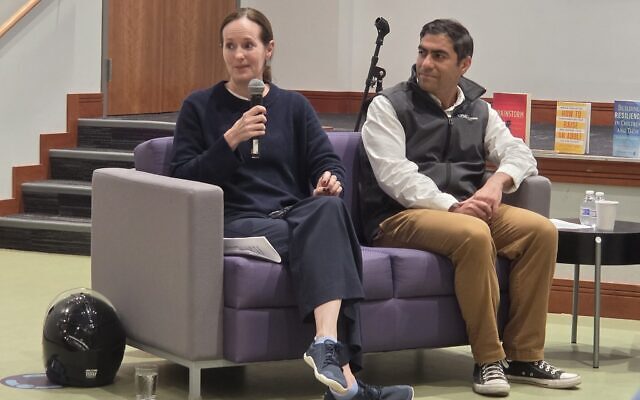
Dr. Gabriel Cisneros, a fellow UPMC pediatrician and medical director of UPMC Children’s Express Care – Lawrenceville and co-chair of the Pennsylvania American Academy of Pediatrics Advocacy Committee, said teens often “get a bad rap” for their attitudes and actions.
Best practices involve trying to understand where young adults are coming from, demonstrating acceptance and patience, and helping adolescents “move safely” through their earlier years.
For teens, life isn’t only black and white, he continued. “Give them space to process and be there to help them see it more colorfully. They’ll get it. It’s something that comes with age and time.”
Still, every choice isn’t similar.
The physicians mentioned that during patient check-ups they ask about substance abuse, sexual activity, access to firearms and mental health.
Delving into those topics yields discussion on “how can we minimize those risks,” Cisneros said.
Rachel Usdan, co-founder and COO of Peace for DC, a nonprofit focused on public safety solutions to gun violence and a Pittsburgh leader with Moms Demand Action, cited numerous statistics regarding gun violence, including data from the Centers for Disease Control and Prevention that firearms are the leading cause of death for children and teens in the United States.
School shootings capture significant attention; but among gun-related deaths affecting young adults, school shootings represent merely a “sliver,” she said.
Most gun-related deaths are a result of homicide, suicide and unintentional firearm use.
It’s important for parents to tell their children that whatever “crisis” is occurring, “they can come to someone, they can come talk with you.” Struggling is a normal emotional experience, “but the thing to understand about guns is their lethality,” she continued. There’s no second chance “if you change your mind, so it’s very important to try to keep guns out of the hands of someone who is in a crisis, who may be at risk of harming themselves or others. And that’s why safe gun storage is so important.”
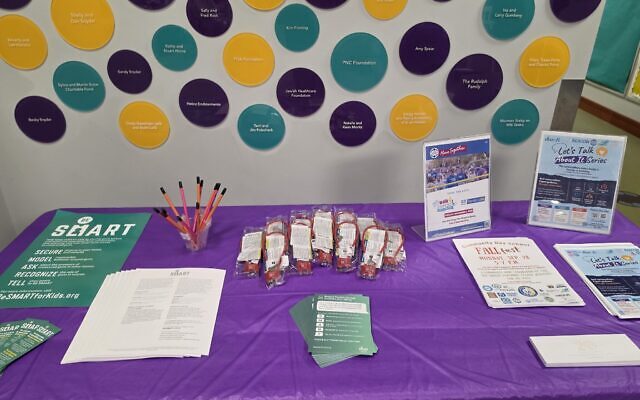
During her comments, Usdan displayed a red-looped tool that prevents a trigger from firing. Similar gun locks were made available to attendees at a table near the Friendship Circle’s entrance.
Chayim Massart, 17, an Allderdice student and Friendship Circle Teen Leader who helped organize the series, said he hopes community members attend the next two installments.
“Drugs Today: Facts, Safety and Conversations that Matter” will occur on Oct. 21. “Social Media, Body Image and Building Healthy Identity: Scroll, Compare, Repeat?” will be held on Dec. 1. Both programs will be led by teens and local experts.
Each session has “a lot of meaning,” Chayim said. “None of these can all be done in one night. They have to be spread out.”
Whereas many previous Friendship Circle programs have been primarily for “parents or just for teens,” this series bridges the gap and offers new perspectives, Akiva said. “Adults don’t know what it’s like to be a teen right now. Teens don’t know what it’s like to be a parent.”
Kaitlin Hens-Greco, Clinical Director of The Friendship Circle, praised the teen organizers, panelists and community members for recognizing the value of difficult conversation.
“Bringing teens and parents into the same room to talk about gun safety, substance use or how to navigate peer pressure is brave,” she said. “It gives young people and adults the opportunity to hear each other, get good information and figure out how we can support one another.” PJC
Adam Reinherz can be reached at areinherz@pittsburghjewishchronicle.org.
comments