
The beauty of imperfection
The message of Elul through Yom Kippur “is that human change is really possible."
The beauty of Rosh Hashanah is the beauty of imperfection, and nothing is messier than the present moment. As one Talmudic sage put it, while we are told in Leviticus that a maimed animal is unfit for sacrifice, “Whatever makes an animal ritually unfit makes a man ritually fit.” That is to say, while imperfections make an animal unfit for sacrifice, human imperfections make us fit for doing what God wants — teshuvah.
During Elul and Tishri especially we are supposed to admit that we have failed in the past year, and we should be prepared to say the same thing next year. Similarly, the Talmud declares, “Where those who do teshuvah stand, the completely righteous cannot stand.” In other words, the journey of teshuvah is more human, more essential and more realistic than the path of someone who pretends to have thrown off all of their negative impulses and misdeeds.
As Arthur Green put it, the message of Elul through Yom Kippur “is that human change is really possible. In the face of all our cynicism, all the versions of determinism (genetic, Freudian, economic and all the rest), that serve as excuses for us not to try to get our lives in gear, the Yamim Noraim come each year to remind us that it is possible to change our lives.”
Get The Jewish Chronicle Weekly Edition by email and never miss our top stories Free Sign Up
One egg, one grave
The 19th-century rabbi Hayyim of Zans told a story of a mother of many children who found a single egg. She called her children around her and immediately made plans for it: She would ask to put it under the neighbor’s hen, and she would hold onto the resulting chick as well as the eggs it would lay, until she had enough to sell to buy a cow. This goes on and on until, distracted by her own story, the mother drops the egg and it breaks. Hayyim of Zans concludes, “That is how we are. When the Holy Days arrive, every person resolves to do teshuvah, thinking in his heart, ‘I’ll do this, I’ll do that.’ But the days slip by in mere deliberation, and thought doesn’t lead to action.” Perhaps this year it can.
Leon Wieseltier writes movingly of the first Rosh Hashanah after his own father’s death. His parents, he said, had always watched with “an unspoken bitterness” as their friends and neighbors trekked to the cemetery every Elul, to mourn at the graves of their relations. Since Wieseltier’s extended family were all murdered and buried in Europe, this ritual was not possible for them until his father died. “It is no wonder, I guess,” Wieseltier writes, “that my mother’s mourning for my father became a kind of super-mourning, an encompassing sorrow, in which she could at last perform the duties of a mourner not only for her husband, but also for her father and her mother and her brother.” And he says, noting the peculiarity of this Jewish circumstance, “We will greet a grave with gladness.”
The Akedah
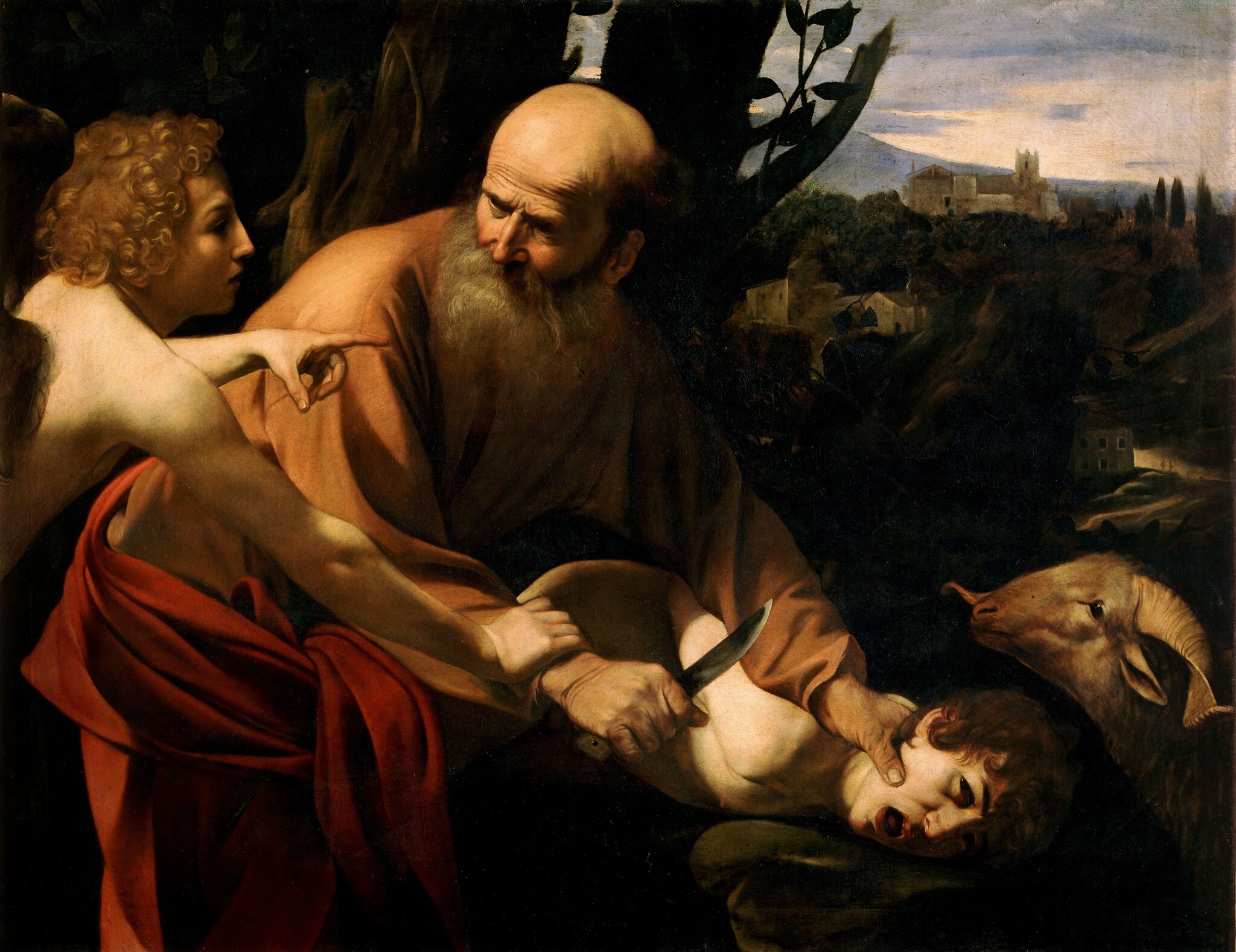
Many of the stories associated with the High Holy Days are about families. This is perhaps why it took becoming a parent to really see (I won’t say understand) the Akedah. The near-sacrifice of Isaac by his father is something like Shakespeare, Cecil B. DeMille and Greek tragedy all rolled into one — but what makes it Jewish is that heartbreaking family dynamic.
The author and rabbi Burton Visotzky compares the impossible deed that Abraham (almost) commits to the accumulated difficulties that parents unwittingly put on their children every day. Visotzky points to the challenges of being a rabbi’s child and says, “In some ways, the Abraham-Isaac story exemplifies this situation. My personal relationship with God — my career path with God, if you will — makes demands of my family that may be very unreasonable.”
Sarah’s response to what her husband did is not recorded, but she also dies soon after; the story as it stands in the Torah can be read to suggest that Abraham and Isaac did not return home together; and it is hard not to see Isaac, in succeeding chapters, as a broken and damaged man. Jews in America may not identify with the full extent of this family’s upheaval, but we know it in bits and pieces, in the severing of bonds between spouses, and between parents and children. In the Akedah it happens all at once; for the rest of us, and if we aren’t careful, the accumulation of broken relationships can go on for years and years.
It is a cliché to point out that, for a religion so centered on family and the raising of children, our patriarchs and matriarchs are imperfect. But by focusing on the Akedah at the turn of the new year, we are given the chance to see where we have slipped, even slightly, in putting our certainties about God — or our personal ambitions — ahead of our families.
The ram in the thicket
My favorite midrash of all is the one that says that the ram Abraham sacrificed in place of Isaac had been waiting there, on Moriah, since the sixth day of creation. It suddenly turns a difficult and fraught story into poetry. It doesn’t make the story any easier to deal with, but it does feel like a rabbinic flourish and excess, a flight of imagination they couldn’t help indulging in.
Being the new year, Rosh Hashanah is also naturally connected with the story of creation. When we say during taschlich that we are “casting our sins into the depths of the sea,” we are told by many sages to imagine it as the sea of creation. And even further, we are to understand that “the sin like the waters will move on.” This is worth emphasizing too, because if the waters move on, so should we.
As the late Rabbi Jonathan Sacks put it, “On Rosh Hashanah, we are like Adam and Eve, the quintessential representatives of the human condition. We may have sinned. We may have lost the paradise of innocence. We all do.” But this is not the end. As Sacks also says, “Where we bring blessings into other lives, there God lives.”
The year is new again, and ready for our blessings. PJC
comments