
In Finland, small Jewish community seeks sizable engagement
Helsinki's Jewish community totals fewer than 900. Growth isn't simply a numbers game, leaders say. It's about creating a cooperative of co-owners connected 'as a community and to the wider Jewish world'
Pittsburgh Jewish Chronicle Senior Staff Writer Adam Reinherz accompanied educators and lay leaders on a two-week trip to northern Europe. Traveling through Lithuania, Latvia, Estonia and Finland, Reinherz reported on modern Jewish life, vanished communities and the quest to create a new European Jewish story. Coverage relied on dozens of site visits and more than 75 interviews. This is the fifth article of a five-part series.
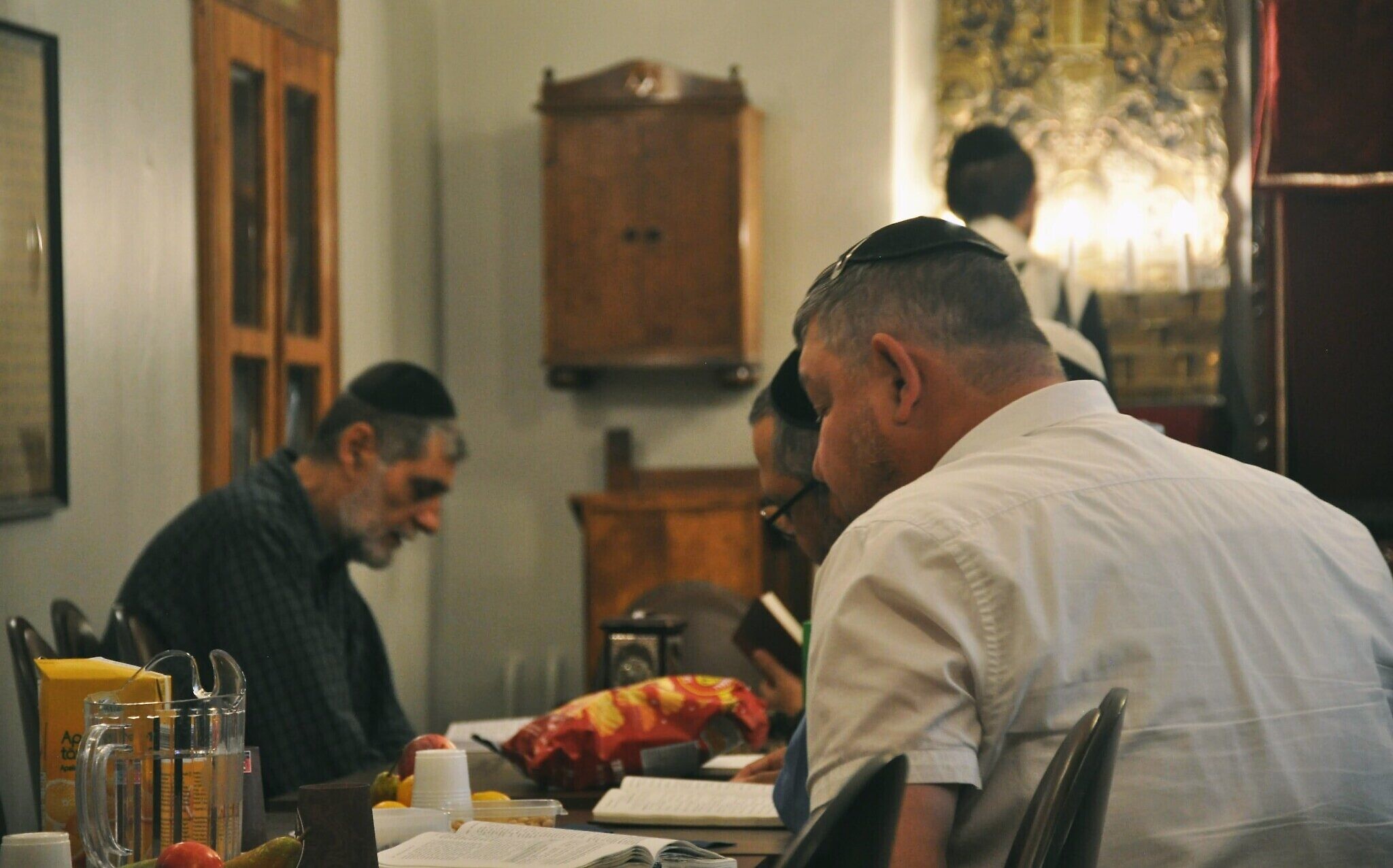
HELSINKI — If a small community makes a sound will the world listen? There are fewer than 900 Jews in Helsinki, Finland. The hodgepodge of multi-generational Finns, ex-pats, Israelis and other Europeans vary in religious identity and engagement. Jewish communal touchpoints include weekly choir practice and synagogue attendance. Few gatherings — whether involving song, study, prayer, school-related meetings or challah bakes — attract more than 40 people. Most meetups, like those in a new kosher cafe, welcome closer to a dozen participants.
Chaya Votkin, the Jewish community’s president, dreams of growth.
Statistics, though, are secondary to residents collectively recognizing the distinct beauty of contemporary Jewish life and committing to its continued enhancement.
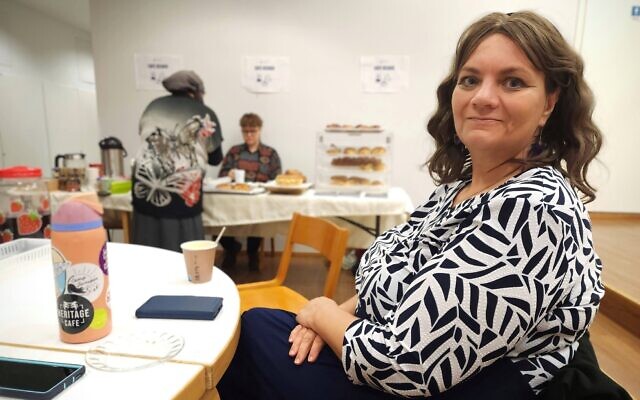
Votkin offered insight while seated inside Cafe Kesher. Located in the basement of the Helsinki Synagogue, the area surrounding the coffee bar and pastry shop was abuzz. On several tables near the cafe’s kitchen, 15 women prepared Shabbat loaves in memory of the mother of the community’s rabbi. A few feet away, a couple sipped drinks and studied Hebrew. In an adjacent space, three other adults parsed rabbinic texts, while about 10 parents discussed an upcoming Israel trip for students at The Jewish Community School of Helsinki, before community members organized an impromptu prayer service. A floor above the subterranean activities, nearly 30 talented sopranos, altos and tenors serenaded a guest.
The choir, according to Kenneth Rubanovitsch, 62, gives members a community to belong to as well as a way to stay connected with their history: “Many of the people here are descendants of former choir members.”
Rubanovitsch joined the group in 1985. His grandmother was among the founders.
Choir origins, according to Votkin — who is also a member — date back more than a century.
At the time, the Finnish Jewish community was barely beyond its infancy.
No easy way out
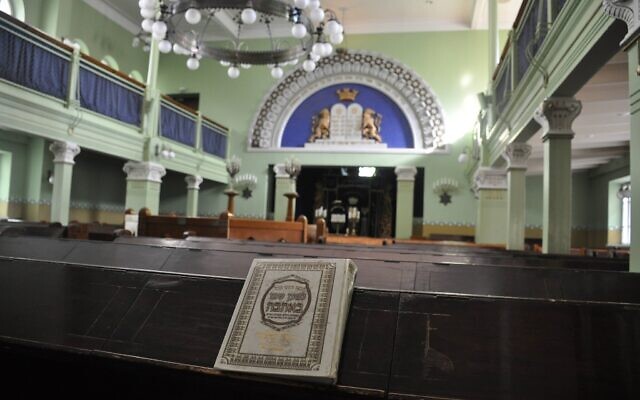
Pointing to a small crown above the Helsinki Synagogue’s ark, Boel Dondysha, a communal secretary, described the arrival of Jewish Russian soldiers in the early 19th century.
After 25 years of service to the Red Army, she said, Jewish soldiers, called cantonists, were permitted to settle in what is now modern Finland. Despite their presence, these landsmen had limited opportunities. An 1869 decree identified permissible occupations and places of residence. Violation warranted expulsion from Finland. Only after Finland attained independence in 1917 did its nearly 1,000 Jewish inhabitants receive equal rights.
On the eve of World War II, there were about 2,000 Jews in Finland — most emigrating from Eastern Europe. With Finns experiencing fewer than 25 years of independence from Russian rule, memories of occupation and persecution loomed. Remembrance became reality when Soviets invaded Finland on Nov. 30, 1939.
Three months of war generated substantial loss, as nearly 24,000 Finns (almost 2% of the population) died, 11% of Finland was annexed by Russia and almost 430,000 residents had to evacuate their homes, according to author John Simon. When the Germans arrived in Finland offering food and arms in 1941, Russia had already reneged on mutual assistance pacts with the Baltic states. Having occupied Lithuania, Latvia and Estonia, and portions of Finland, Soviet threats were palpable. For most Finns, the “choice was simple.”
As a co-belligerent to Nazi Germany, Finland — and its 300 Jewish soldiers — battled Russia from 1941 to 1944. During this period German authorities requested Finland deliver its 2,000 Jewish residents. Prime Minister Johann Wilhelm Rangell refused, reportedly telling SS Chief Heinrich Himmler, “We have no Jewish question,” according to Yad Vashem.
Protection of Jews in Finland wasn’t absolute, though. Eight Jews, who had fled Austria, were secretly given to the Gestapo on Nov. 6, 1942. Finnish residents protested and ensured similar transfers ceased; however, seven of the eight Jews were killed in the Auschwitz concentration camp. In a separate exchange, 70 Soviet-Jewish prisoners of war were sent to Germany. The Jews, according to researchers, died in German custody.
For their bravery and military service to Germany, three Finnish Jews were awarded the Iron Cross. All three Jews declined the honor.
Cloud cover
Nearly eight decades later, World War II still casts a shadow.
Michel Beniard, 79, recalled relocating to Finland from France 45 years ago.
Those active in Helsinki’s synagogue were “veterans of the Second World War, and they were a very close community,” he said. There was a “gap,” not only among generations but between Finns and foreigners, with the former “primarily speaking Swedish.”
“Some families were very open-minded and very nice, but it was a bit strange,” he continued.
Synagogue practices were strictly Orthodox, however, the people were not. And then there was the “problem” of having joined the Germans during the war, Beniard said. “There was a bit of shame.”
As decades passed, communal dynamics shifted. Several changes appeared in classrooms, said fifth-generation Finn Daniel Weintraub, a history teacher at Helsinki’s Jewish school.
When the school started more than a century ago, many students came from families familiar with Jewish practices. Today, the non-confessional school, which follows a Finnish curriculum, has a larger responsibility.
Shmuel Beniard, rabbi of the Helsinki Jewish community, recalled speaking with a student who’d never heard of Rosh Hashanah, didn’t know about a shofar but somehow knew about dipping apples in honey.
Finnish scholar Mercédesz Czimbalmos, 34, spent two years studying “Minhag Helsinki.” Her research, and service in Helsinki’s chevra kadisha, led her to conclude the majority of community members couldn’t differentiate halacha (Jewish law), minhag (custom) and “choice of convenience.”
Votkin recalled hearing from individuals perplexed by seeing a woman shake a lulav on Sukkot.
“They didn’t know women can also do that,” she said. Similarly, some people regard tradition so strongly they believe having gefilte fish on Passover is akin to “lighting candles on Shabbat.”
Sofia of Finland
Sofia Freudenstein, an Orthodox-trained rabbi, arrived in Helsinki weeks before the recent High Holidays.
Hired by Helsinki’s Jewish Community as its director of Jewish Life and Learning, with support from Educating for Impact, an initiative of Jewish philanthropies committed to strengthening Europe’s Jewish future, Freudenstein, 27, quickly discovered the haziness between custom and law.
During Shabbat morning services, a chazzan employed tunes typically reserved for Rosh Hashanah in North American synagogues; it happened week after week. Whereas some communities apply melody to connote meaning and differentiate the seasons, she said, there isn’t that “nuance” here.
Freudenstein identified another oddity involving Birkat HaMazon, a post-meal blessing. In Helsinki, she said, community members conclude the text by singing “Oseh Shalom,” as if the verse is part of the prayer.
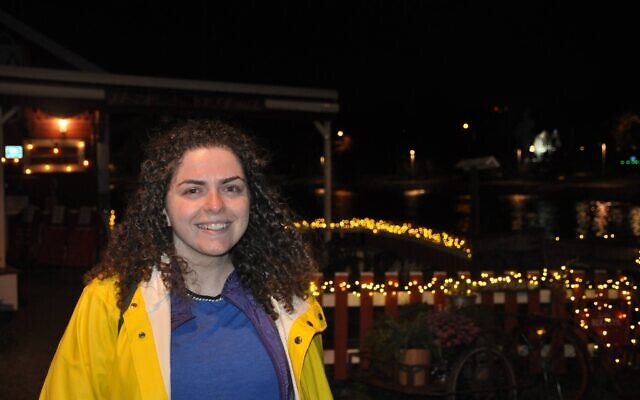
For months, Freudenstein has worked with Votkin, Czimbalmos and others to enhance Jewish knowledge.
She aided in the publication of “Birkon & Shiron,” a booklet of passages typically recited during Shabbat meals (“Oseh Shalom” is printed at the end of Birkat HaMazon).
The text ensures “learning possibilities are available for everyone — even in Finnish — even if they never come to shul,” Votkin said.
Half Hebrew, half Finnish transliteration, the booklet allows users to recite Kiddush, make Havdalah or read Hebrew without embarrassment. Even among those who attended the Jewish school, “there’s some kind of shame” in not knowing how to perform certain practices, she continued. “Birkon & Shiron” reminds Finns “Judaism is something that belongs to all of us — we own it, it’s our thing,” and with that understanding comes acceptance of the past.
“What has been, has been,” Votkin said. “Now we think about the future, what we can do now.”
With the community’s headquarters, school and synagogue under the same roof, Freudenstein organized a Shabbat dinner, shortly after her arrival, for staffers. Along with a brief service and meal, professionals were encouraged, she said, to strengthen relationships and become “more on the same page about what Shabbat is.”
Along with organizing similar monthly dinners, Freudenstein started filling other gaps — even among a highly knowledgeable group.
Finland is touted for its educational system. Along with a commitment to ensuring developmentally appropriate instruction, Finnish teachers are required to have master’s degrees and pedagogical proficiency.
Speaking with Classrooms Without Borders travelers, teachers from Helsinki’s Jewish school described their venerated profession and admitted surprise that U.S. educators, especially within Jewish day schools, are not often afforded similar respect. One challenge, several Finnish teachers mentioned, though, was limited access to materials as few Jewish texts are available in Finnish.
After a teacher asked Freudenstein why people cover their eyes when saying “Shema,” Freudenstein created a source sheet with answers. The school teacher then translated it into Finnish for students.
Though Freudenstein was hired to deepen the community’s understanding, she’s been among its biggest learners.
“I think that a lot of people would maybe look at a community like this and say, ‘I should just make aliyah, or I should go move to New York City,’ but actually, living in a smaller Jewish community might actually be better for one’s observance,” she said. “When we’re in a North American Jewish community, there’s just so many things we take for granted as not being changeable. I think a community like this throws all that into question.”
Communal practices here aren’t simply a testament that “European Jewish life is possible, and not dead,” she continued. Residents’ varied undertakings are global reminders to consider one’s communal involvement: “Here’s a model.”
Helsinki hum
Speaking over the buzz of nearby activities, Votkin said she dreams of growth.
Whether through the choir, prayer, buying a fresh frittata or any other avenue, Finns need greater engagement. But isolated involvement isn’t the point, she said. “I just want to encourage people to take initiative, to take responsibility, and to learn and enjoy Jewish culture — we have an amazing culture.”
Belonging to this community, and the Jewish people, changes every member. “If you’re just a customer, you can always complain that you don’t get enough services,” she said. “When you become an owner, you have to give something from yourself — you have to invest money, and time, energy and ideas — and then it becomes your own.”
A cooperative of 1,000 co-owners is “possible if we work toward it and we verbalize what we want,” Votkin said. That’s the key to connection “as a community and to the wider Jewish world.” PJC
Adam Reinherz can be reached at areinherz@pittsburghjewishchronicle.org.
comments