
How to host your first Shabbat dinner — no experience required!
Shabbat is a weekly chance to hit pause, unplug and reconnect — with yourself, your people and something bigger than the weekly to-do list.

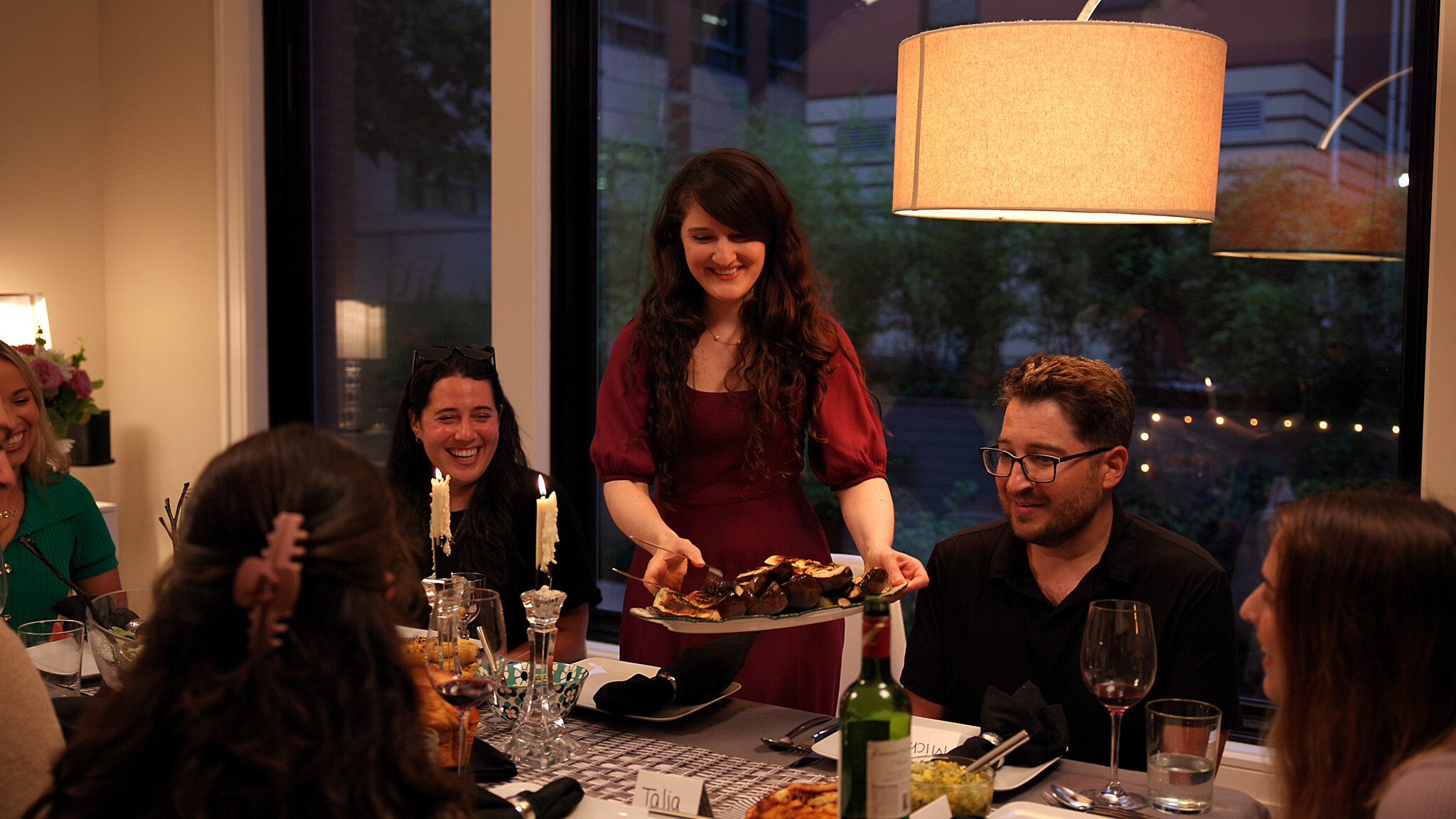
So you’re thinking about hosting your first Shabbat dinner. Maybe you’ve been to a few in your time, maybe you just finished “Nobody Wants This” and want to see what all the fuss is about. Or maybe you’re simply looking for a reason to gather your favorite people around a table. Whatever brought you here, welcome!
At OneTable, we believe Shabbat is less about perfection and more about intention. It’s a weekly chance to hit pause, unplug and reconnect — with yourself, your people and something bigger than the weekly to-do list. And the best part? How you Shabbat is entirely up to you.
Here’s how we suggest you get started.
Set the intention
Shabbat begins every Friday at sundown, but your Shabbat practice can start when you’re ready. Pick a date and time that feels do-able for you. Then, decide what kind of energy you want to bring to the evening. Is this a cozy dinner with your roommates? A potluck asking everyone to bring a dish and a friend? A “no-phones” dinner party with multiple courses and deep conversation? Setting the tone early helps your guests know what to expect and helps you create your unique vibe.
Build your guest list
Shabbat is all about community. Invite people who make you feel comfortable and curious, folks with whom you can laugh, be real and tear unashamedly into challah. Don’t be afraid to mix it up. Shabbat dinner is a beautiful opportunity to introduce people from different parts of your life. There’s something about sharing a meal that makes strangers feel like family faster than you’d think.
Plan your menu
Shabbat dinner can be anything from takeout sushi to a home-cooked feast. How you fill your table is totally up to you. You can also turn the meal into a participatory event by planning a potluck. Ask guests to bring a side, salad, or dessert to pair with your main course. Sharing the cooking — and the stories behind each dish — can make Shabbat dinner feel even richer.
Add a little ritual
One of the most beautiful parts of Shabbat is the invitation to slow down. Traditionally, welcoming Shabbat and marking the transition from work week to 25 hours of rest is done with blessings: candle lighting, challah, wine and more. If you’d like to build a practice of adding ritual to your Shabbat dinner, you could consider saying or singing traditional blessings (in Hebrew or English), playing a recording if that feels more comfortable, or even just taking a moment of gratitude together before eating. Some hosts like to go around the table and ask everyone to share a highlight of their week or something they’re looking forward to. It’s your Shabbat dinner — make it meaningful for you.
Get The Jewish Chronicle Weekly Edition by email and never miss our top stories Free Sign Up
Let the evening unfold
Once the rituals are complete and dinner begins, let yourself relax into Shabbat. Resist the urge to micro-manage. The beauty of Shabbat dinner is in the pause: the laughter, the conversation, the lingering because no one’s rushing off to the next thing. Remember: Shabbat isn’t about impressing anyone. It’s about connecting — with each other and with a sense of rest that’s so rare these days.
Keep it going
When the evening ends, say goodbye to your guests knowing you’ve just created something special. You spent hours sharing food, stories, joy and connection. That’s the magic of Shabbat dinner. If it felt great, do it again! Try new menus, invite different people, or host in new spaces. Each Shabbat can look different, and that’s exactly the point. It’s a practice that grows with you.
One more thing
At OneTable, we help people in their 20s and 30s find and create Shabbat dinners. We offer support, resources, and even nourishment to make it easier. Visit onetable.org for information, and inspiration. And remember: We’re always here to help at hello@onetable.org. PJC
Amy Bebchick helps others create joyful, sustainable Shabbat practices as OneTable’s chief program officer.
comments