
Classrooms Without Borders strengthens roots in Pittsburgh with scholar Avi Ben-Hur
'We need to reach across the aisle and search for allies. If we look for them, we will find them'
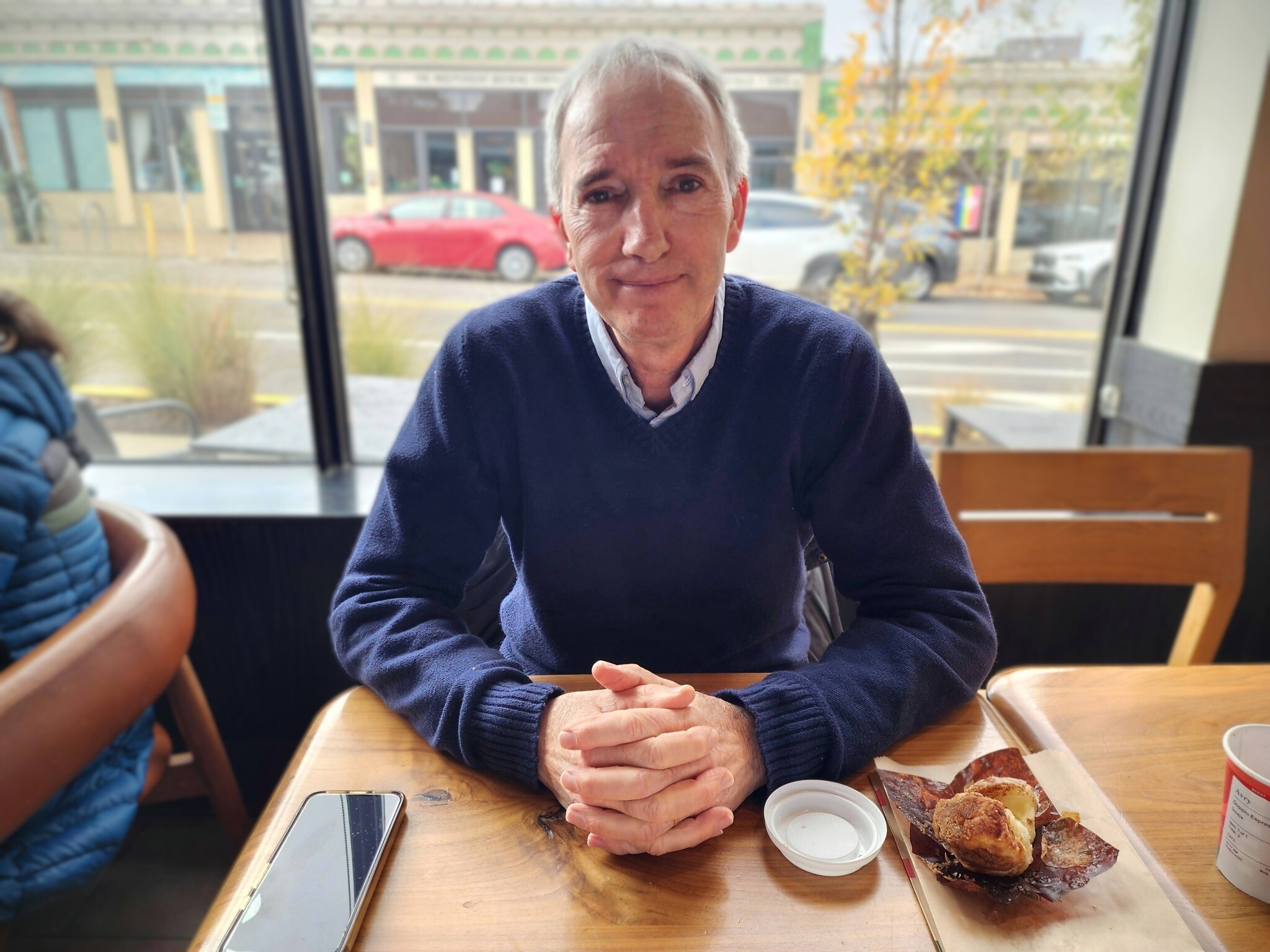
A local public school teacher invited Avi Ben-Hur to speak with students. The Classrooms Without Borders scholar-in-residence agreed and asked for clarification about the visit’s “educational goals” and the instructor’s specific interests.
“It is such a complex issue, we would really like you to try and give them the basics as best as you can,” the educator wrote in an email. “The origins of the modern state of Israel, a history of how we got to the current situation, what caused the current conflict, what is the present ceasefire, and hopefully, if you can get them to understand why they should care about it, that would be awesome.”
Ben-Hur was allotted 25 minutes to cover those topics and about 20 minutes for Q&A.
The New York City-born educator, who has spent the previous 42 years in Israel, wasn’t bothered by the absurdity of being asked to “unpack the Jewish and Arab connections to the land,” and the roots of the conflict, in the same amount of time as an episode of “Law & Order.” He simply tried to do his best, he said, to “lay out the facts as I have studied, taught and lived them, without weighing in personally.”
Since arriving in Pittsburgh on Aug. 1, Ben-Hur, 60, has sought to create partnerships, wherever possible, with local educators and professionals while strengthening CWB’s efforts to develop teachers. The inroads he’s made have relied on a network of contacts cultivated through a 22-year association with CWB Founder and Executive Director Tsipy Gur.
Well before Ben-Hur moved to Pittsburgh to serve as CWB’s on-the-ground scholar, the organization and its staff have worked with schools and institutions in Pennsylvania, Ohio, West Virginia and Florida. Though CWB routinely utilizes lectures and workshops to develop teachers, its raison d’être is travel-based seminars. Since its 2011 inception, the Pittsburgh-based group has taken more than 2,500 teachers from 215 private, parochial and public schools to locations including, Israel, Poland, Germany, Greece, Lithuania, Latvia, Estonia, Finland and the American South.
“Teachers teach in a box,” Gur said. There’s a profound impact on educators, and students, from leaving the physical classroom, seeing sites, speaking with locals and gaining firsthand appreciation. Ben-Hur’s Pittsburgh presence, she continued, will strengthen the organization by empowering teachers both before and after their travels.
Taking non-Jewish educators to Poland and helping them incorporate Holocaust studies into the classroom is the “central project we do,” Ben-Hur said.
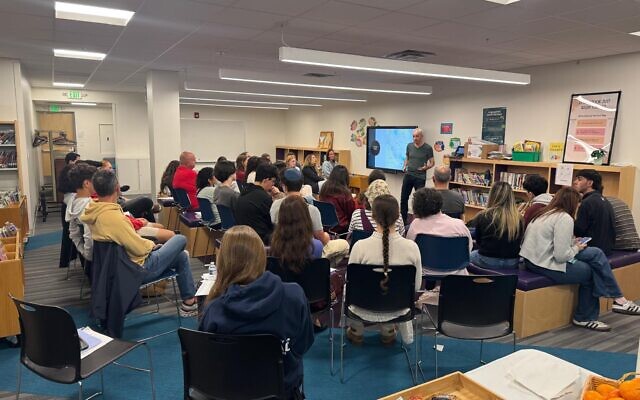
Though new to Pittsburgh as a full-time resident, aiding CWB and its travelers isn’t a novel task. For years, both through trip-related Zoom sessions, and participating in overseas seminars, Ben-Hur enhanced the CWB experience. The benefit of being in Pittsburgh full time, he said, is the ability to comprehensively address the associated lead-ups and returns.
During the next two years, the goal is to “systematize” the several sessions educators enjoy before traveling to Poland. By refining those preparatory meetings and working with teachers upon their return from Poland, Ben-Hur is convinced students will benefit.
The other primary aim, he said, is to continue working with school districts, intermediate units and professionals. Those relationships often lead to multi-hour training sessions in which Ben-Hur is asked to speak about the Holocaust or antisemitism.
He said he happily complies, but there’s a particular concept that also now needs to be addressed.
“This whole narrative of there’s no Jewish connection to Israel has been mainstreamed over the past few years. As somebody who has been teaching Land of Israel studies for 30 years, and swims very deeply in archeology and the history of the country, it strikes me as so preposterous,” he said. “It’s not enough that our non-Jewish teachers have learned about antisemitism and how and why Jews were othered. We need to talk about who the Jews are.”
For the new Pittsburgh resident, the responsibilities are vast. Still, he’s eager to tackle each task and impact educators one-by-one — trusting that every connection and conversation will foster relationships benefitting both students and the wider society.
Encountering today’s realities and ensuring a better tomorrow requires historic appreciation, he said. “We should never have a view of a nation that dwells alone. That’s the wrong way to go, because that’s a very, very lonely place to be in this world, and it doesn’t work,” he said. “We are not in 1933, nor are we in 1938. We’re in a bad time for Jews, but there are plenty of Americans who do not hate us. There are Americans who like us, and there are some Americans who love us. We need to reach across the aisle and search for allies. If we look for them, we will find them.” PJC
Adam Reinherz can be reached at areinherz@pittsburghjewishchronicle.org.
comments