
Local teens find community and purpose on social justice trip to LA
Travel with Jewish Federation of Greater Pittsburgh affords teens chance to explore sites and discuss topics including, welcoming the stranger, repentance and personal responsibility
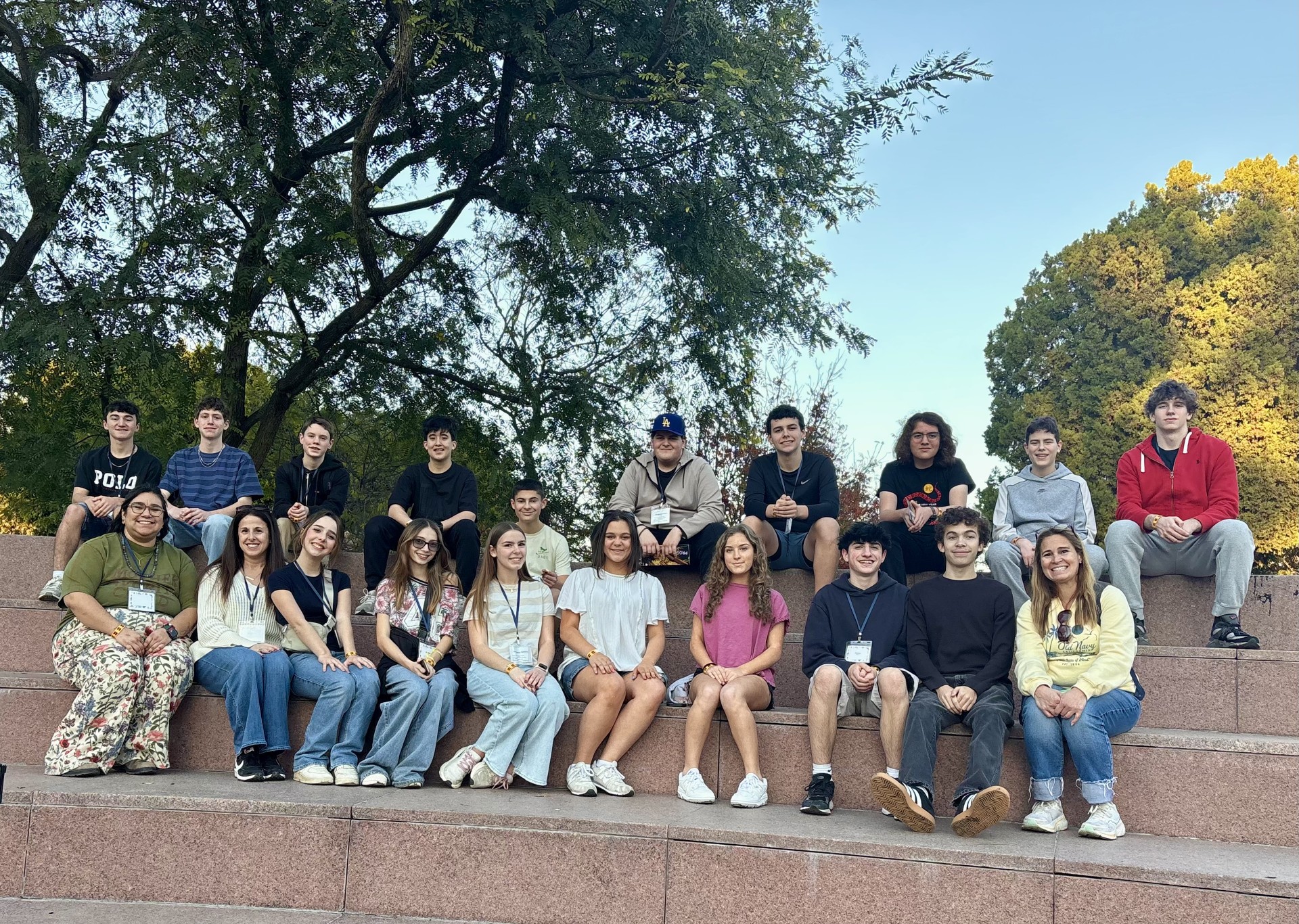
A subsidized trip to Los Angeles granted Pittsburgh teens an opportunity to discuss Jewish values while creating new friendships.
The Jewish Federation of Greater Pittsburgh organized the Dec. 28–31 trip in partnership with Tzedek America and The Fine Foundation, according to Federation representatives.
Carolyn Linder, Federation’s associate director of Jewish Life and Learning, said the program “fills a gap in our community.”
By bringing together 17 local Jewish high school students from the city and suburbs and enabling them to learn together, “they are not only deepening their understanding of social justice and Jewish values, but also widening their social networks and strengthening the bonds that tie our broader Jewish community together,” she said.
For North Hills High School student Coleman Kline, participating in the mission marked a return to his religious and cultural roots.
“I took a long break on going to my temple,” he said. “I recently thought it was a good idea to get back into Judaism.”
Months ago, Kline, 16, started attending the She’elot Fellowship, a 12-week program, run by the Jewish Community Center of Greater Pittsburgh, encouraging high school students to investigate questions about life, community and Jewish identity.
Kline said his mother noticed how much he enjoyed the program and asked if he wanted to go to Los Angeles with the Federation. The teen agreed.
“I thought it would be cool to see how their Jewish community is different from the Jewish community in Pittsburgh,” he said.
Upper Saint Clair High School student Makis Sobel-Drum said his interest in the mission grew from the opportunity to meet new people and explore a new city: “It looked like a lot of fun.”
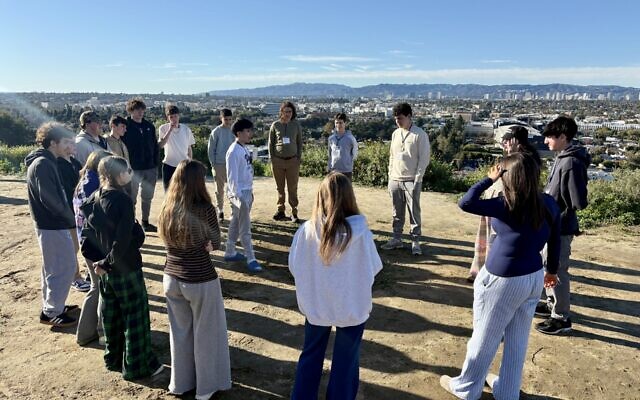
Now back in Pittsburgh, the teens said the multi-day excursion met their expectations.
During discussions at site visits the participants bonded over topics including welcoming the stranger, t’shuvah (repentance) and personal responsibility.
Both teens cited a stop at Beit T’Shuvah as being especially informative. The Los Angeles-based residential treatment center integrates Jewish spirituality, psychotherapy and the 12-step program to help individuals recover from addiction.
One of the speakers there had this “horrific story” about growing up in a “great home” and things coming apart during eighth grade, Kline said.
A conversation with a “former gang member who was struggling with a meth addiction,” was also impactful, Sobel-Drum said. “Drugs can lead to a very dark place.”
Megan Amster, a Fox Chapel resident and Federation staffer who helped chaperone the trip, said the mission exposed teens to “relevant and real life social justice issues that they might not always have the ability to see at home.”
“Social justice‑themed travel has the power to create a profound and lasting impact on our teens,” Linder said. “When they immerse themselves in the lived realities of marginalized communities, they gain a deeper understanding of the social, economic and cultural challenges people face every day.”
Kline said touring Los Angeles and discussing topics like homelessness and immigration offered experiences few Pittsburgh teens have and helped him view life in western Pennsylvania differently.
“There are not a lot of Jewish kids at my school in the North Hills. I’ve always felt different from other kids.” Having the chance to spend time talking with fellow Jewish teens, he continued, “I felt more normalized. I feel like there’s more people like me than I originally thought.”
Researchers have long acknowledged the role of non-classroom experiences within adolescent development.
A 2022 study from Brigham Young University, Johns Hopkins University and the Heritage Foundation found that students who undertook multiple field trips during the school year achieved higher test scores, demonstrated fewer behavioral infractions and expressed “greater tolerance for people with different opinions and an increased desire to consume arts.”
Although the trip was a one-off experience, Linder believes the mission’s purpose “goes far beyond tourism,” she said. “It fosters radical empathy and a true sense of global citizenship.”
The value of going away, meeting Jewish peers and having challenging conversations is fairly easy to understand, according to the teens.
“People’s worldview can be very close-minded,” Kline said. “It’s good to expand your worldview.”
This trip made clear that “struggling people are normal people — they’re just in really bad circumstances,” Sobel-Drum said.
While the trip led to new encounters and friendships, participation in the mission isn’t needed to apply its lesson, Kline said.
“Nowadays there are a lot of screens, and a lot of people sit inside and don’t go out. Going out and socializing with the world — even on your own — can make a small difference,” he said. Whether it’s joining a group, contributing to a cause or “helping someone reach something high up on the grocery store shelf, even small steps make a larger difference.” PJC
Adam Reinherz can be reached at areinherz@pittsburghjewishchronicle.org.
comments