
Uncovering a forgotten Holocaust story, one note at a time
Multimedia program presented at Chatham University on Jan. 27 explores the question of identity
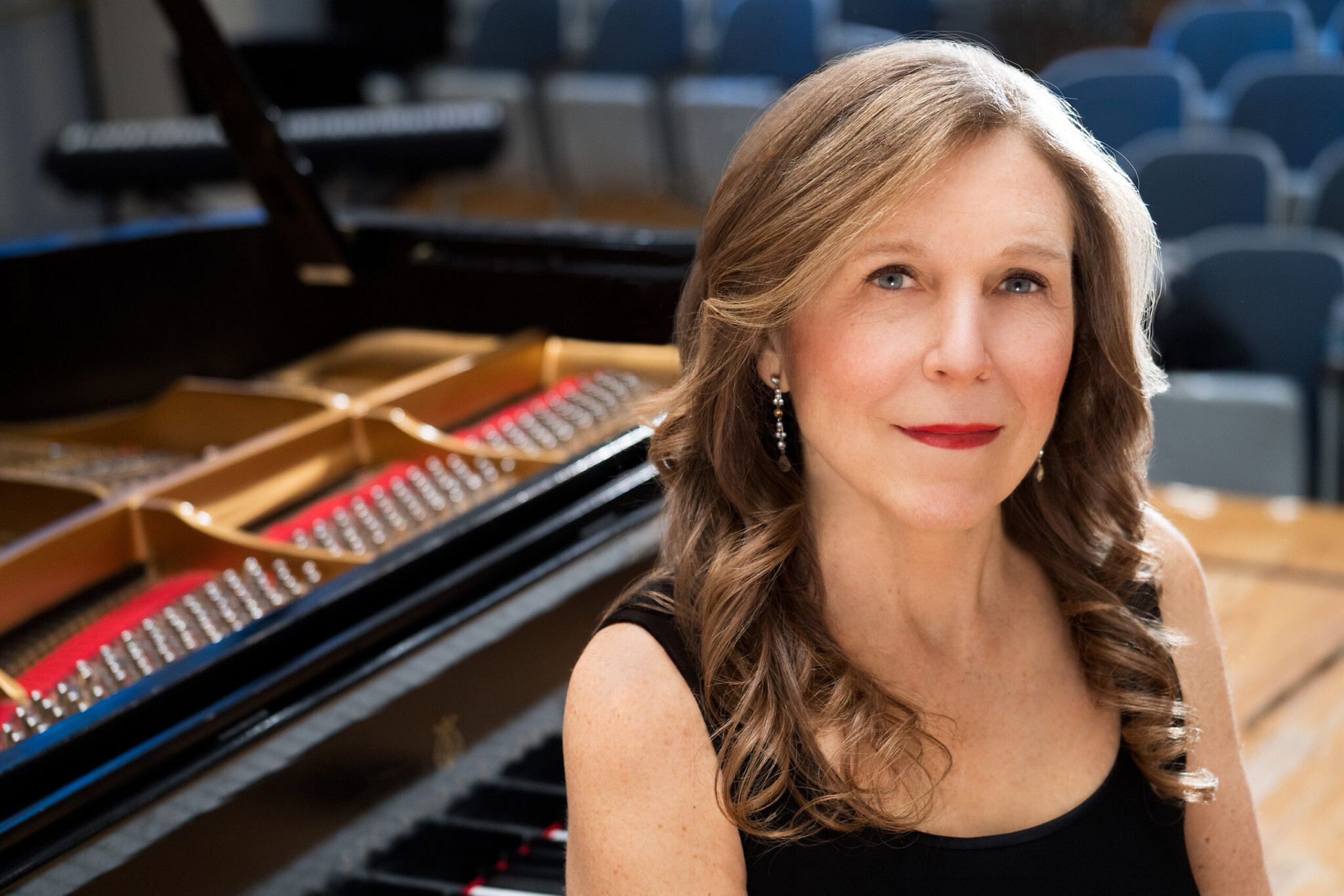
As the daughter of a Holocaust survivor, Carolyn Enger struggled to know more about the experiences her father had endured as a non-practicing half-Jew — a Mischling — sent to forced labor camps.
Mischlinge is the derogatory legal term Nazis gave to Germans like Horace Enger, who were further classified as first-degree or second-degree Mischlinge based on their number of Jewish grandparents.
Although Carolyn Enger and her four siblings grew up comfortably in Tenafly, New Jersey, her father’s traumatic past, which he was reluctant to discuss, spurred an all-consuming quest for understanding.
While developing her career as a concert pianist, she immersed herself in learning all she could about the Holocaust and German history. Following her father’s death in 2013, her journey of discovery led her to create “The Mischlinge Exposé,” a multimedia program about the persecution of part-Jews in Germany during World War II.
Enger will present “The Mischlinge Exposé” at the Eddy Theatre at Chatham University on International Holocaust Remembrance Day Jan. 27. Sponsored by the Holocaust Center of Pittsburgh, it is free and open to the public with advance registration.
“My father’s reticence and silence drove the project,” said Enger, 67, from her Englewood, New Jersey, home. “I wanted to understand him better and feel closer to him in some way. I wanted to understand his moods.
“It was also about the overarching puzzle of ‘How could this have happened?’ although that is a question you can never get to the bottom of.”
In her program, Enger provides live accompaniment to an hour-long documentary that includes Holocaust images, the testimony of her father and godmother, and the work of poets and writers, all of whom shared mixed Jewish identities. Enger plays the compositions of Felix Mendelssohn, a Jew raised as a Christian who struggled with his ambiguous heritage.
“The thing I wanted to explore is identity, and is there some sort of inner anxiety about having a foot in two different camps — of ‘not this and not that?’” Enger said.
She is herself the product of a mixed marriage, since her mother was a Scotch-Irish Philadelphian who was born Protestant but later embraced the Methodist faith.
Although Enger is today a practicing Orthodox Jew, she was raised and baptized in the Methodist church. Her father, who had not identified as a Jew growing up, remained agnostic.
“He believed in God but thought all religions were political,” Enger said, noting that in Europe there was little separation of church and state.
Her conversion to Judaism occurred not once but twice. The first was in a Reform temple and against her father’s wishes. “He did not want me to be Jewish,” she said.
After his death, she considered making aliyah and formally transitioned to Orthodox Judaism.
Fate intervened in the anticipated move to Israel when Enger met and married a Syrian Jew. They live in what she calls “a very lovely shtetl” filled with members of the same synagogue.
She has performed “The Mischlinge Exposé” all over the world since 2016 and is “always so grateful to come home,” she said, “because there is strength in such a tight-knit community.”
Because of the 2018 synagogue shooting at the Tree of Life building, Enger said bringing her program to Pittsburgh will have an especially deep meaning. On a visit to the site during a prior trip she recalled her father’s prescient words:
“He said that what happened in Germany can happen again, although I had no fear that it would. But he was right. He understood that antisemitism doesn’t go away.”
In 1939, 72,000 first-degree Mischlinge and 39,000 second-degree Mischlinge were living in Germany, according to Yad Vashem, the World Holocaust Remembrance Center in Jerusalem. First-degree was defined as having two Jewish grandparents, and second-degree meant having one Jewish grandparent.
Their plight and that of countless others elsewhere in Nazi-occupied eastern Europe is an underexplored aspect of the Holocaust, and a compelling subject for Holocaust Remembrance Day, said Emily Loeb, director of programs and education at the Holocaust Center of Pittsburgh.
“We are part of a national network of Holocaust centers and get emails about people doing all kinds of programs,” Loeb said. “Carolyn’s stood out because it is so different in how it sheds light on a particular part of our history and connects us to it.”
Loeb believes it will resonate with a broad audience because, she said, “a lot of people’s lineages are a combination of various cultures and identities.”
Registration for the event can be found at hcofpgh.org/event/pianist-carolyn-engers-the-mischlinge-expose. PJC
Deborah Weisberg is a freelance writer living in Pittsburgh.
comments