
Two mikvahs grow in Greenfield
'It shows the dedication of what Jews and the Jewish community here — and these young families — really want'
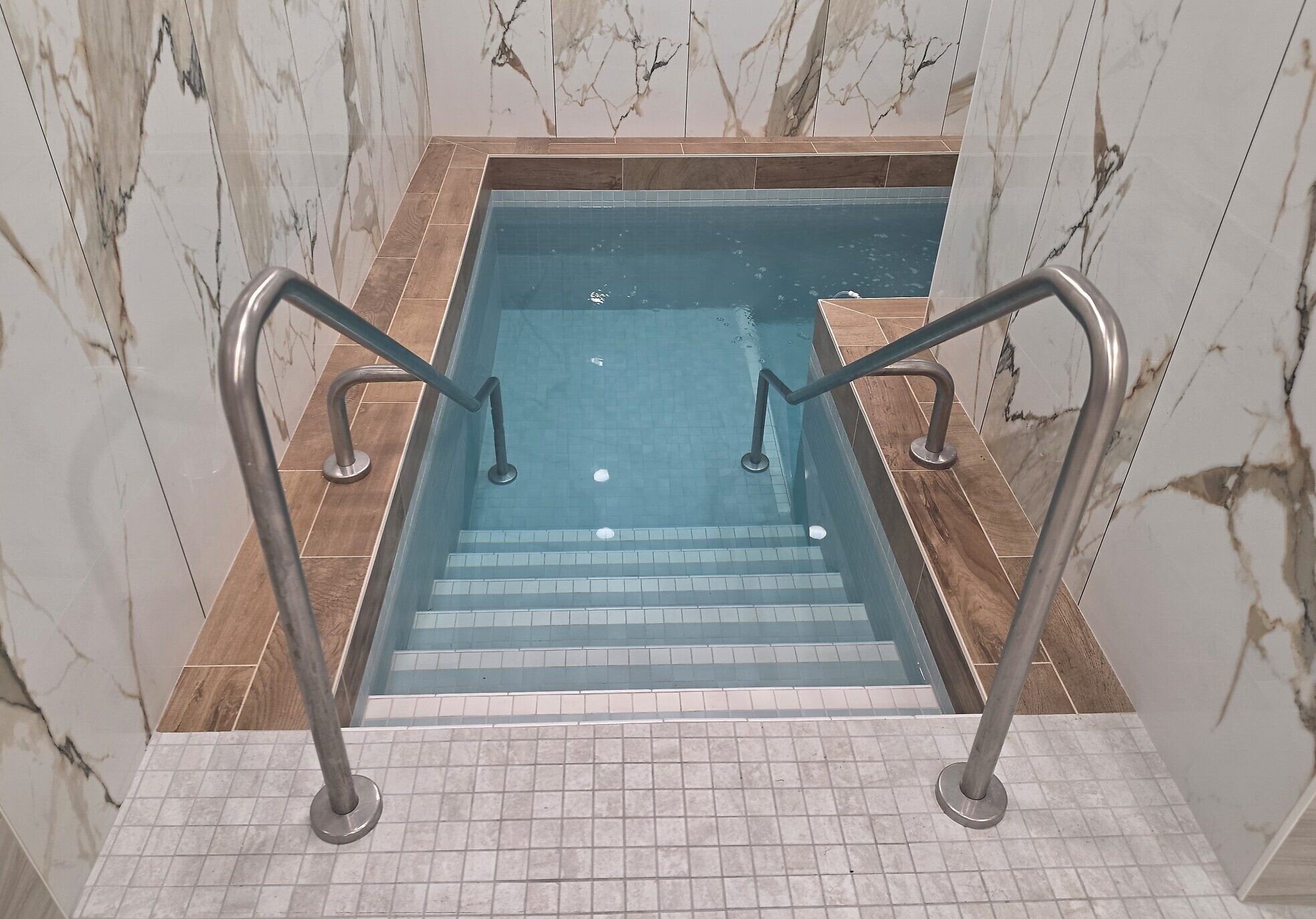
Jewish life is bubbling forth in Greenfield. After nearly five years of construction, two new mikvahs are slated to open in the coming weeks. Located at B’nai Emunoh Chabad, the men’s and women’s ritual baths will enable community members to easily adhere to religious practices, B’nai Emunoh’s Rabbi Elchonon Friedman explained.
Whether for observing family purity laws or marking milestones, including marriage or conversion, mikvah usage is central to Jewish life. A primary mechanism for attaining spiritual holiness and a testament to the sacredness of Jewish families, a mikvah’s importance is touted throughout rabbinic literature, with some authorities claiming its communal necessity surpasses building a synagogue or even buying a Torah scroll.
Until now, Greenfield residents have traveled to Squirrel Hill for mikvah use, but it’s a “little bit of a distance,” Friedman said.
Trekking to the Lubavitch Center, which has a men’s mikvah, or the Denniston Street facility, which has a women’s mikvah, could be a four-mile schlep. Walking to either site from Greenfield on Shabbat is “cumbersome,” Friedman said.
In fact, despite Greenfield’s relatively affordable housing prices and other amenities, the lack of a nearby mikvah has deterred several families from moving to the area, he continued. With the mikvahs slated to open post-inspection, Greenfield becomes “a lot more desirable and accessible.”
Average home values in Greenfield, according to Zillow, are $246,492. In neighboring Squirrel Hill South, average home values are $495,209.
Greenfield boasts a synagogue, yeshiva and rabbinical school, along with about 80-100 Chabad-affiliated or Orthodox families, Friedman said. The mikvahs “add another dimension” to local Jewish life.
“Having both a men’s and women’s mikvah here really brings the community together,” Greenfield resident Zalman Thaler said. “A mikvah is a central part in the purity of any Jewish community, and having one right here in Greenfield feels like this isn’t just a place we go to, but this is a place that’s permanently part of our home.”
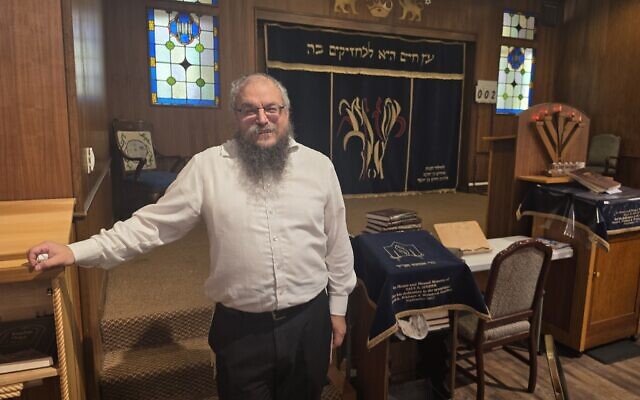
Inside B’nai Emunoh, final touches are being made to the mikvahs. Adjacent to the $800,000 two-story construction project, a room for yeshiva students from Pittsburgh Zal is being readied for the start of the school year. Several feet away, new chandeliers hang within the main sanctuary. Friedman is proud of the building’s heritage — Bnei Emunoh will mark 100 years in 2027 — and the community’s quest to create a stronger future.
On a tour of the facility, he pointed out tiles, toilets, plumbing systems and beautiful pools, while praising community members for contributing to the sizable project.
“It is expensive, no question,” he said. “But you have to realize a mikvah is basically the most expensive part of a house.”
Imagine undertaking a 1,500-2,000 square foot bathroom renovation. Factor in the need to build, moderate moisture, filter water and ensure areas are slip-proof, and costs start to climb, he said.
The soon-to-open spaces will be called “Yudi’s Mikvah,” in memory of Yudi Sternfeld, a Jewish man who died at age 31 in 2021 due to complications from COVID-19.
Friedman credited Sternfeld’s widow, Chani Sternfeld, as well as family and friends with recognizing the “importance of a mikvah in the Jewish community.”
“Here was a person who didn’t have any children, and his wife was so excited about the project because of their belief in the Jewish family and Jewish continuity,” Friedman said. A mikvah represents “the sanctity of the Jewish family,” and Sternfeld’s family understood that this is a way to “continue his legacy.”
Bnei Emunoh is continuing to fundraise to meet its $800,000 goal.
“We’re on our way,” Friedman said. “And we’re getting there.”
When the mikvahs open in the coming weeks, Friedman hopes community members see the broader picture.
What’s occurring isn’t merely about one building or institution. “There’s a whole infrastructure of Jewish life that’s happening in Greenfield,” Friedman said.
The “transformation,” he continued, is being driven by “families who are dedicated, families who are traditional.” The fact that so many “people here in this community are stepping up, and helping to support and build this, and put their sweat, their blood, their money into this, it shows the dedication of what Jews and the Jewish community here — and these young families — really want.”
Building a home is more than finding an affordable residence; it’s also about establishing a community with the right qualities, Friedman said. People want the “spiritual necessities in a community as well.” PJC
Adam Reinherz can be reached at areinherz@pittsburghjewishchronicle.org.
comments