
The missing vowel
The name of the Bes Almon Society is a puzzle.
Dr. Adam Shear told me he once puzzled over the term “Balt Filler” in old records. What is balt? How do you fill it? Then, it clicked. It meant to say Baal Tefilah, a prayer leader.
This gets to a challenge of Jewish words. Often we know what we mean but don’t know what we’re saying. Throughout my childhood, I thought Haftarah was spelled “Half Torah.” It made a lot of sense to me. It was a lot shorter than the “full” Torah reading.
Some confused transliterations are good for a laugh, but sometimes they matter.
Get The Jewish Chronicle Weekly Edition by email and never miss our top stories Free Sign Up
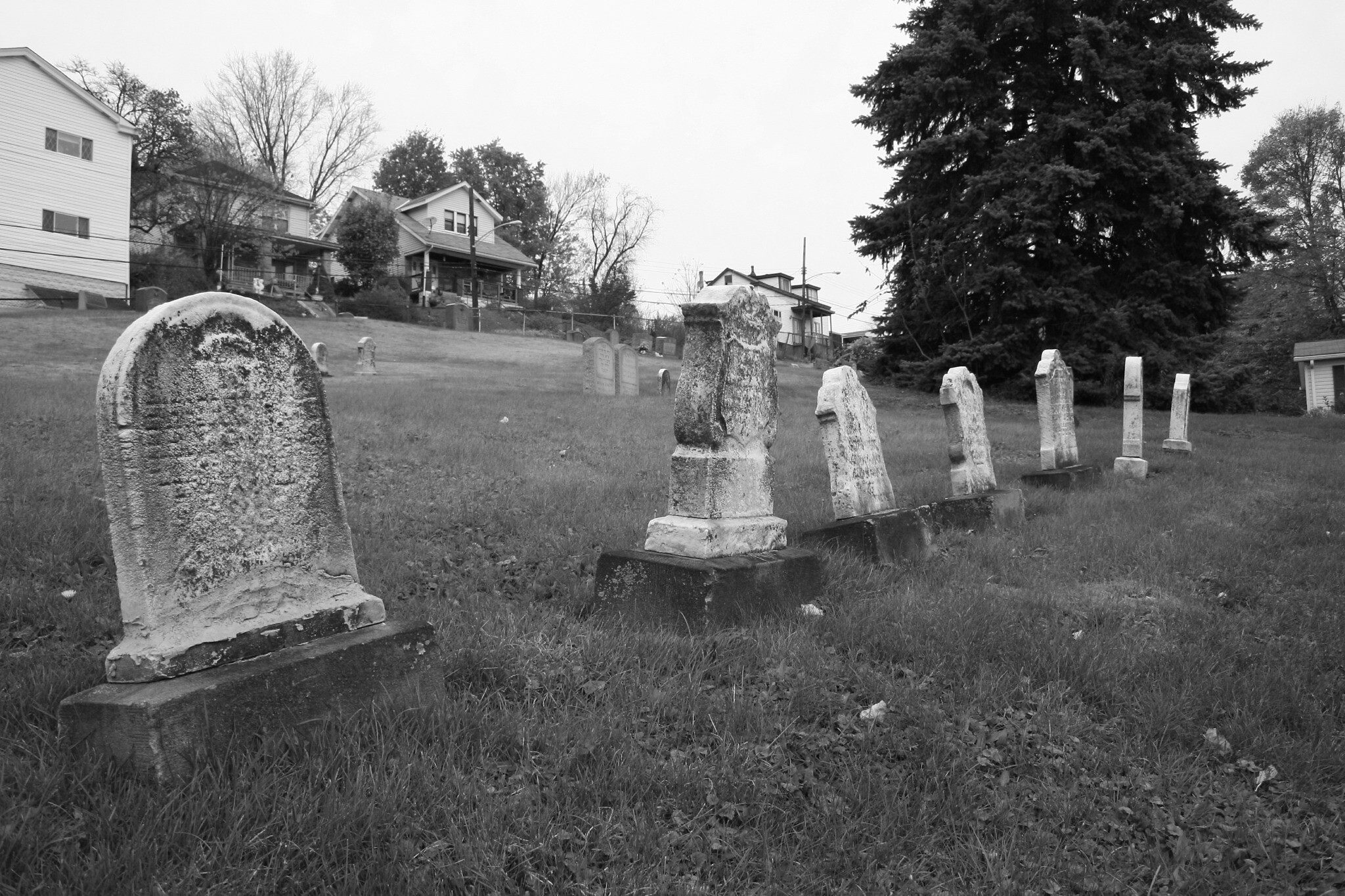
In the summer of 1847, a group of Jewish men acquired property in Reserve Township for a cemetery. It was the first Jewish communal asset in western Pennsylvania.
For more than 150 years, this cemetery has been known as Bes Almon. What do those two words mean? Bes is clearly “Beit,” which means “house of.” What is an “Almon?”
In August 1854, the American Israelite newspaper in Cincinnati published a short history of the Jewish community of Pittsburgh, written by Leopold Jaroslawsky. It begins, “In 1847 a Beth Olam Society was founded in this city by twelve Jewish residents.”
Beth Olam means “House of Forever.” The phrase “Beit Olamo” appears in Ecclesiastes 12:5, “And the caper bush may bud again, but mortals set out for their eternal home.”
A literal translation is limited. Hebrew uses a “construct state” to create words. A Beit Ha-Sefer isn’t a House of the Book. It’s a school. A Beit Olam is a cemetery.
At its conception in 1847, the Bes Almon Society may have just been a generic name: “cemetery society.” When it incorporated in 1867, this generic name became a legal name. Only they took a different spelling. They used “Bes Almon,” not “Beth Olam.”
The meaning is the same, but the language is different. “Bes almin” transliterates the Yiddish term for cemetery. “Beth Olam” transliterates the Hebrew term for cemetery.
I don’t know whether Leopold Jaroslawsky actually wrote the words “Beth Olam” or whether editor Rabbi Isaac Mayer Wise took the liberty of adapting the original letter.
I suspect the latter.
Throughout the mid-19th century, Western scholars were developing systems for transliterating Hebrew scripture into Latin characters. By the early 1820s, some scholars were adding an aspirate “h” to six Hebrew letters with dual pronunciations. The Hebrew letter “tav” was now spelled “th” in certain cases. And so “Bes” became “Beth.”
The German-born Wise uses this convention throughout his memoirs. Jaroslawsky was an immigrant from Poland-Lithuania who most likely would have defaulted to Yiddish.
Let’s say Jaroslawsky actually wrote, “In 1847 a bes-almin society was founded.” If Wise in fact decided to transliterate the word “bes” as “Beth,” according to the Hebrew pronunciation, it would have made sense to translate “almin” into Hebrew as “olam.”
This gets to another question. Why did they name it Bes Almon and not Bes Almin?
One of the men who purchased the cemetery property in 1847 was William Frank. He handwrote a memoir in 1889. In our copy, he spelled the name “Besalomon.”
In Yiddish, “almin” is spelled: ayin-lamed-mem-yud-nun. I take Frank’s extra “o” to reflect the “schwa” vowel sound on the Lamed. As far as the second “o,” perhaps it reflected Frank’s particular accent. I know people who pronounce “almond” as “almend.”
Or maybe it’s not an “o.” Frank’s penmanship is loose. It could be “o,” an “e,” or an “a.”
William’s son Isaac translated the memoir into English. Charles Cooper reprinted this translation for an article in the Jewish Criterion in 1918, spelling it “Bes-Almen.” Julia Miller used the same translation for an article in 1929, but she spelled it “Bes Almon,” perhaps relying upon the name of the organization from its 1867 incorporation filing.
Dr. Jacob Rader Marcus included Isaac Frank’s translation in the second volume of his book “Memoirs of American Jews, 1775-1865,” published in 1955. He spelled it “Bes Almon.” In the years preceding publication, he made an effort to track down the original German but was unsuccessful. That same year, a Jewish community history published in the Pittsburgh Press used “Bes-Almen,” likely using Cooper’s history as its source.
The Rauh Jewish Archives holds a typescript version of this English translation. Our copy reads “Besalmon,” but someone has crossed out the word, struck the “s,” swapped in “th,” and written, “Beth Salmon” above it. That would mean “House of Nova Lox.”
In the 1970s and 1980s, a new generation of historians began investigating the beginnings of the local Jewish community. All the original actors were gone. Only records remained.
Here is where the volley of vowels begins to matter.
If you reverse engineer “Bes Almon” back into Hebrew characters, you might spell it “Alef-Lamed-Mem-Nun.” By using an “Alef” and dropping the Yud, the Yiddish word “almin,” meaning “forever,” becomes the Hebrew word “alomon,” meaning “widower.”
In “A Time for Gathering,” Hasia Diner surveyed American congregations that had emerged from immigrant benevolent associations. She wrote, “A clear case of this — also reflecting problems with Hebrew — happened in Pittsburgh, where what must have been the society of the Bes Olam (the eternal house — the cemetery) became a congregation with a transposed name Bes Almon (the house of the widower, a meaningless term).”
In the early 1980s, Jacob Feldman began publishing articles about the beginnings of Jewish life here. He initially left Bes Almon un-translated, but in his 1986 book “The Jewish Experience in Western Pennsylvania,” he called it the “Mourners’ House.”
A mourner in Hebrew is an “ovel” or an “onein,” not an “almon.” I haven’t found any explanation for his rationale. Perhaps he was trying to square the circle of “widower.”
Once in print, though, it assumed the authority of fact. Rodef Shalom Congregation later used the translation “Mourners’ House” on a large bronze plaque commemorating the founding of the congregation. It now hangs in the central hallway of the synagogue.
All this bothered Dr. Ida Cohen Selavan. In addition to being a skilled researcher, she was Yiddish speaker. She knew “bes almin” was a traditional name for a cemetery.
Using primary sources, she followed the path from the charter, to William Frank’s memoir, to Isaac Frank’s translation, to Marcus’ book, showing how “bes-almen” became “bes alomon” became “Bes Almon.” In a letter to the Chronicle in 1992, she wrote, “It seems to me that it is time to correct this error, due to ignorance rather than design, and return to the correct transliteration (Ashkenazi pronunciation) of Bes Almin.”
A few years later, writer Brenda Wineapple visited Pittsburgh to research author Gertrude Stein and her older brother Leo Stein. It became the dual biography “Sister Brother.”
Her first chapter is titled “Bes Almon.” It begins with Gertrude Stein’s mother Amelia visiting the cemetery where she had buried two children. It was, Wineapple writes, “the small plot of land that twelve Jewish men had purchased there in 1847. The men were a burial society, their land a graveyard. They called it Bes Almon, or House of the Dead.”
Her source seems to have been the non-Jewish caretaker of the property at the time.
Here you can see a different pathway of misinformation. “Widower” becomes “mourner” becomes “dead.” Each is more plausible and less factual than the one before it.
In a 1997 essay, Wineapple explained the resonance. The Steins had intended to have five children. Leo and Gertrude were born after the two who had died young. In the echo of those deaths, Wineapple hears the origins of Leo and Gertrude’s rich creative lives.
“But in titling the first chapter of Sister Brother ‘Bes Almon,’” she wrote, “I voiced not only the Steins’ obsession with death, but my own. For if biography is a form of mourning, its finished product is in fact an imaginary boneyard inhabited by real people.”
Swapping a single vowel — an “o” for an “i” — inverts reality. The hopeful ring of “eternity” becomes the hard clank of “dead.” The present bends the past to its will. PJC
Eric Lidji is the director of the Rauh Jewish Archives at the Heinz History Center and can be reached at rjarchives@heinzhistorycenter.org or 412-454-6406.
comments