
Shalom Farms, almost a Jewish paradise
Ben Paul Brasley established the farm for the Salk brothers in the 1940s and later challenged the local Jewish community to develop its full potential.
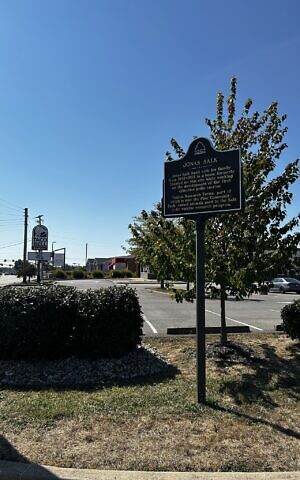
In the outer reaches of Perry Highway in Wexford, where the addresses have five digits, there is a Taco Bell. Before it was a Taco Bell, it was a Burger King. Before it was a Burger King, it was where Dr. Jonas Salk lived while he worked on the polio vaccine.
If you visit the Taco Bell today, you will find a historical marker anchoring its parking lot, commemorating Salk’s work. According to the marker, while Salk was living at the site from 1947 until 1953, he used animals from the nearby Shalom Research Farms to test his vaccine. It is delightfully absurd to encounter the iconic Jewish word “Shalom” sharing this stretch of suburban sprawl with a purveyor of the cheesy gordita crunch.
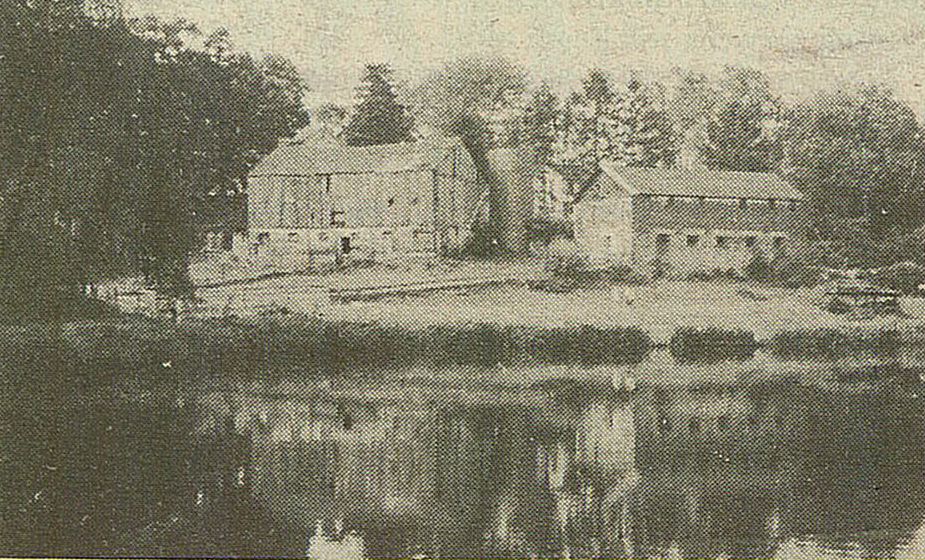
Ben Paul Brasley established Shalom Farms on this land north of Pittsburgh at some point in the early 1940s. It was a working farm and later became his primary residence.
Brasley was a lawyer of a particular personality type: a private and somewhat eccentric Jewish bachelor whose chief creative outlet was philanthropy. (For other examples, see Abraham Lippman, Louis Little and Henry J. Goldstein.) The full story of Brasley’s life is too winding and wild for our purposes here, but I hope to return to him in the future.
Jonas Salk came to town from Ann Arbor in the late 1940s to work at the University of Pittsburgh. Having lived in the Michigan countryside, and preferring it, he settled in the rural outskirts of Pittsburgh. Brasley hired Jonas Salk’s brother, the veterinarian Dr. Herman Salk, to oversee the animal population at Shalom Farms. “I had charge of from 3,000 to 5,000 animals which included monkeys and mice,” Herman Salk later recalled. “They had to be in perfect health at all times or they could not be used in the polio serum tests.”
Counting the two Salk brothers, their families and Brasley, this unassuming patch of Pine Township farmland had no fewer than nine Jewish residents by the 1950 census. In a sense, their enclave was the earliest Jewish community in the northern suburbs, which is now the fastest growing segment of the Jewish population of western Pennsylvania.
Herman Salk moved to Palm Springs in 1954 and became a beloved veterinarian. The polio vaccine was released in 1955. Jonas Salk moved to La Jolla, California in 1964.
With the vaccine finished, Shalom Farms had a supply of unused equipment and animals. For the next 20 years, Brasley sponsored a small laboratory, making blood samples available for scientific and medical research, often for free. (On the property today one can still find the grave for “Prince,” a presumably Jewish horse that died Apr. 9, 1965.)
During these years, Brasley increased his philanthropy. He watered the ground around his feet, focusing on the northern suburbs. He was among the leading donors for the new Passavant Hospital in McCandless Township. He gave land to the Pine-Richland School District for a high school athletic field. He paid off the debt for the Mars Public Library.
Suburban development was climbing into the northern reaches of the county, including the first significant Jewish settlement in the area. A group of Jewish families started the North Hills Jewish Community Center in 1968. It incorporated in 1970 and spent the subsequent decade trying to raise funds and find property for a permanent synagogue.
Brasley left another section of Shalom Farms to the Hebrew Institute. The bequest included a clause requiring the organization to use the property within 90 days, and to use the property continuously without any gap longer than 90 days, or forfeit 50% interest to the United Jewish Federation of Pittsburgh. Brasley died in Aug. 15, 1981, which meant that the Hebrew Institute had to start using the property by Nov 13, 1981.
The High Holidays fell during that 90-day period, and so the Hebrew Institute fulfilled its initial obligation by constructing a sukkah on the property. It proposed a program of immediate projects including nature hikes, retreats and additional holiday celebrations.
By October 1981, the Hebrew Institute had developed an ambitious vision for Shalom Farms. For the “intermediate term,” it wanted to reopen its old day camp. The Hebrew Institute had acquired Camp Kadimah in Evans City in 1958 but later sold the property. The proposed Shalom Farms day camp would accommodate Jewish campers each summer and would also host various adult Shabbatonim and Kallot throughout the year.
“Long-term” plans for Shalom Farms included a “Brandeis-type Institute” for immersive study, a “miniature Kibbutz,” a senior center and a national boarding Jewish high school.
The Hebrew Institute maintained continuous use of Shalom Farms by taking its summer camp to the property in 1982. Having met the terms of the will, a local Orphans Court judge awarded the Hebrew Institute free and clear title to the farm in December 1983. The following fall, the Hebrew Institute hired a full-time caretaker for the property.
Ron Brauner became the head of the Hebrew Institute in July 1985 and announced plans to use Shalom Farms for school programming. “Here we’d have programs for family education; Shabbat programs, retreats, Jewish summer camping; perhaps a model Kibbutz. We’ve identified many areas of development,” he told the Chronicle at the time.
That fall, the Hebrew Institute and the United Jewish Federation hired James P. Goldman of UDA Architects to conduct a feasibility study on the Shalom Farms property.
Shalom Farms was used sporadically over the next few years, but the Hebrew Institute was never able to achieve its greatest ambitions for the property. The 1980s were difficult years. Allegheny County lost nearly 10% of its population during the decade.
The United Jewish Federation reorganized local Jewish education in the late 1980s with the Joint Central Agency Task Force. It created the Jewish Education Institute in 1991 through the merger of the Hebrew Institute, the School of Advanced Jewish Studies, and Community Day School. As part of the merger, the United Jewish Federation sold the Shalom Farms property to Pine Township to clear outstanding Hebrew Institute debt. The township has since developed the property into a large and beautiful community park.
Earlier this summer, as a result of a scheduling mishap, I found myself reciting my morning prayers in Pine Community Park. As I was davening schacharis on a slight hillside overlook the park with its lake, its trails, its community center, its playground, and its bandstand, I felt gratitude for its beauty and sadness over the lost possibilities.
If the resources had been available in the 1980s, Shalom Farms today might resemble something like Adamah’s Isabella Freedman Jewish Retreat Center in Connecticut — a beloved institution drawing a diverse Jewish population to our area for innovative programming. Instead, a different community has reaped those benefits for itself. PJC
Eric Lidji is the director of the Rauh Jewish Archives at the Heinz History Center. He can be reached at rjarchives@heinzhistorycenter.org or 412-454-6406.
comments