
Rabbi Suzanne Offit brings suicide loss support and healing message to Pittsburgh
Program encourages community to learn 'how we can take care of individuals who have had this horrible loss'

EDITOR’S NOTE — This story includes discussion of suicide. If you or someone you know needs help, the national suicide and crisis lifeline in the U.S. is available by calling or texting 988. There is also an online chat at 988lifeline.org.
Medical professionals deliver various types of care. Rabbi Suzanne Offit specializes in postvention.
“People find me when they’ve lost a loved one,” Offit said, speaking by phone from Boston.
For years, the Massachusetts-based board-certified chaplain has supported people navigating the “different kind of grief” prompted by suicide.
As for the “traumatic and tragic death,” Offit said the Jewish community could do more to care for people “who have lost a loved one to suicide.”
“We Jews are so good at our death practices,” she said. Whether it’s prioritizing prompt burial, attending a funeral or shiva, saying kaddish or marking a shloshim or yahrzeit, “we’re really good at that. But for some reason, that hasn’t been true for people with suicide loss.”
Offit, 64, will share her perspective on May 6 at 7 p.m. at The Friendship Circle of Pittsburgh.
The talk, facilitated by Maggie Feinstein, director of the 10.27 Healing Partnership, will encourage listeners to learn “how we can take care of individuals who have had this horrible loss.”
The spiritual leader’s perspectives are fueled by myriad experiences. Offit applied to rabbinical school at age 40 and began her studies one day before her third child began kindergarten. After briefly undertaking congregational work, Offit became a hospital chaplain. Then, for eight years, she delivered palliative care.
“I worked with patients and families in dark and scary places,” she said. “My motivation for that work, as well as this work, is I don’t want anyone to suffer alone.”
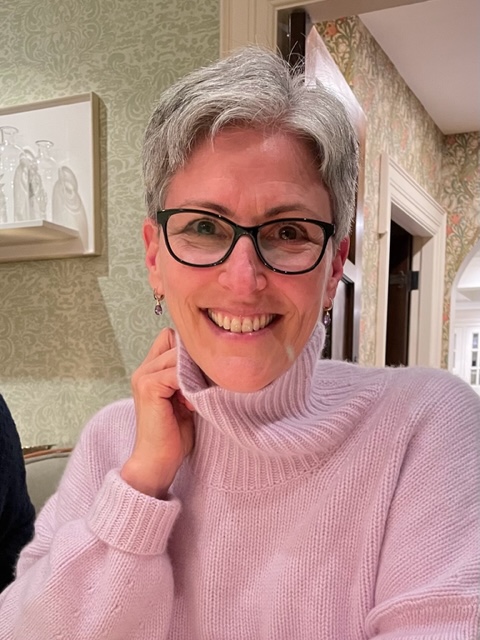
As a chaplain, Offit discovered the immense isolation experienced by hospital-bound individuals and those with “suicide loss,” she said. “This was somewhat familiar terrain to me.”
At the age of 16, Offit lost her best friend to suicide. As an adult, one of Offit’s best friends lost her son to suicide. Later, as a rabbi, Offit officiated at funerals of people who died by suicide.
Postvention, which promotes healing, support and reducing further trauma, is taxing. Along with in-person meetings, Offit hosts regular support groups on Zoom. She has a propensity for the job, but stressed the importance of keeping balance in her life.
“My work is full-soul, but it’s not full-time,” she said. “I don’t do this 40 hours a week. I cannot do this 40 hours a week. I try to make sure I do a few weddings a year, if possible, or a bris or a baby naming. I love to ride my bike and hike and kayak. I’m a gardener. I love to cook. I read novels. I have close friends — some of whom do the kind of work that I do, and some of whom have no idea how I do the work that I do.”
For those unclear how or why someone could do this work, Offit said she has the “character, personality, ability to do this, but I have a lot of life experience that enables me to go into dark places, and I don’t want people to be afraid of telling me anything, because I’m not afraid.”
While in Pittsburgh, Offit will continue thwarting fear and correcting misperceptions.
“Living things want to grow. Living things want to be alive. If someone’s brain is telling them, ‘I’m in so much pain, I can’t do this anymore,’ that’s brokenness, that’s illness. Dying by suicide is a moment in time. It’s a moment of crisis — even if some people are planning it — it’s impulsive. There’s so many things going on,” she said. Still, “it’s stigmatized” and families are often made to feel “nothing but guilt or shame.”
When families feel this way, “they hide, they don’t tell anyone,” she continued. “When someone uses all their energy for hiding, there’s no energy for healing.”
Offit believes community members are capable of delivering “radical acts of kindness in the face of darkness.”
Those practices are possible and contagious, she continued. “Our souls are created in a way that when we are kind and good to other people, it makes us feel better and we want to do it again.”
The message is a familiar one, she continued. “When somebody has suffered a horrible loss, it’s important to show up. That’s what we do. We just show up. Don’t worry about saying the right thing or the wrong thing. Just show up. And when people lose a loved one to suicide, too often, no one shows up.” PJC
Adam Reinherz can be reached at areinherz@pittsburghjewishchronicle.org.
comments