
‘Paintable Pittsburgh’ to showcase artist Henry Koerner’s industrial paintings
Koerner is best known for his Time magazine covers, book covers and portraiture, so “Paintable Pittsburgh” shows a different side of his work.
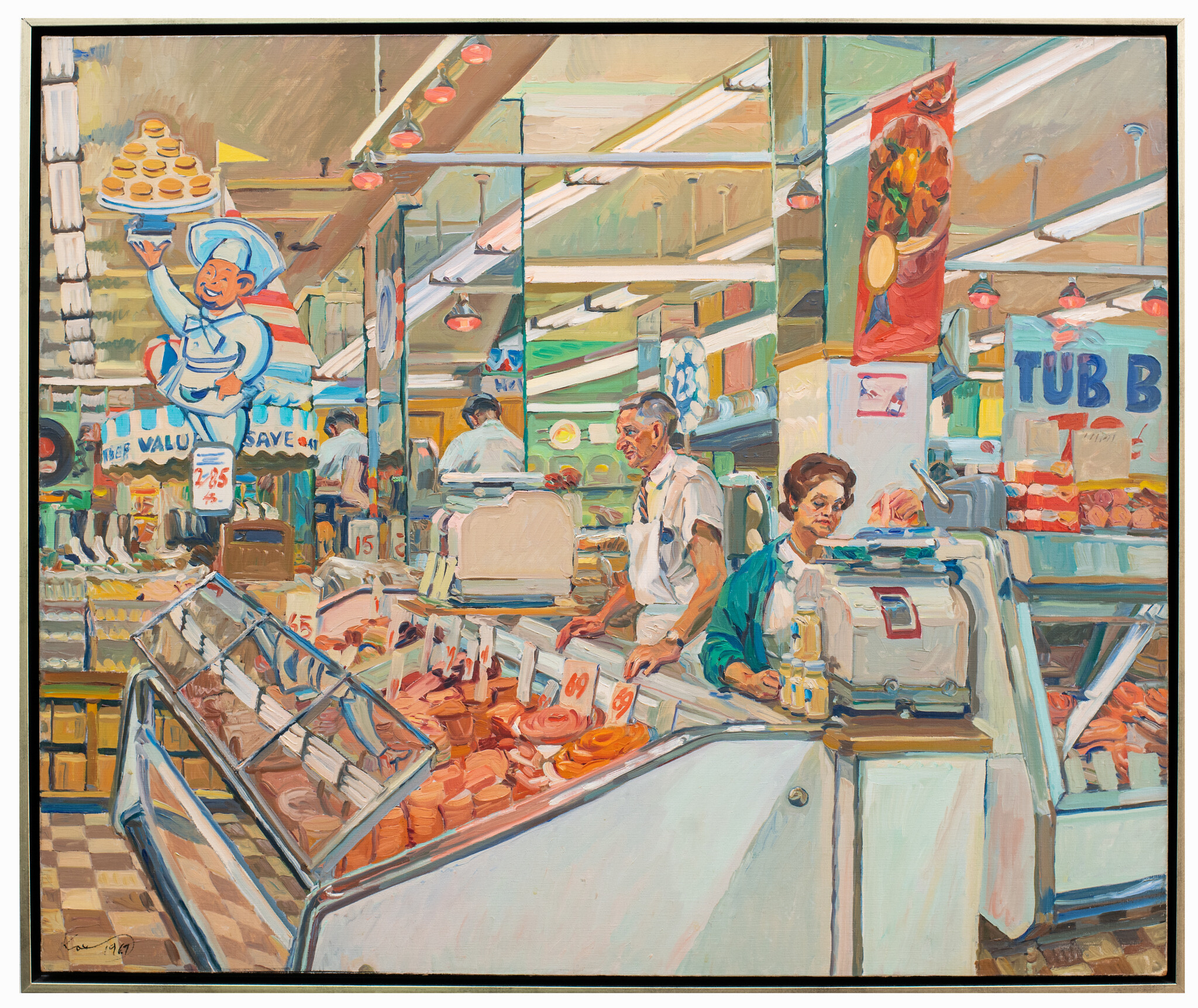
Too often, new owners move into a quirky old house and strip it of its character. Not so for Caroline Boyce. When she moved into a stately old home in Squirrel Hill, she soon learned it belonged to renowned Austrian-Jewish painter Henry Koerner. Boyce, whose background is in historic preservation, has made her residence into a historic landmark and become one of the stewards of Koerner’s legacy, including as a co-curator of “Paintable Pittsburgh,” a new exhibition of Koerner’s work opening April 24 at Rivers of Steel.
“I have a great deal of respect for the work Rivers of Steel is doing and how they are integrating art programming into their work,” Boyce said. “Paintable Pittsburgh” focuses on Koerner’s paintings of the “grittier” side of the city. He found beauty and intrigue in Pittsburgh’s industrial structures and the omnipresent visuals of labor here. In fact, it reminded him of home.
“He traveled the country and settled in Pittsburgh because it reminded him of Vienna,” Boyce said. “It had this juxtaposition of beautiful churches and buildings and this gritty side as well.” Koerner’s home, designed by architect Richard Righter, has echoes of the baroque in it, too — Juliet balconies, statuettes, and floor-to-ceiling windows so Koener could work on his paintings in the best light.
But even when he wasn’t in his own house, Koerner felt he belonged in Pittsburgh. Boyce recalls asking Joseph Koerner, Henry’s son, whether his father considered himself Austrian or whether Pittsburgh became his identity. “No doubt about it, he said his father found Pittsburgh to be home,” Boyce said.
Koerner is best known for his Time magazine covers, book covers and portraiture, so “Paintable Pittsburgh” shows a different side of his work. Most of the industrial paintings are from earlier in his career, as he reckoned with the pain of fleeing Austria and the murder of his family by Nazis. Though the paintings show his affection for his new home, they also show the artist figuring out how to piece together his understanding of the world in the wake of tragedy.
Part of what makes Koerner’s work so interesting is that it holds its own at a time when most artwork grappling with World War II did so in abstraction. Koerner showed that an artist could still demonstrate subtlety and emotional complexity through figurative painting.
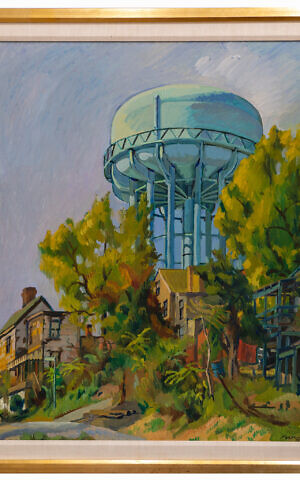
“Koerner didn’t drive, so people remember him riding his bicycle around Pittsburgh with his artwork. Kathleen would drive him if he had to go any distance,” Boyce recalled. “She had taken him out to Brownsville to paint that bridge — he didn’t really like to be painted, so she stood behind him and painted him.”
Zimbicki, who is now 92, had a gallery called Studio Z on East Carson Street where Koerner was a frequent guest. Boyce worked nearby at one point and knows she must have met Koerner himself in the ’80s without knowing who he was — or that she would be living in his house four decades later.
Though Boyce grew up in Squirrel Hill and recognized the quirky old house, she gained a new appreciation for it by connecting with the Koerner family and learning more about Koerner’s work.
“He painted Pittsburgh as he saw it. Pittsburgh was his home. He painted Pittsburgh with a keen eye and with a love and affection that is really special,” Boyce said. “He was prolific. He painted and was out every day painting some scenes in Pittsburgh. We titled the exhibit ‘Paintable Pittsburgh’ because that’s how he felt about it.”
Rivers of Steel is staging “Paintable Pittsburgh” at the Bost Building in Homestead, near many of the sites Koerner painted. Boyce hopes the exhibition gives Koerner’s work more exposure and helps more viewers understand what a rich art history Pittsburgh has. She plans to write a book about Koerner and to host more programming at the house in the future.
“Henry was such a fixture in Pittsburgh,” Boyce said. “It feels like it’s time for the next generation to be introduced, and those who know of him to be reintroduced.”
“Paintable Pittsburgh” is on view at the Bost Building, 623 E. Eighth Avenue, April 24 through July 31, with an opening reception on April 24 from 6 to 8 p.m. PJC
Emma Riva is a freelance writer living in Pittsburgh.
comments