
Olympic medalist Ori Sasson on focus, fear and moments that matter
Standing on a podium isn't the only way to demonstrate power; the most forceful way young Jews can exhibit strength is to “keep going”
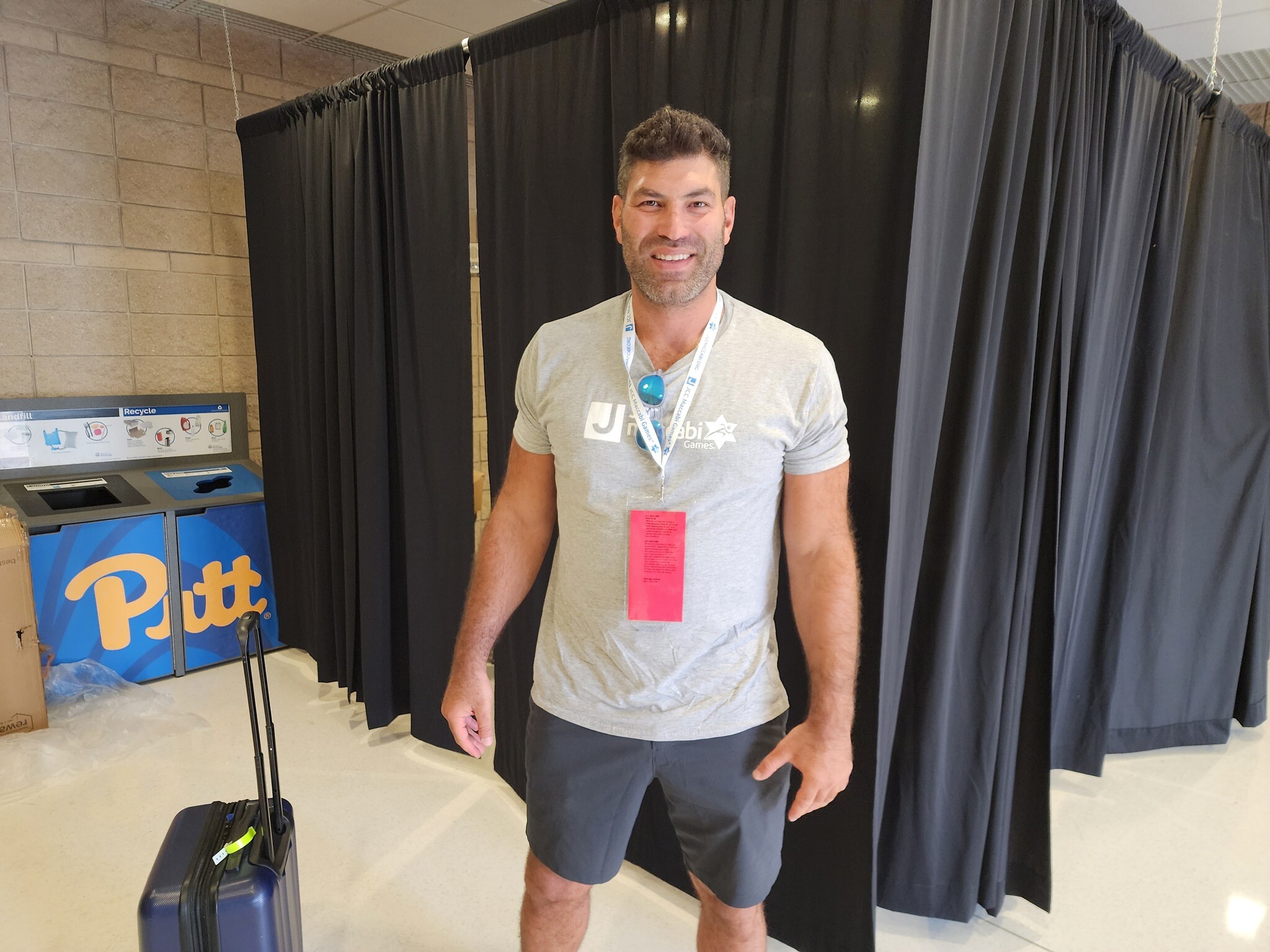
Moments create memories. Memories change.
Nine years ago, Israeli judoka Ori Sasson arrived at the 2016 Summer Olympic Games alongside 11,000 athletes from 207 countries. The group competed in 306 events. For more than two weeks, those athletes represented the best in sport. But even among the best, divisions exist. Most Olympians never win a medal — participation in the Games is already among the rarest of athletic achievements.
Sasson arrived in Rio with more than participation in mind — he was there to earn a medal, he said. He’d dreamed of it since age 8.
Attaining a status virtually nonpareil wasn’t inconceivable. The Israeli took silver at the 2015 European Games, 2016 European Championships and 2016 Judo World Masters.
The goal in Rio, like the one pursuing it, was easily recognizable. Standing more than 6 feet, 3 inches tall, and weighing about 260 pounds, Sasson competed in the men’s over-100 kilogram competition. Clad in a judogi — a sport-specific jacket, belt and pants — the letters ISR appeared on Sasson’s back. Throughout the Games, the noticeable Israeli fought opponents from Cuba, France, Netherlands and Poland.
In the semifinals, Sasson lost to France’s Teddy Riner. Riner ultimately won gold. Sasson then battled Cuba’s Alex García Mendoza in the bronze medal match.
Video from the closing moments of that match depict a familiar Olympic scene: Sasson recognizes his accomplishment, the announcer articulates the achievement, Sasson heaves, places his hands above his face and cries. Israelis in attendance wave flags. Hebrew pop music plays.
Why Pittsburgh
Seated on a small folding chair in Oakland nearly nine years later, Sasson reflected on medaling. But that wasn’t what brought him to Pittsburgh and the JCC Maccabi Campus Games, he explained.
An event preceding his win garnered international attention. It was that moment and those that followed (which fewer people remember) that spurred him to visit Oakland and speak with hundreds of Jewish teens, he told the Chronicle.
During the first round in Rio, Sasson competed against Egyptian judoka Islam El Shehaby. The Israeli won, but when the match ended El Shehaby rejected Sasson’s demonstration of sportsmanship.
“I went to him and tried to shake his hand, because this is what judo is about,” Sasson said. “It’s about respecting your opponents, respecting yourself, respecting your coach, respecting all the people who are taking part in this sport.”
The failed exchange lasted mere seconds, but Sasson said he remembers instantly realizing its significance.
Shortly after the match ended, Sasson opened his phone. Not only were people in Israel aghast, but global media also weighed in on the handshake that wasn’t.
The Israeli chose to “forget” the moment, he said. “It happened. It’s bad that it happened. I just focused on the goal, and my goal was to take the medal no matter what.”
Both in speaking with the Chronicle and during his demonstrations to young athletes in Pittsburgh, Sasson, 34, articulated the importance of memory, attentiveness and avoiding distraction.
“When you have a big goal, keep focus on your target,” he said. “Nothing else matters, even things like that.”
After Rio
After Rio, Sasson returned to the Olympics. At the 2020 Summer Games, he helped Israel win bronze in the judo mixed team event. Sasson eventually retired and began lecturing. He spoke about how a “sensitive” man became an Olympic fighter. He recorded nearly 50 episodes of a podcast. He partnered with Shalva, an Israeli organization committed to caring for individuals with disabilities. He traveled and taught judo.
While teaching judo abroad, he said, an Egyptian man approached him.
The individual, according to Sasson, was El Shehaby’s teammate. Standing at a New York workshop, the man said, “I want to shake your hand and apologize for the bad situation that happened. I hope these things will not happen again.”
Sasson said he shook the man’s hand, hugged, “and for me it was like a closure, like it’s the end. It happened, but now it’s gone.”
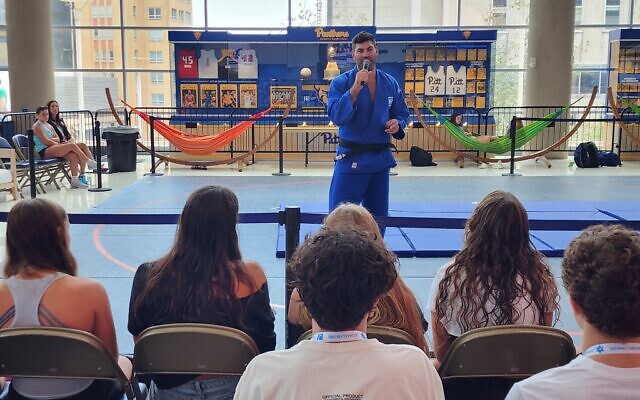
Both in Pittsburgh and at the JCC Maccabi Games in Tucson (a similar event that occurred several days before the Games in Oakland), Sasson met teenage Jewish athletes, delivered judo demonstrations and spoke about moments that matter.
“It’s true, what happened in Rio was really bad, but we can fix situations by explaining values,” he told the Chronicle. “This Egyptian fighter [El Shahaby], I’m sure he didn’t hate me. Why should he? He doesn’t know me.” And as much as the Egyptian didn’t know the Israeli, the Israeli said he didn’t know his opponent: “He might have had a lot of pressure from his country, maybe from the coach, maybe from the team.”
Keep going
Medaling at the Olympics, Sasson explained, required singular focus. But standing on a podium isn’t the only way to exhibit power. The most forceful way young Jews can demonstrate strength is to “keep going.”
Recent conversations with young Jews prove “it’s not an easy situation. It’s hard. I can’t even imagine,” he said. Still, “they don’t need to be scared … They need to be strong and to stand really proud in front of everyone, and say the truth. Just say the truth: I’m Jewish.”
When asked why he’s so proud of that identity, Sasson said, “Because of our history, because of the fact that we are still here after so many wars, after the Holocaust, it’s magical. The fact that Israel exists, the fact that so many people support Israel.”
Because of judo, Sasson saw the world. Because of the Olympics, and a moment beyond his control, the world saw Sasson.
Nine years later, that attention still matters, he said. “I feel like I represent Jews from all over the world. I feel like it’s a gift. It’s a gift, and if I got this gift I need to do something with it.” PJC
Adam Reinherz can be reached at areinherz@pittsburghjewishchronicle.org.
comments