
‘October 27th Podcast’ shares reflections on Pittsburgh synagogue shooting
Podcast is adapted from “Meanings of October 27th,” a collection of 105 oral histories of Jews and others conducted between 2019 and 2021.
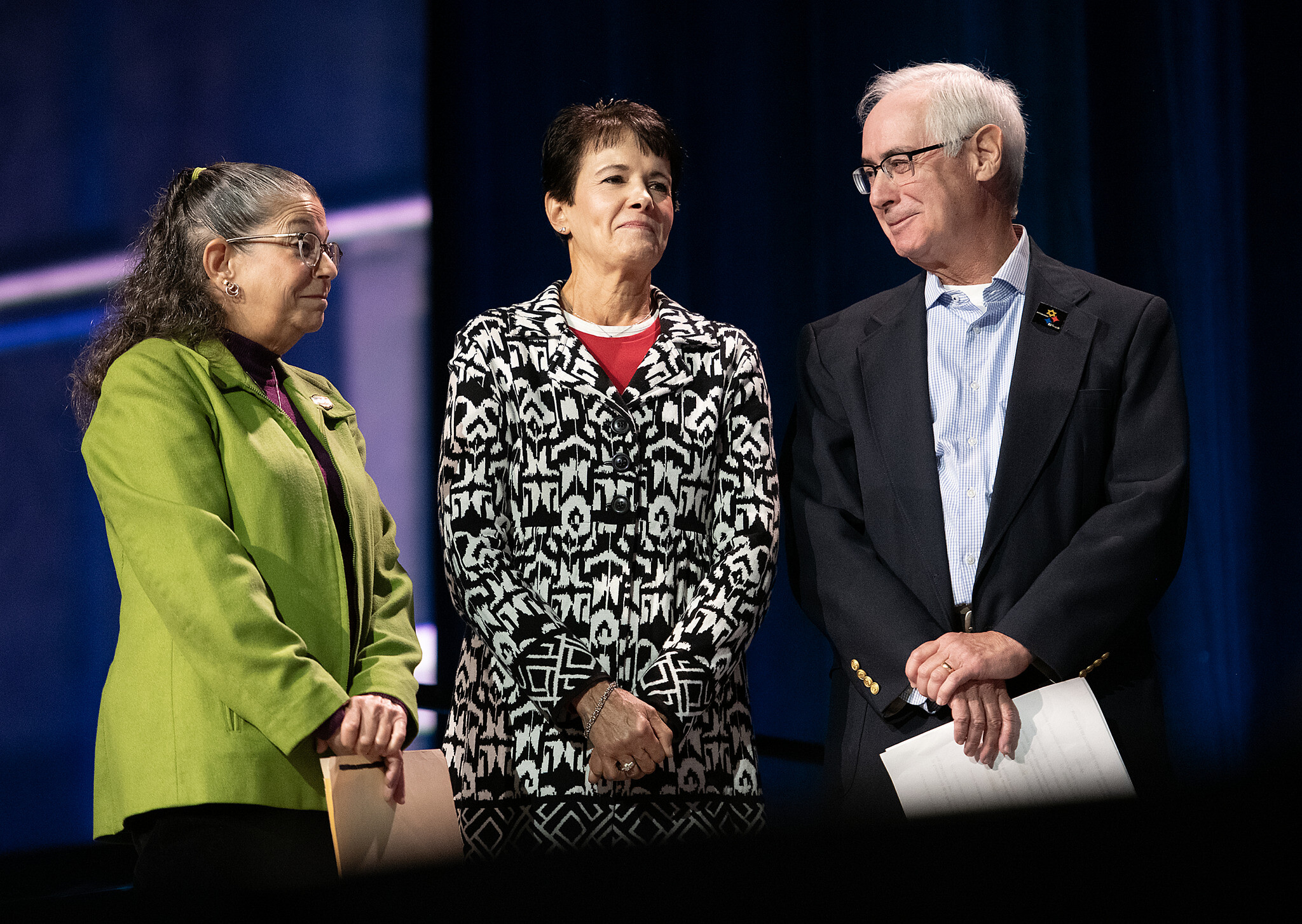
Alan Mallinger recalls the last time he saw his mother alive the day of the Pittsburgh synagogue shooting, Oct. 27, 2018.
He had looked out his bedroom window to watch family matriarch Rose Mallinger, 97, climb into his sister’s car to go to Shabbat services just blocks away at Tree of Life Congregation in Squirrel Hill.
Hours later he would learn that Rose had been murdered and his sister, Andrea Wedner, seriously wounded during the shooting — the deadliest antisemitic attack in American history — that claimed 11 lives.
Get The Jewish Chronicle Weekly Edition by email and never miss our top stories Free Sign Up
Audrey Glickman had just begun to lead services at Tree of Life that fateful morning when she heard gunshots down the hall. She and a fellow worshipper hurried up steps to a room where they covered themselves with prayer shawls, hoping to blend in with bags of donated clothing.
In the aftermath, in the Jewish Community Center of Greater Pittsburgh, she recalls the distress of family members waiting to hear, as well as the “bunches of therapists” who showed up to give care.
Mallinger, Glickman and four other western Pennsylvanians less directly affected by the shooting share their thoughts and feelings about that tragic event in “October 27th Podcast,” newly released by oral historians Noah Schoen of Squirrel Hill and Aliza Becker of Chicago.
The podcast is adapted from their “Meanings of October 27th,” a collection of 105 oral histories of Jews and others, ages 16 to 96, conducted between 2019 and 2021.
Six additional, half-hour episodes are slated for release in December.
Besides shooting survivors and victims’ family, any number of narrators could have been chosen to tell their deeply moving stories, Becker said. “We wanted a certain amount of diversity — different voices — but there are so many compelling stories. People opened their hearts. To some extent it was the luck of the draw.”
To give context to their insights and reflections, narrators were asked to begin with their personal histories. They also were asked to talk about Oct. 27, how it affected their lives, their understanding of antisemitism, and what they want future generations to learn from their experience.
Glickman describes the bustling Squirrel Hill of her youth, with its bakeries and kosher butcher shops, Poli’s restaurant and Weinstein’s delicatessen. She talks about being the second girl to celebrate her bat mitzvah at B’nai Emunah, and about the antisemitism she experienced from kids in the Greenfield neighborhood where she lived.
The massacre did not surprise her, she says. “As soon as I heard the gunfire, I knew what it was, because we were in a synagogue. I understand some people were painfully stricken that it would happen here. But it didn’t surprise me in the least. I wish I would have known how to stop it before it happened, but no, it doesn’t surprise me.”
Glickman says keeping “way too busy for my own good” helped her to cope with the trauma.
A similar strategy worked for Tracy Baton, a Black progressive political activist who was in a meeting of the 14th Ward Independent Democratic Club when she was texted about the shooting by someone who was there.
She recalls offering her organizing skills to a high school student-led vigil in Squirrel Hill the night of the shooting and again several days later for a community march under the banner “No Place for Hate.”
Feeling needed helped her to get through the immediate aftermath of the shooting, she says, while also revealing a poignant moment during the student vigil when she leaned against a support beam at Forbes and Murray avenues, and wept.
For Baton, antisemitism aligns with racism, which she encountered as a teen living in Squirrel Hill. She recalls being one of three Black girls enrolled in the scholars program at Allderdice High School, but experiencing social isolation.
The idea for the oral history project began with Becker, who wanted to learn firsthand “what it was like to be in a community where everyone is connected and experiencing this kind of antisemitic hate crime, this kind of loss.”
“I knew I couldn’t do it without a Pittsburgh partner,” said Becker, who serendipitously connected with Schoen through his mother and her friend, Nancy Bernstein. “When Nancy told me that Noah had left his job, I audaciously called him. He thought about it for a couple of weeks and said yes.”
They made an interesting team, Becker said, given that Noah grew up in Pittsburgh and had worked as a community organizer. Becker had spent a decade collecting stories about the American Jewish experience and had only ever traveled through Pittsburgh on her way to New York.
The pair loosely networked to find narrators and spent time on a listening tour before they began recording.
“We took a slow, thoughtful approach,” said Becker, noting the contrast with news coverage. “Oral histories perform a healing, not an extraction. The person speaking has agency and we let them take the lead.”
Although they came from different places, she said, “everyone felt like the shooting happened to them, and they wanted to know how they could do good.”
One of Schoen’s takeaways was that many non-Jews care about the Jewish community although they don’t always know how to show it, he said, “and we, as Jews, don’t always know how to receive it.”
“On the listening tour, almost every Jewish person we talked with had a story about something a non-Jew had done to comfort them.”
“We get discouraged by antisemitism,” he said, “and don’t notice that we may have more allies than we feel.”
They include Clara Gourley, one of two then-high school students heard in the podcast.
Gourley describes growing up in New Bethlehem, a small white, conservative, Christian town about an hour north of Pittsburgh. She speaks of her devotion to her faith and how caring her neighbors are toward each other.
With no Jews in her community, Gourley’s first glimpse into Jewish life, she says, was a Holocaust class at her high school. It moved her to call out antisemitism when she saw it among other students, including one who drew a swastika on his Chromebook.
She learned of the Pittsburgh synagogue shooting while reading USA Today online and recalls sitting back in her chair and thinking, “How?”
In church the following Sunday a man raised his hand and asked for prayers for those impacted by the shooting. On a drive through Pittsburgh, Gourley was struck by the Stronger Than Hate signs everywhere, and “how even after something so terrible that will change the city forever, people respond by coming together.”
The podcast and “Meanings of October 27” are being stored at the Rauh Jewish Archives at the Heinz History Center, where their historical significance will continue to grow over time, said Rauh Archives Director Eric Lidji.
“It’s a really remarkable collection, amazing in scope.”
The narratives are distinct, nuanced and complex, he said, lauding Schoen and Becker with providing people a safe place to process their experiences.
Becker is hopeful that the podcast will foster kindness.
“I want people to understand about human compassion and to care deeply about the impact of harmful events on the community. I would like to see a broad conversation about antisemitism.” PJC
Deborah Weisberg is a freelance writer living in Pittsburgh.
comments