
New American Jewish Museum exhibit chronicles perilous 1941 voyage
'Camera as Passport' invites viewers to look again
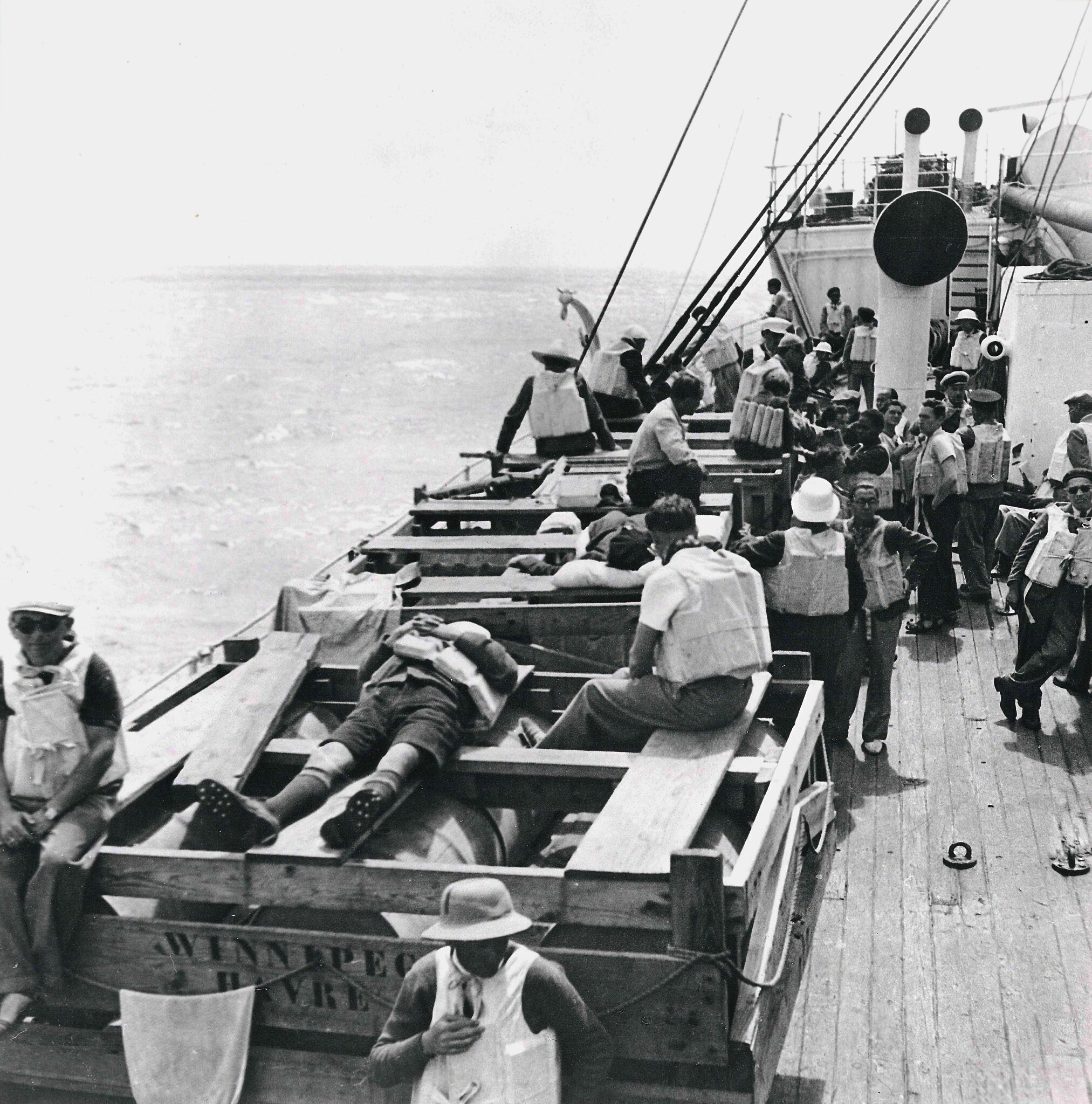
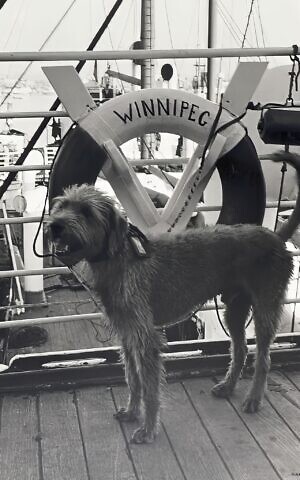
A new exhibition asks viewers to see what others saw. On display through Jan. 30 at the American Jewish Museum at the Jewish Community Center of Greater Pittsburgh, “Camera as Passport: The Ship of Photographers,” presents 36 images from seven photographers escaping Nazi persecution.
Each image was taken aboard the S.S. Winnipeg, a converted freighter that departed Marseille, France, on May 6, 1941, en route to Martinique, a French Caribbean Island.
Two hours before arriving at its intended destination, the Winnipeg was boarded by armed soldiers and rerouted to Trinidad. Traveling aboard the ship were eight photographers hailing from Belgium, France, Germany and Hungary. Six of the eight photographers (photos from only seven photographers are included in the exhibition) successfully made it to the United States by mid-June 1941. The other two photographers arrived later.
“Camera as Passport,” which is on loan from the University of Michigan, forces viewers to “wrestle” with multiple ideas, AJM director Melissa Hiller said.
One key aspect is how the exhibition documents a “particular place during a very particular time in history.” The images, according to Hiller, detail lived experiences surrounding displacement, which is “very relevant to people today.”
Another matter raised by the exhibition is photography’s place in society.
The photos are from a “time when you couldn’t just take snapshots, you didn’t have an Instagram page and you weren’t an influencer,” Hiller said. “These were images that had to get developed, and it was expensive.”
Along with the cost of creating art was the equipment itself, as not only were cameras expensive but they were cumbersome pieces of equipment, she continued.
Collectively, the works represent a different relationship to photography than what exists today. Both among photographers and viewers, people back then “were not inundated by a visual culture like they are now.”
With most mobile phones now equipped with cameras, there’s a modern ease to capturing moments. The simplicity of sharing those scenes was noted by the National Institute for Social Media, which reported that 1.3 billion photos are uploaded to Instagram each day.
Technological realities 80 years ago were quite different, and the 36 images in “Camera as Passport” tell a unique story that should captivate a contemporary audience, Hiller said.
The museum director credited the University of Pittsburgh Jewish Studies Program, University of Pittsburgh Film and Media Studies, University of Pittsburgh Horror Studies, Carnegie Mellon University Jewish Studies, the Holocaust Center of Pittsburgh and the University of Michigan with helping AJM bring the exhibition to Pittsburgh.
An opening reception on Oct. 23 from 5:30–7:30 p.m. with curators Deborah Dash Moore of the University of Michigan and Louis Kaplan of the University of Toronto will offer greater insight into the pictures and those who took them.
These images detail a “particular journey” during a time that was “fraught with so much unknown and terror and fear,” Hiller said. Yet, perhaps even greater, the exhibition raises an ageless question: “What happens in moments of crisis?” PJC
Adam Reinherz can be reached at areinherz@pittsburghjewishchronicle.org.
comments